Events
Records and photos of the Healthcare Systems Consortium's annual general meetings and Chairman inauguration ceremonies over the years, medical technology exhibitions, team highlights and awards, event videos, and the Consortium's business publications.
Founding Meeting
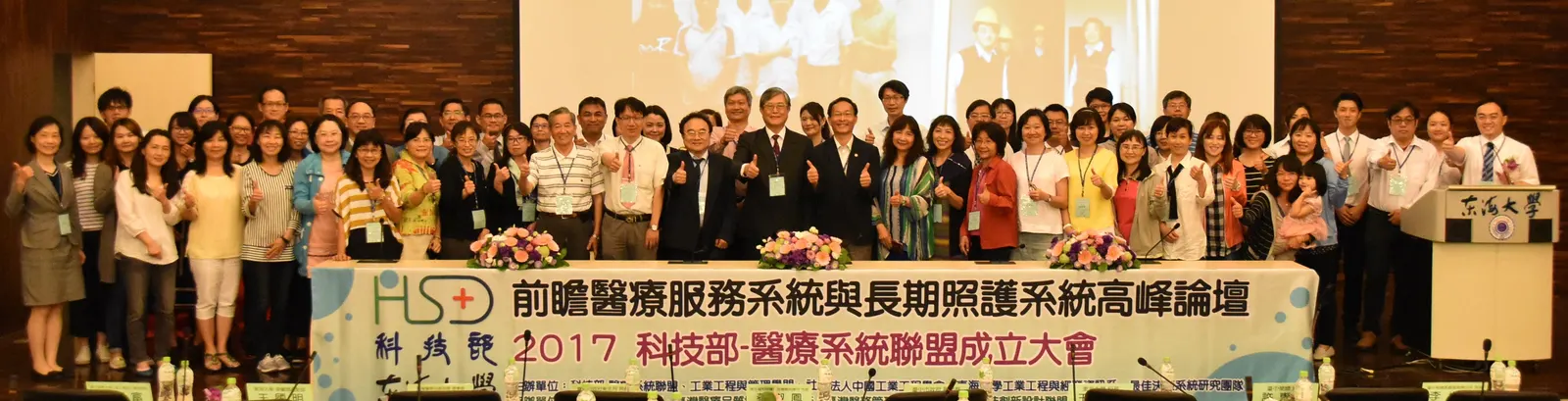
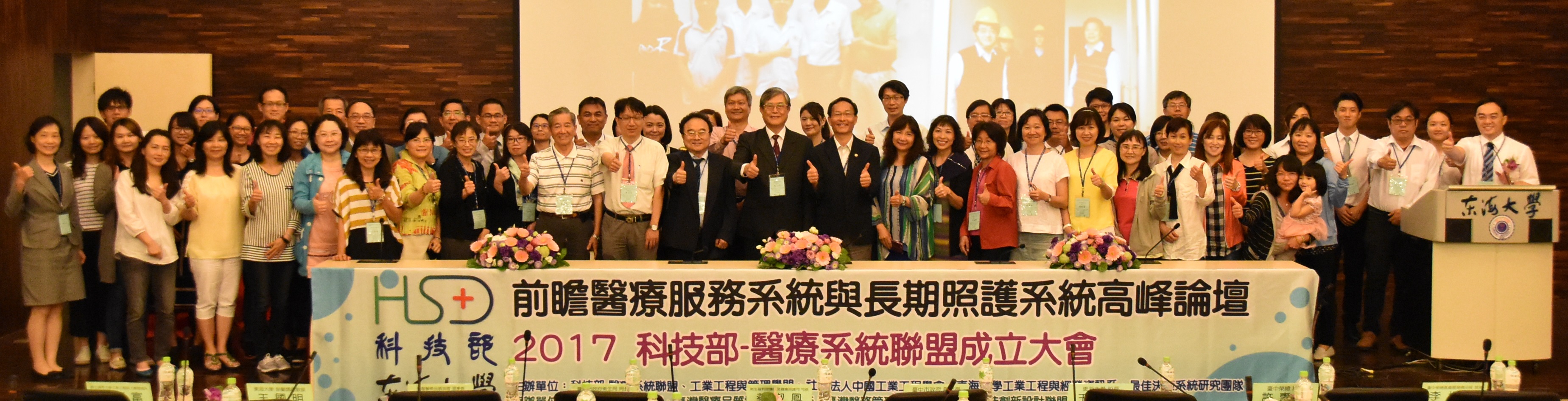
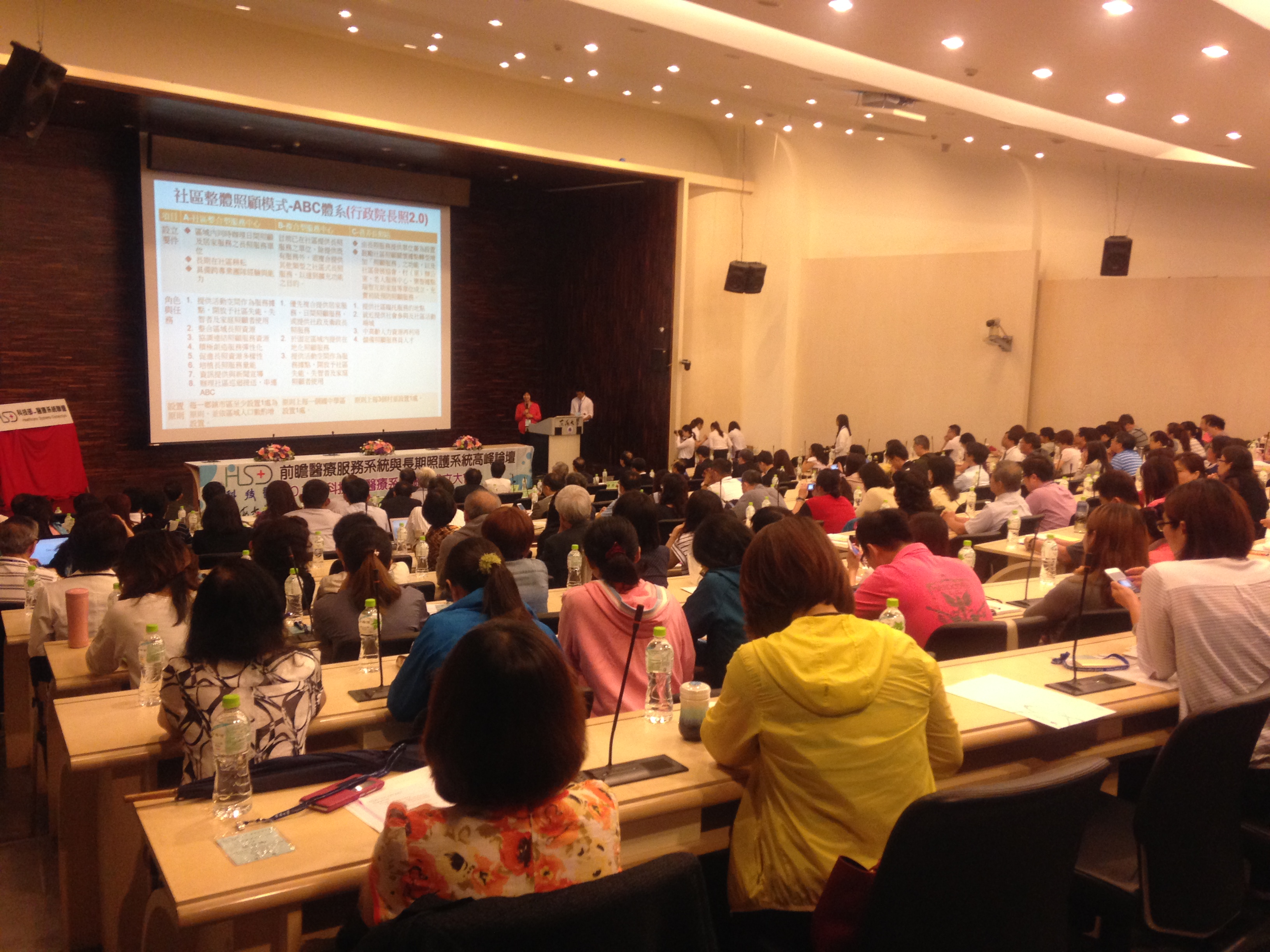
The Healthcare Systems Consortium was founded at Tunghai University on May 6, 2017. The Consortium is a cross-disciplinary medical industry-academia service team. At the same time, it held the "1st Summit Forum on Forward-Looking Healthcare Service Systems and Long-Term Care Systems", attended by 250 experts and scholars from government agencies, healthcare organizations, medical suppliers and academia, who discussed and shared trends in the development of long-term care in Taiwan and the improvement of healthcare systems.
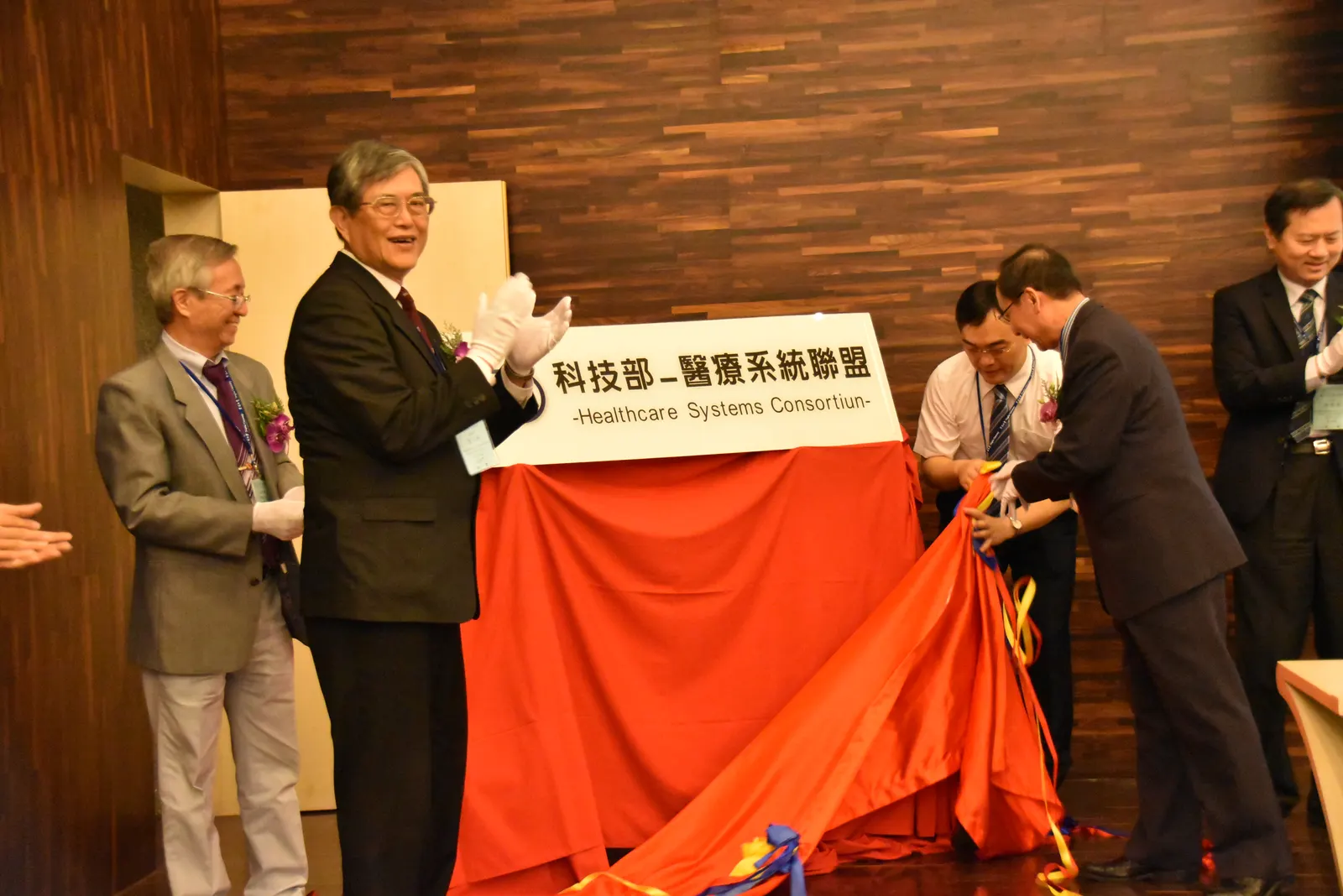
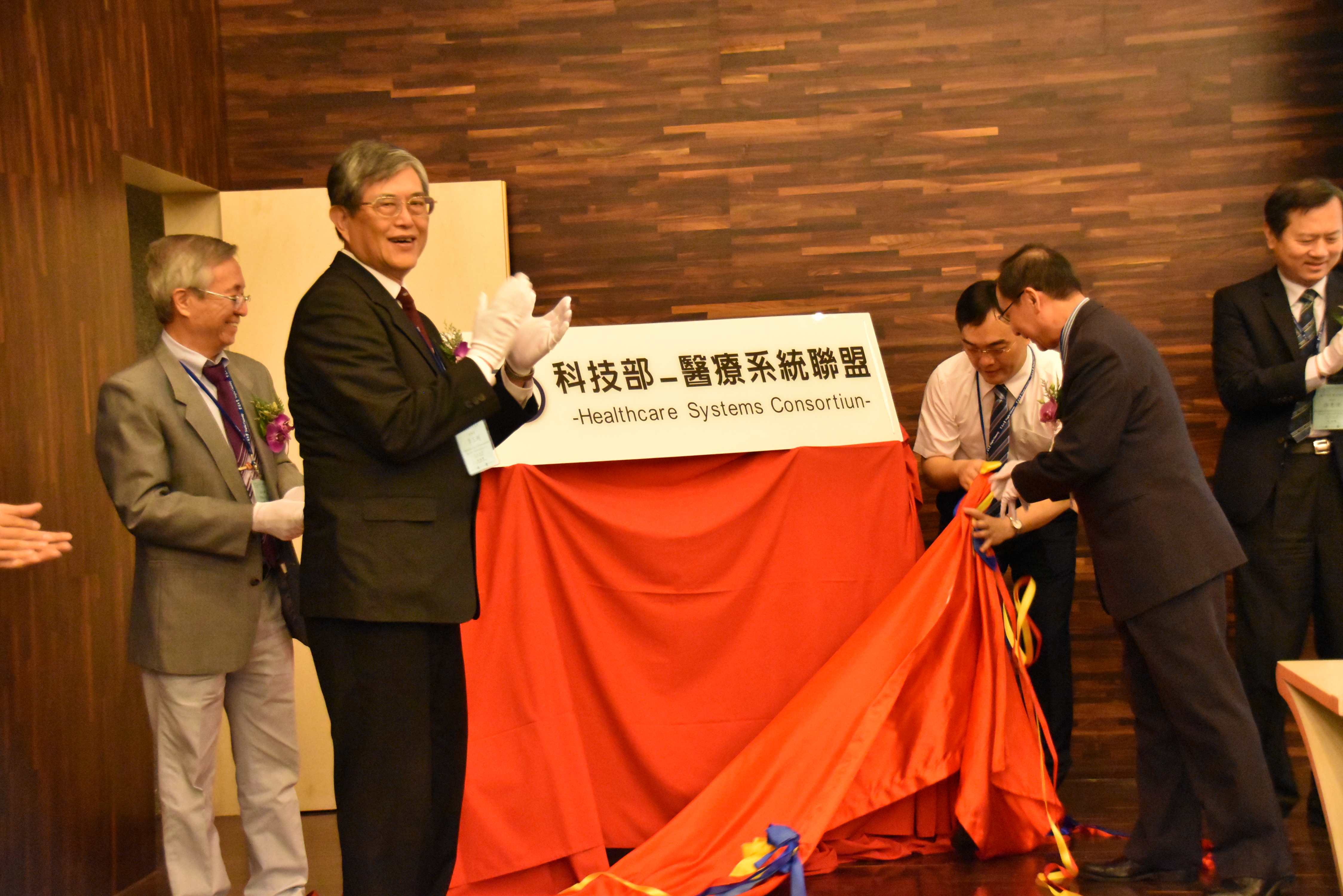
Vice Chairman Kuo-Ming Wang, Chairman San-Kan Lee, Vice Chairman Mao-Jiun Wang, and Superintendent 許惠恆 of Taichung Veterans General Hospital unveiling the plaque at the Consortium's founding (from left to right)Original image 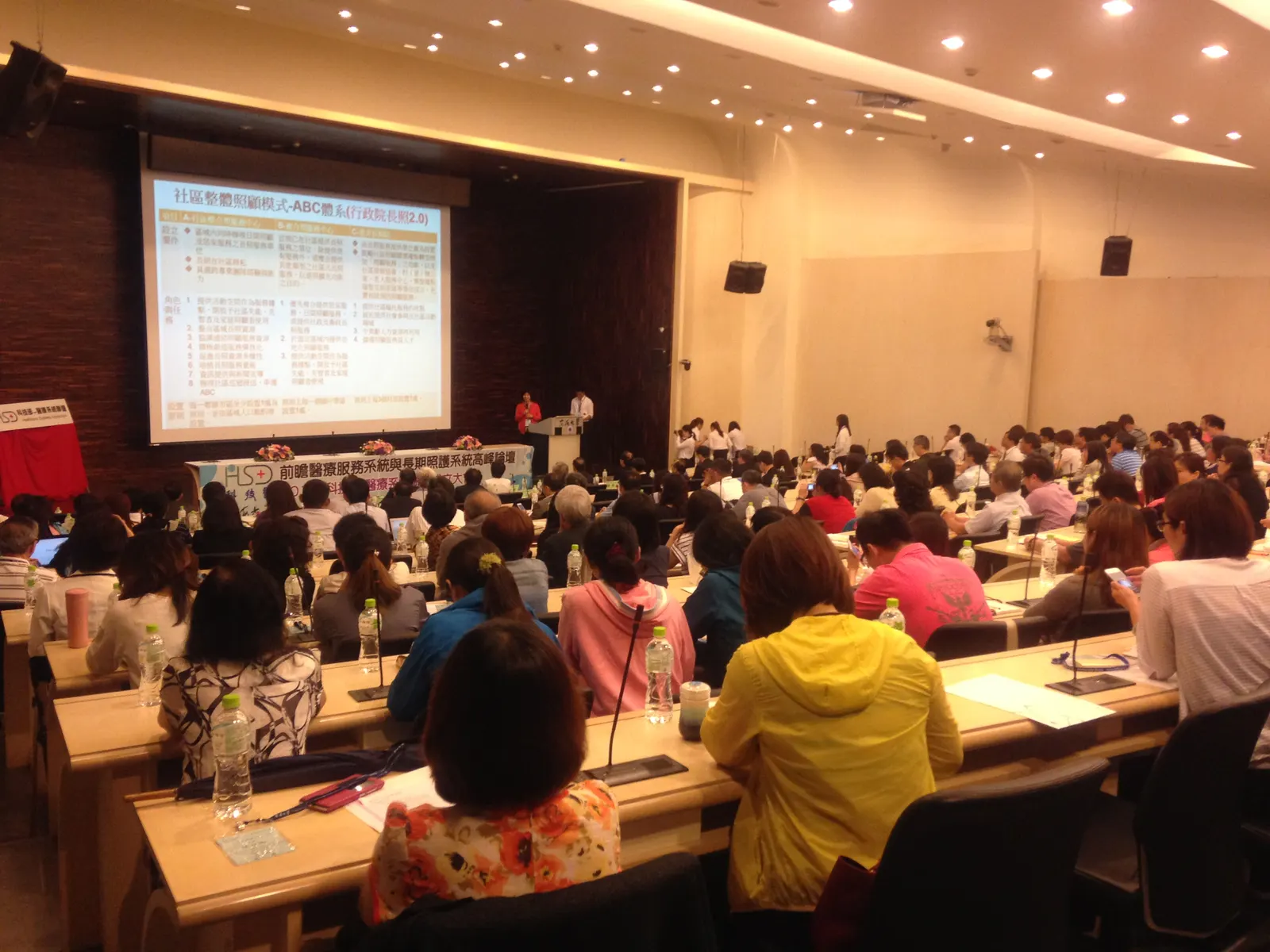
A scene from the meetingOriginal image
The Ministry of Science and Technology (MOST) Healthcare Systems Consortium is a cross-disciplinary medical industry-academia service team. It appointed Dr. San-Kan Lee, former Superintendent of Taichung Veterans General Hospital, as its first Chairman, with Tunghai University President Mao-Jiun Wang and Honorary Chair Professor Kuo-Ming Wang as Vice Chairmen. The Consortium's purpose is to examine hospital systems and patient needs, develop service products that meet the needs of patients, and emphasize advanced lean healthcare quality design, so as to improve healthcare quality management and advance the well-being of the national healthcare industry.
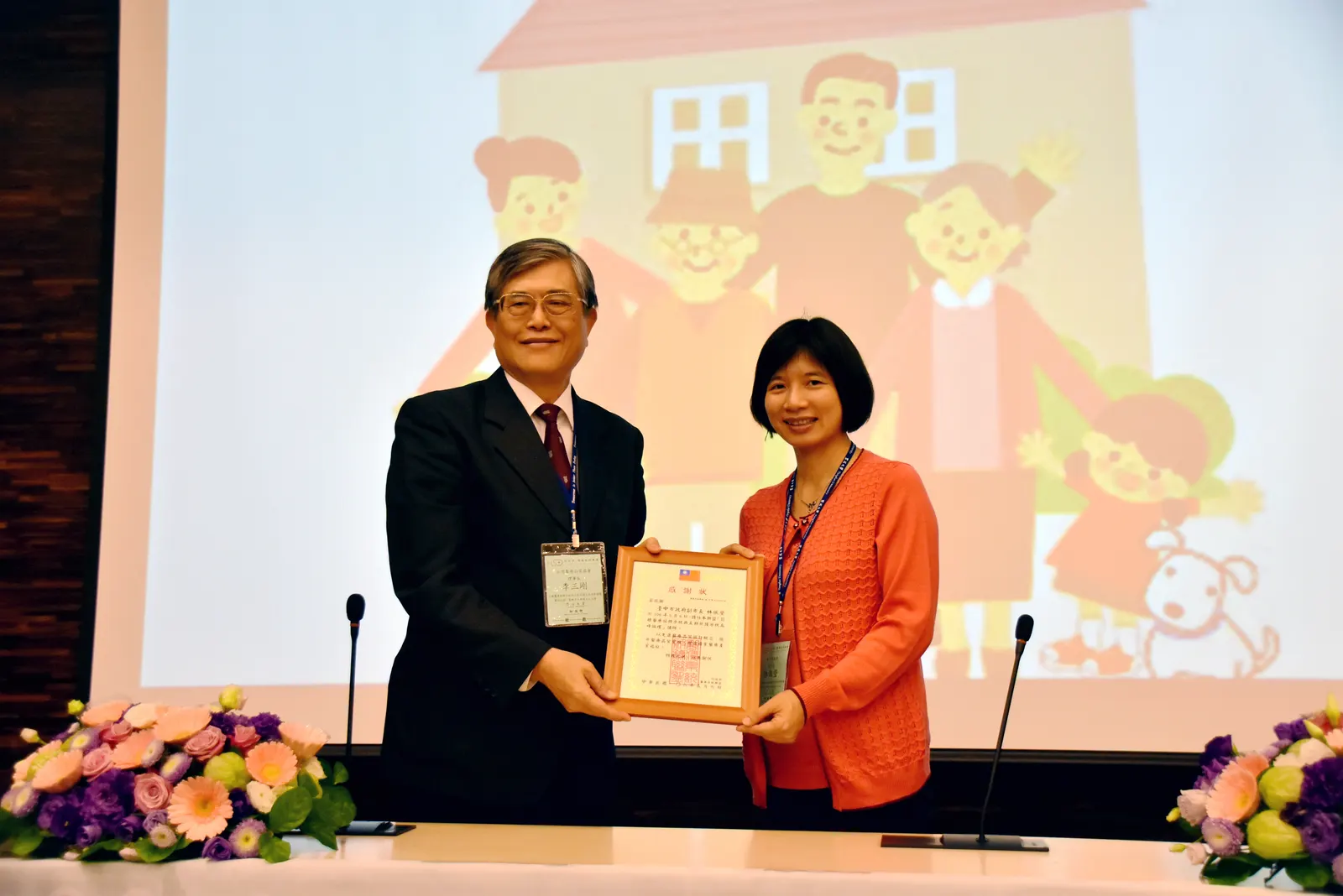
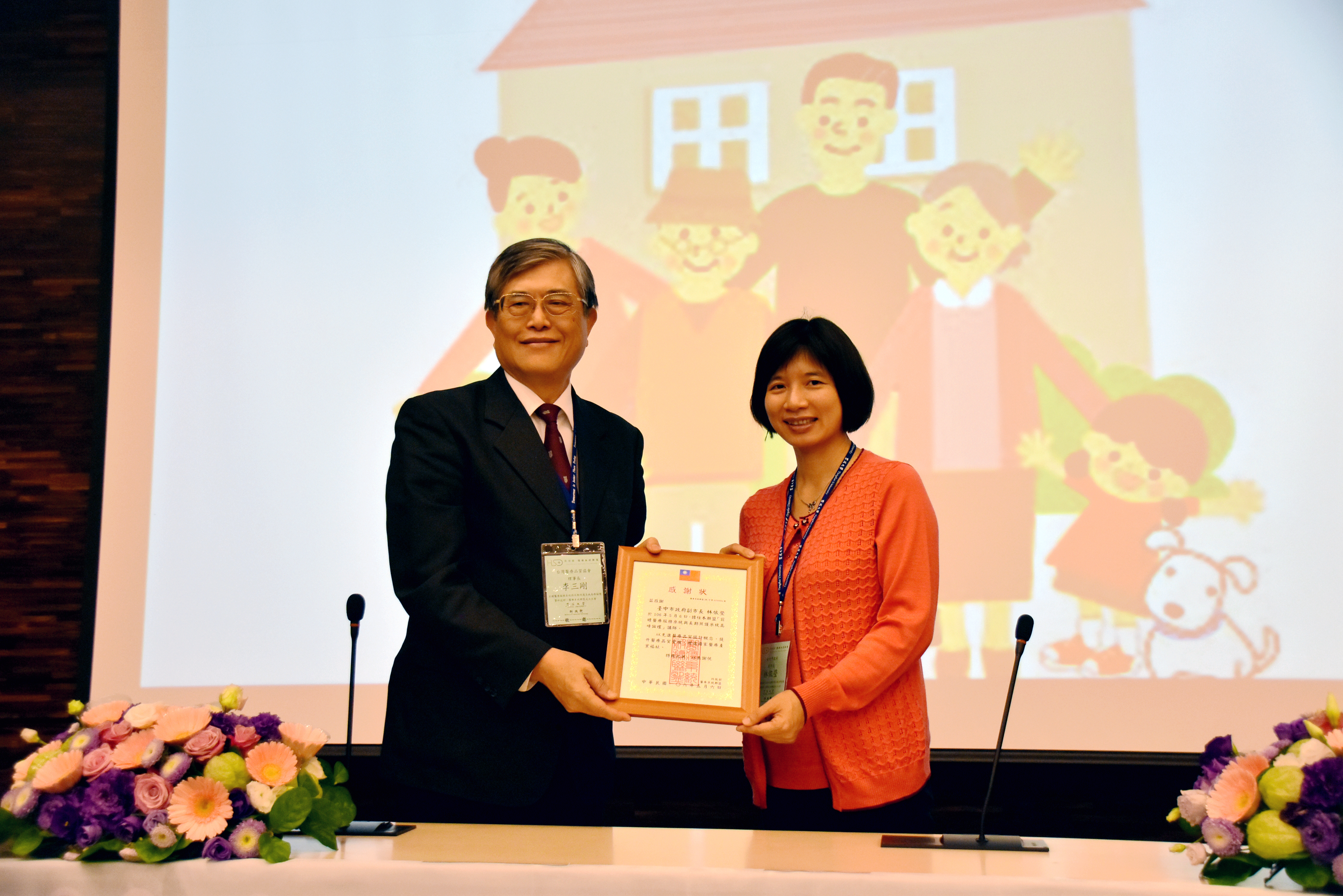
Taichung Deputy Mayor 林依瑩 presenting the letter of appointment to Chairman San-Kan Lee on behalf of the ConsortiumOriginal image 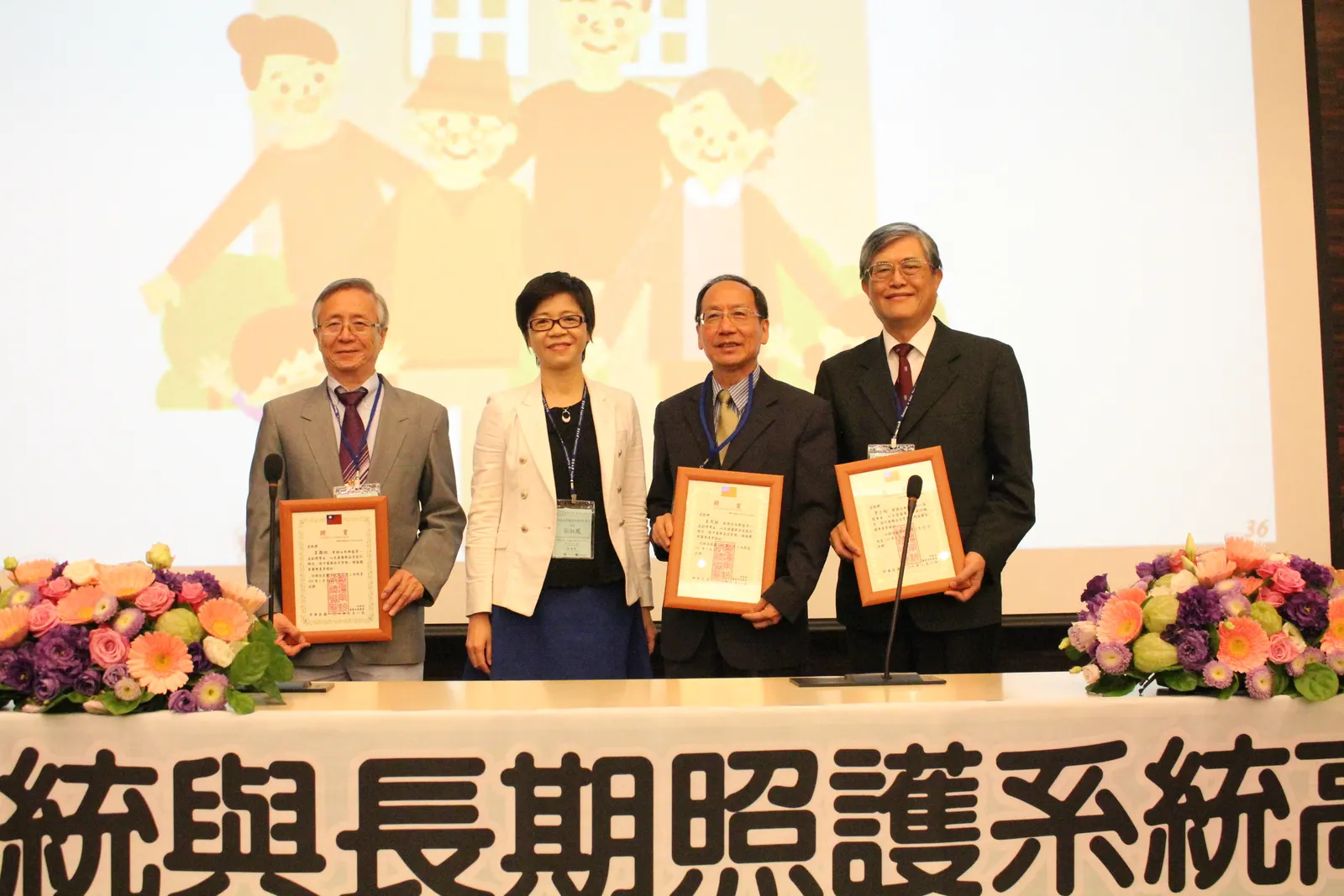
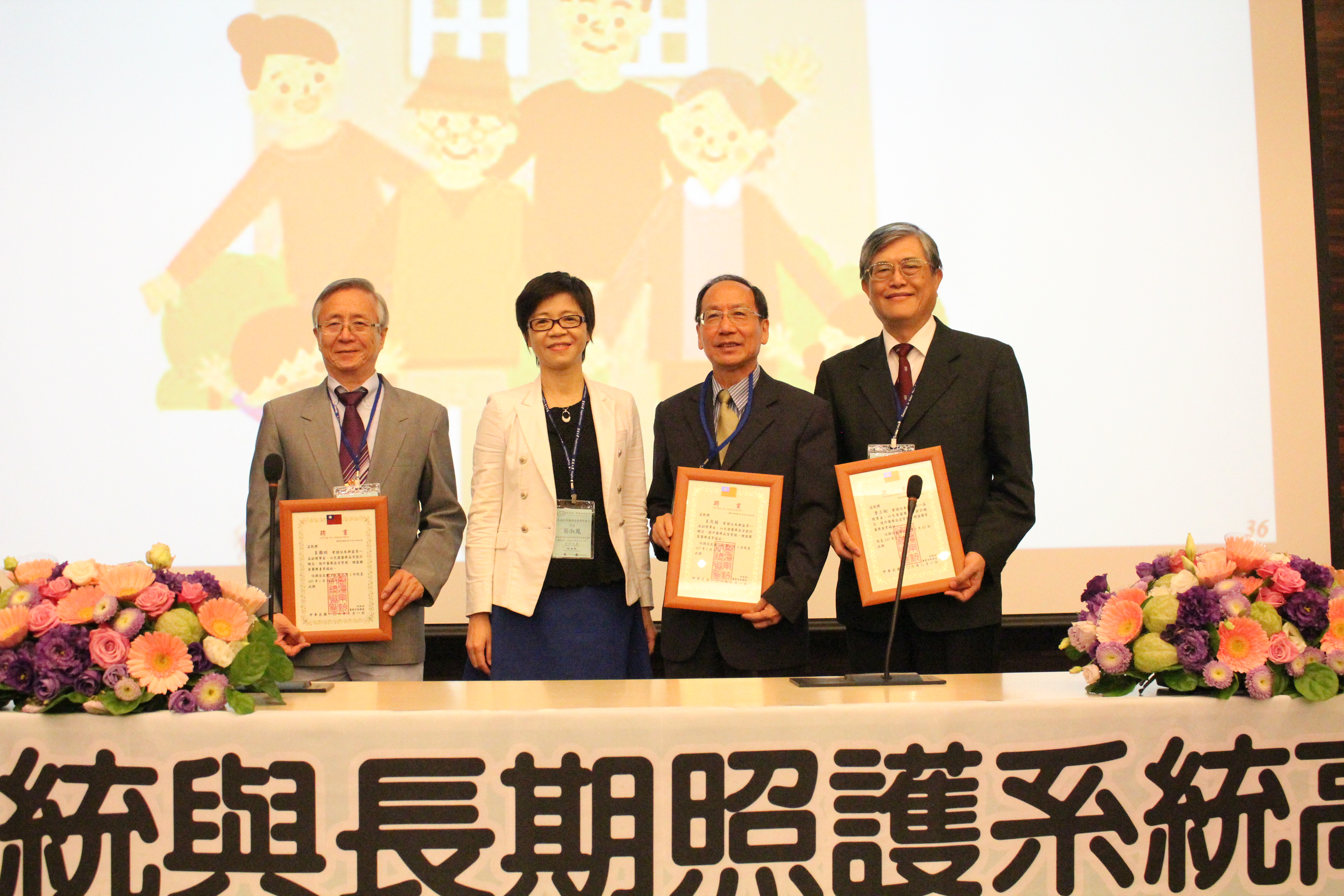
Director-General 蔡淑鳳 of the Department of Nursing and Health Care, Ministry of Health and Welfare, presenting letters of appointment to the Consortium's two Vice Chairmen on behalf of the Consortium, and posing for a photo with the ChairmanOriginal image
Tunghai University President Mao-Jiun Wang said that the university will in future combine senior living care and a senior university, developing the concept of a wellness village to engage in long-term care activities. In his address, Healthcare Systems Consortium Chairman San-Kan Lee said that the Consortium will provide high-quality management guidance to healthcare institutions in the future. Director-General 蔡淑鳳 of the Department of Nursing and Health Care, Ministry of Health and Welfare, said: "Taiwan will gradually become a super-aged society. The central government will take a complete and comprehensive view and make more thorough and appropriate plans for Taiwan's long-term care needs." Taichung Deputy Mayor 林依瑩 said that long-term care needs local talent, and encouraged and supported young people to take up the noble work of long-term care and find vision and value in it, so that long-term care capacity can take root in every district of Taichung.
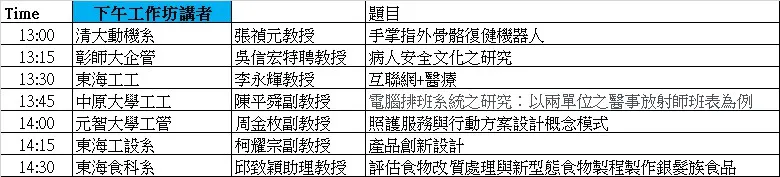
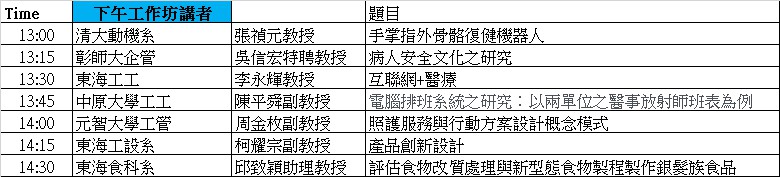
The meeting also held a "Medical Industry-Academia Cooperation Workshop" (see table below), inviting a number of experts and scholars to share their views on healthcare, long-term care and related issues, giving the physicians, nurses and long-term care workers in attendance access to multifaceted information. Participants rated the sessions very highly and expressed the hope that the Consortium would hold high-quality lectures every year to strengthen healthcare management capacity.
Original image 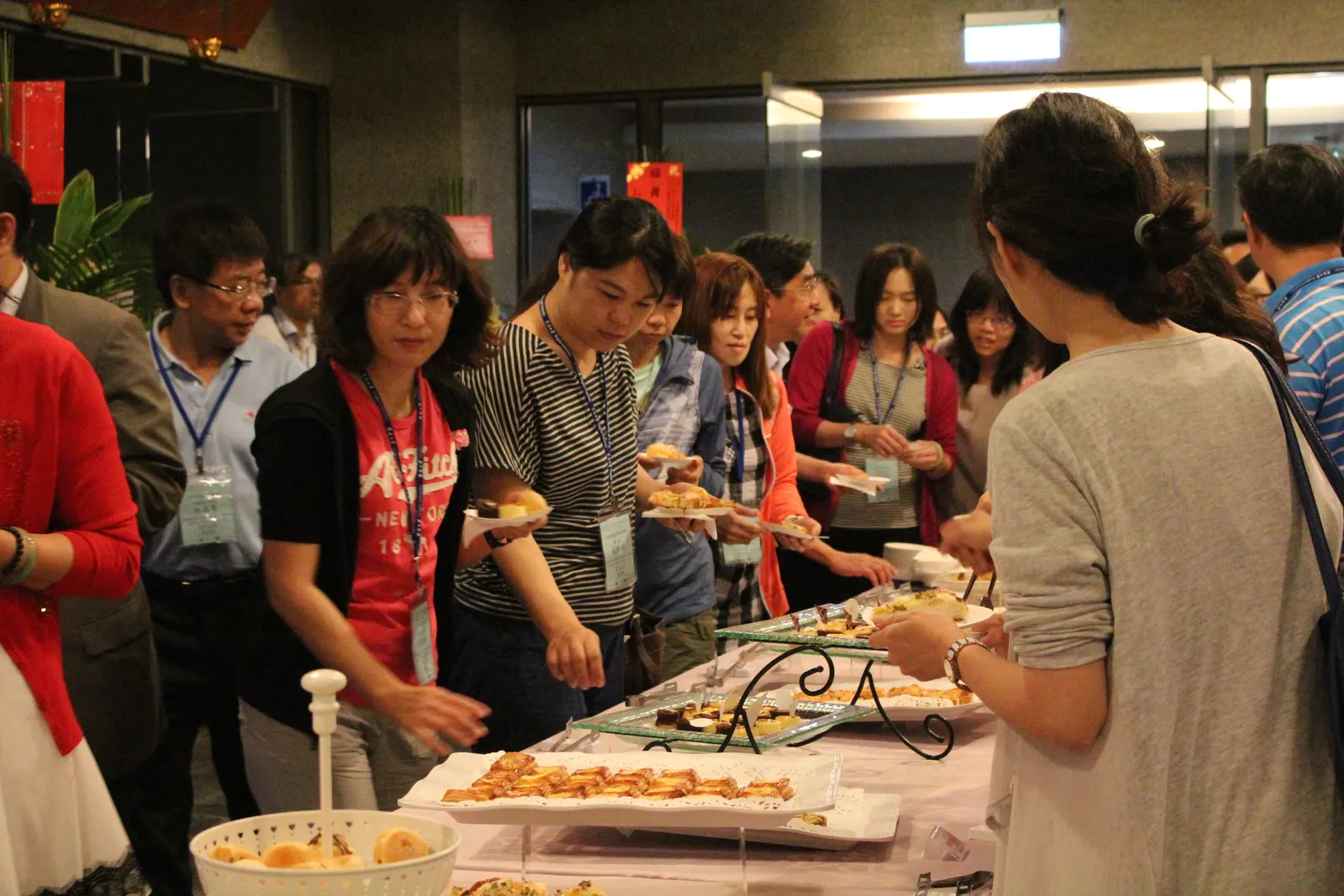
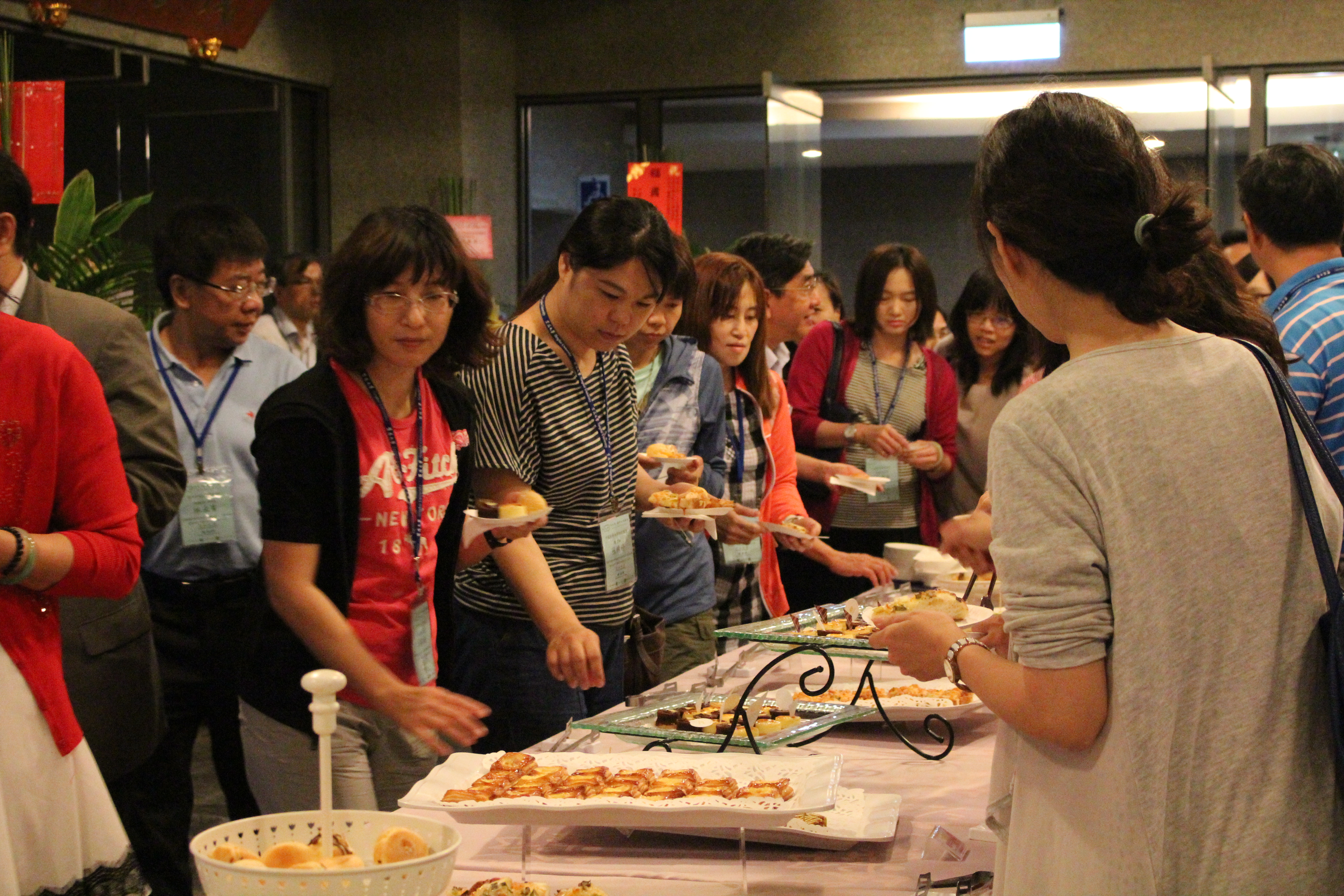
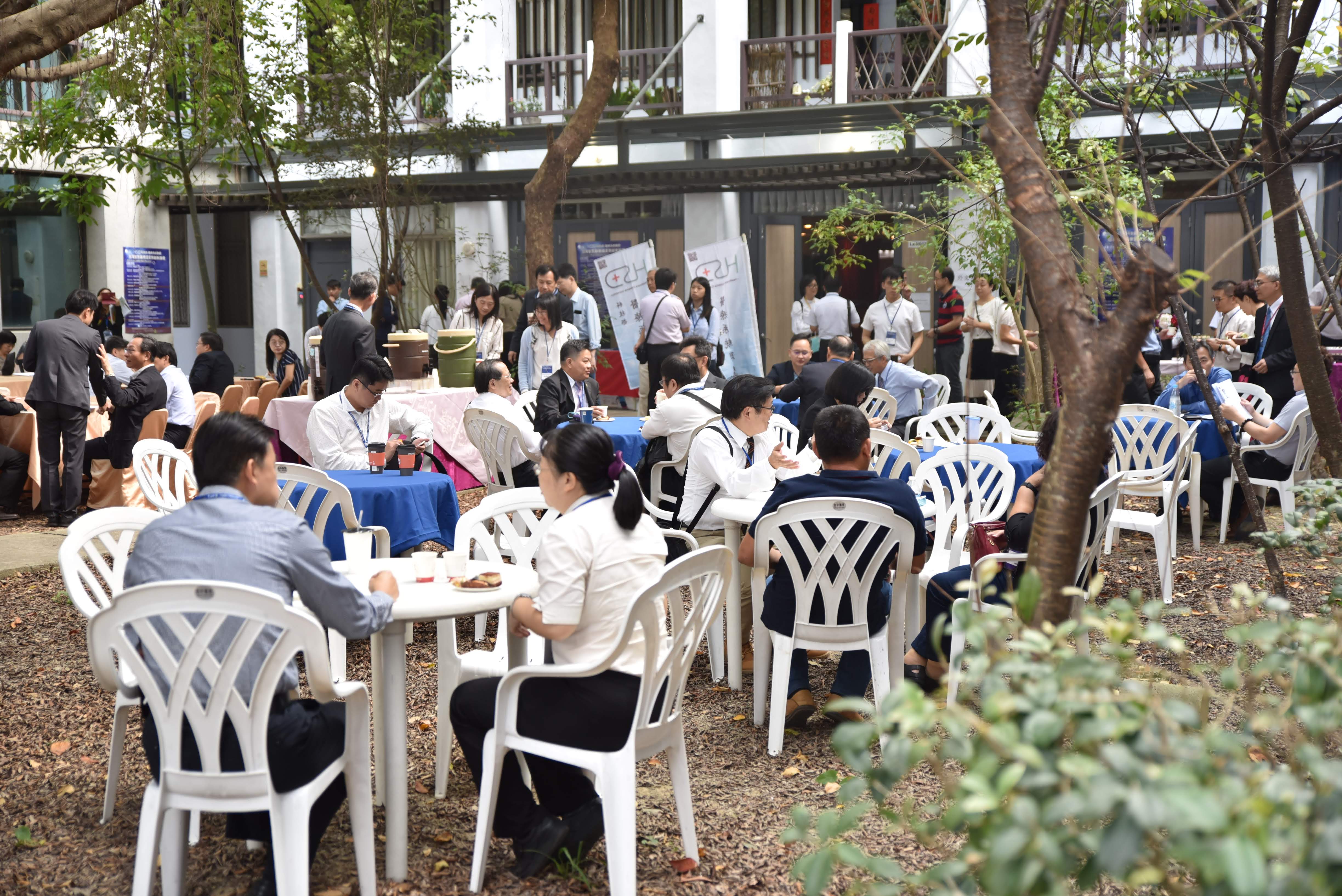
Tea reception and networking at the meetingOriginal image
In an innovation, the Consortium team also invited vendors of healthcare and long-term care products to set up booths at the meeting. A number of companies enthusiastically rented booths, including the Taiwan Healthcare Quality Association (臺灣醫療品質協會), the machinery company 康倍得機械股份有限公司, the computer information company 大鼎電腦資訊股份有限公司 and Sunlight Energy-Saving Technology Co., Ltd. (日光節能科技有限公司).
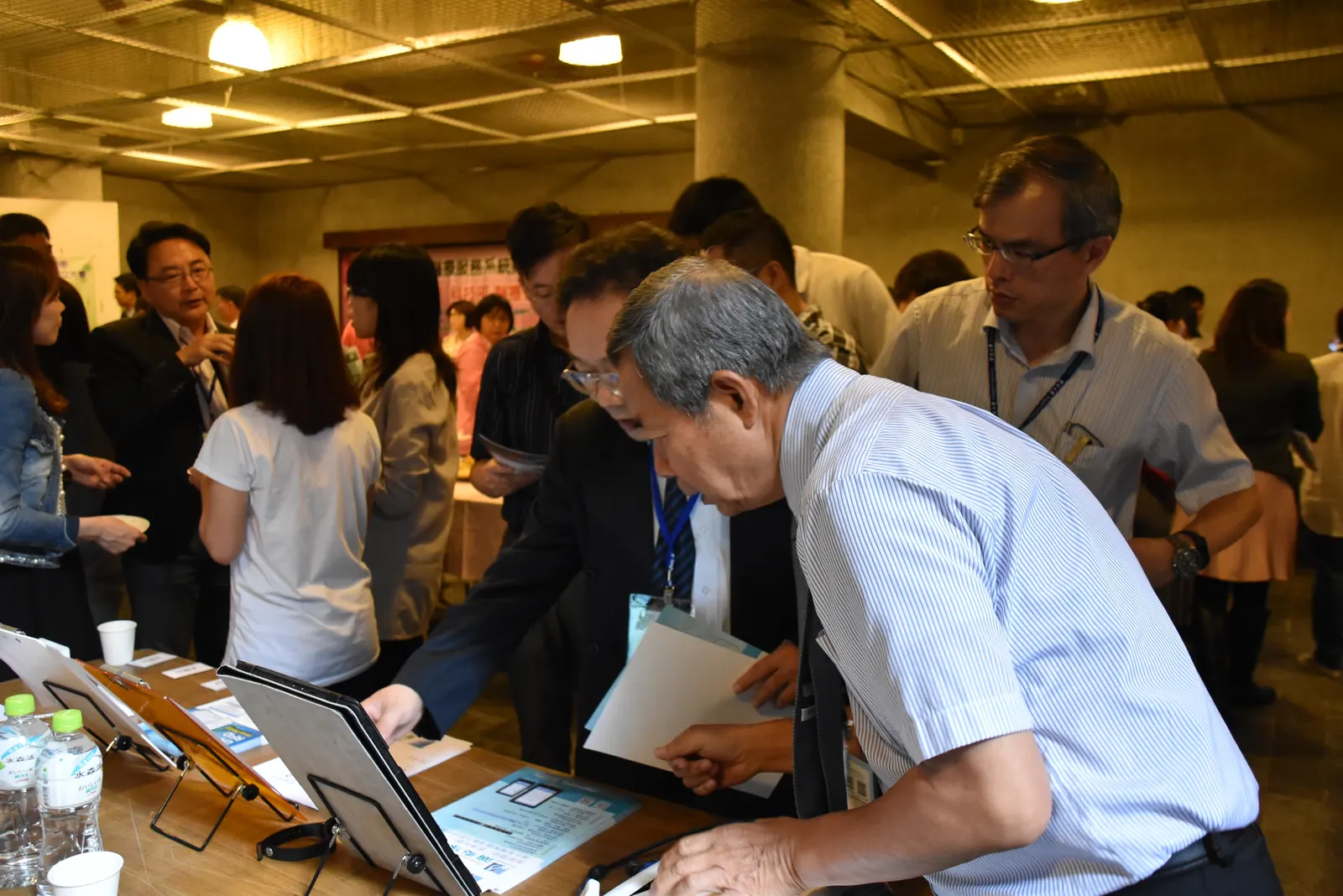
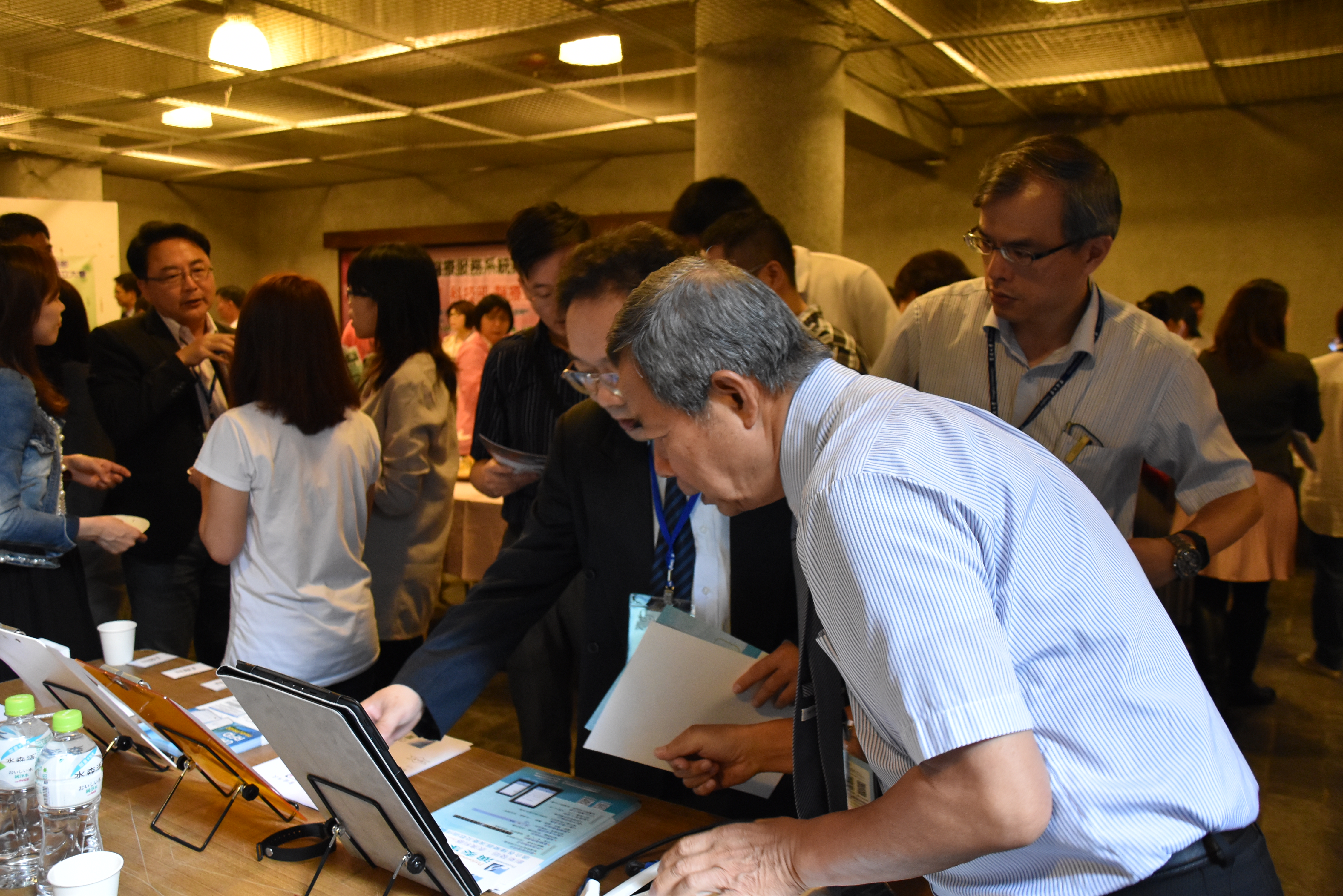
Deputy Superintendent Li-Min Wang of Chia-Yi Division, Taichung Veterans General Hospital, visiting the booth of 大鼎電腦資訊股份有限公司Original image 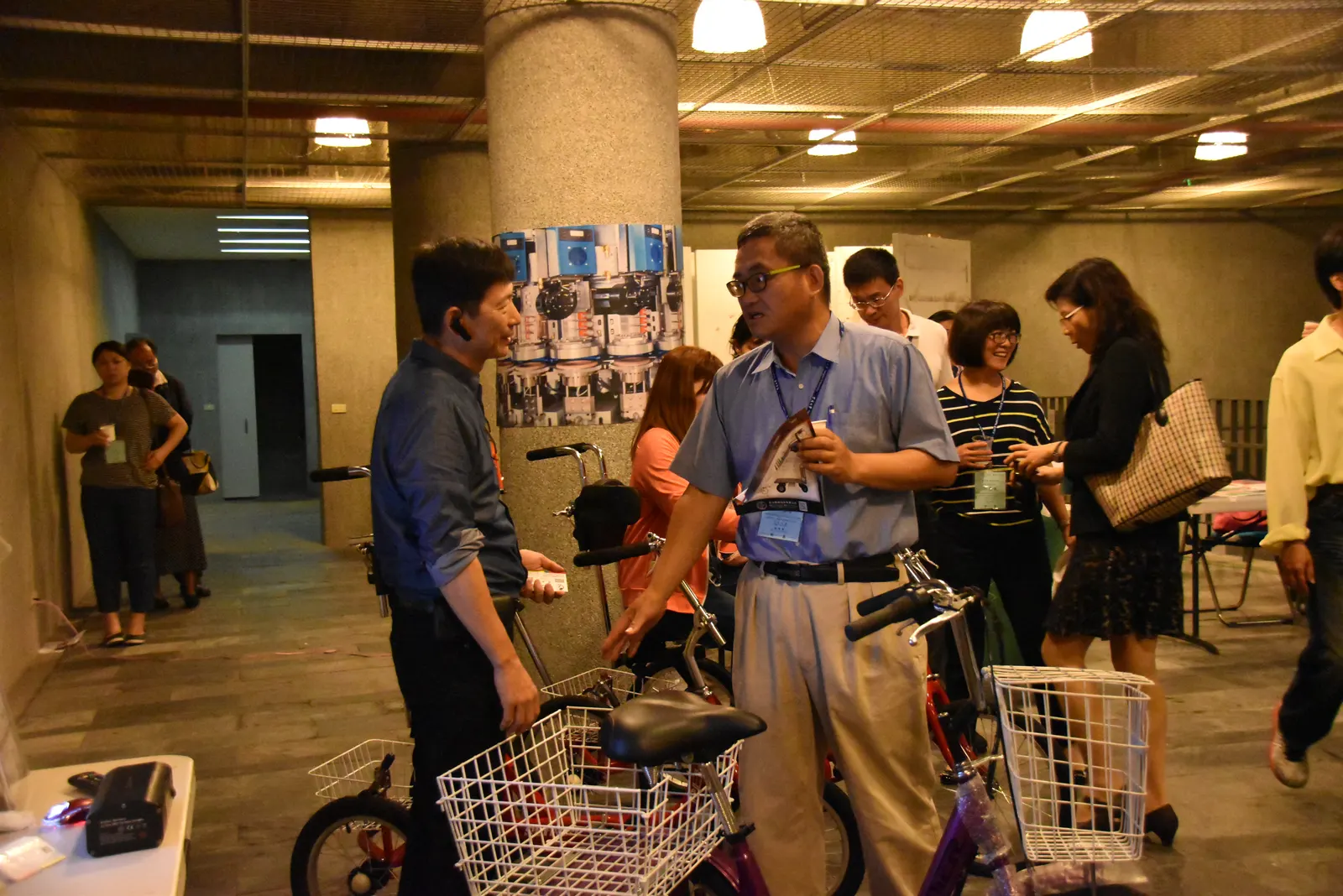
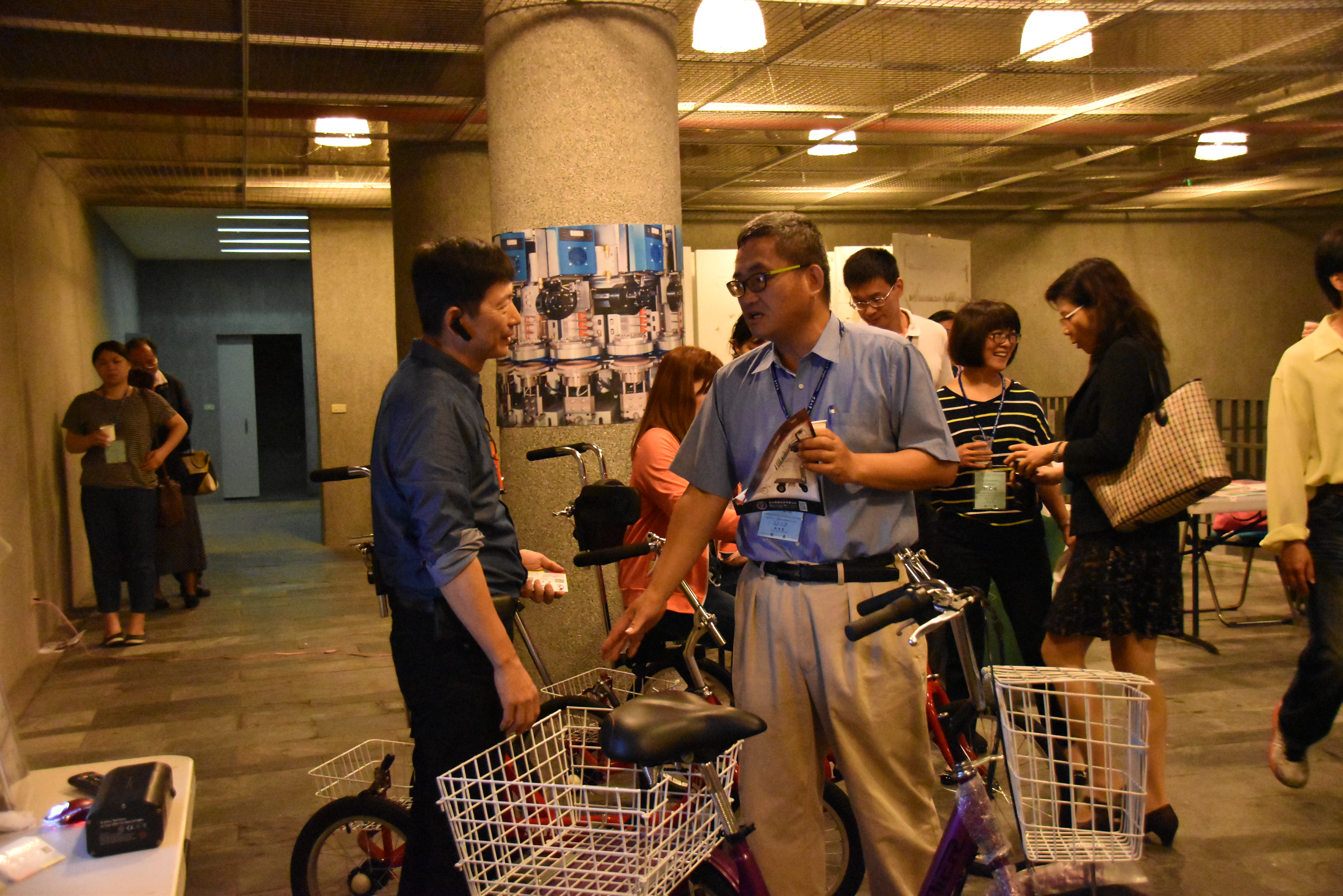
Industry representatives visiting the Sunlight Energy-Saving Technology Co., Ltd. boothOriginal image
In 2017, the Ministry of Science and Technology's Production and Technology Alliance Cooperation Program awarded funding to Tunghai University. Program director Shao-Jen Weng of the Department of Industrial Engineering and Enterprise Information explained that the organization is a cross-disciplinary alliance (industrial engineering, computer science, business administration, mechatronics and medicine), positioned to promote core technologies and to interact and match with the medical sector, so that Consortium members can upgrade their technology and build capabilities for service innovation and development, creating excellent healthcare service quality. It provides a platform for industry to get to know the medical sector and actively invites local governments to explain future healthcare-related policies, so that through their participation Consortium members gain more interaction and business service opportunities with the medical sector, reducing communication barriers in both directions; and, in line with government regulations, it matches hospitals and companies to jointly develop healthcare products or services that meet real needs.
First Annual General Meeting
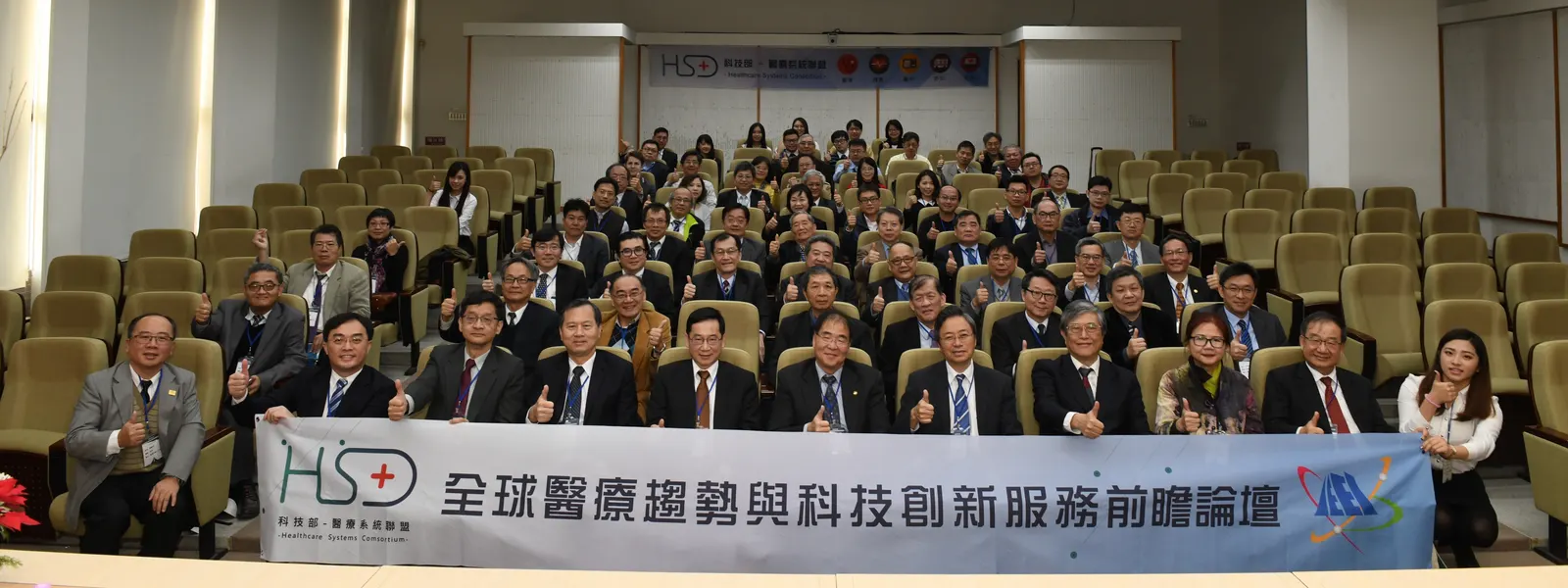
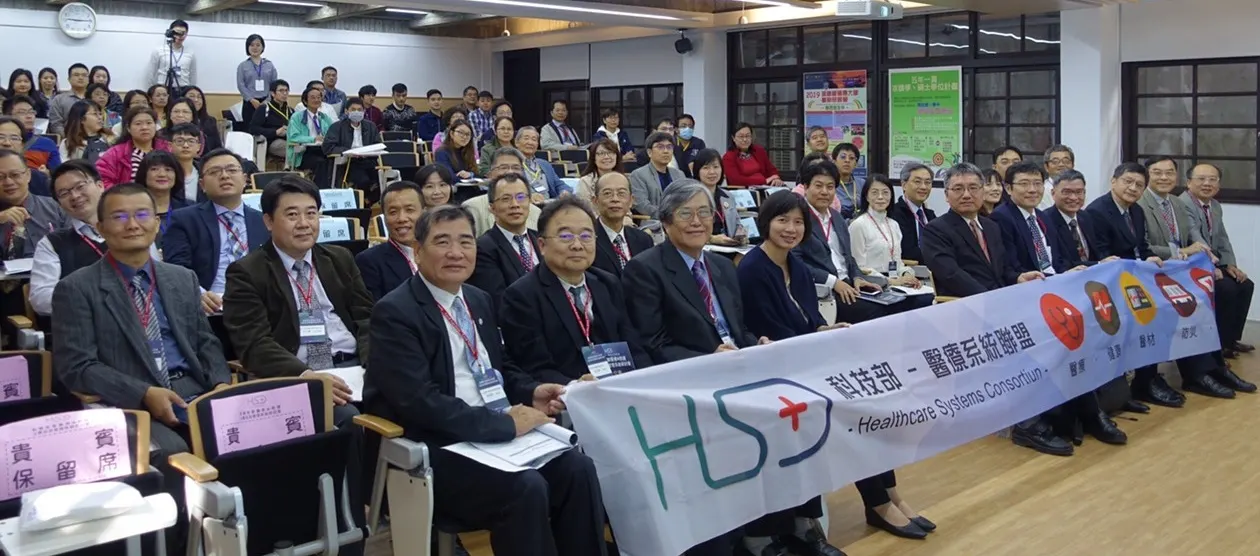
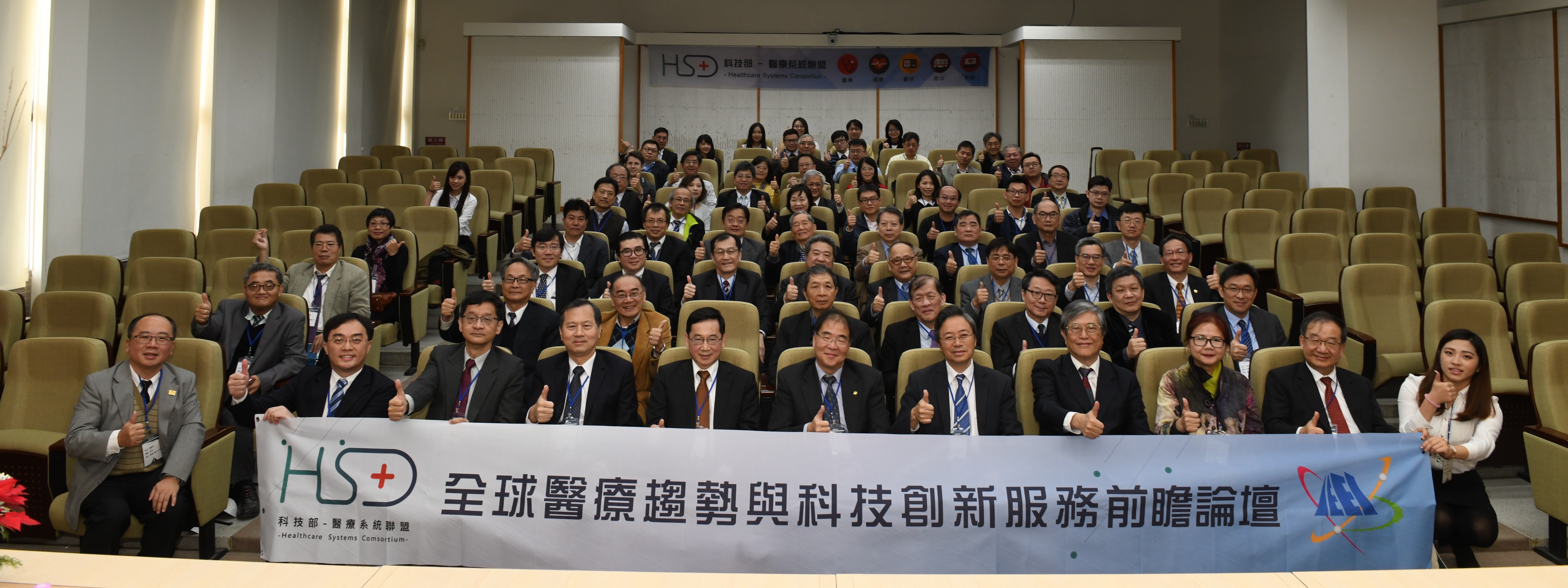
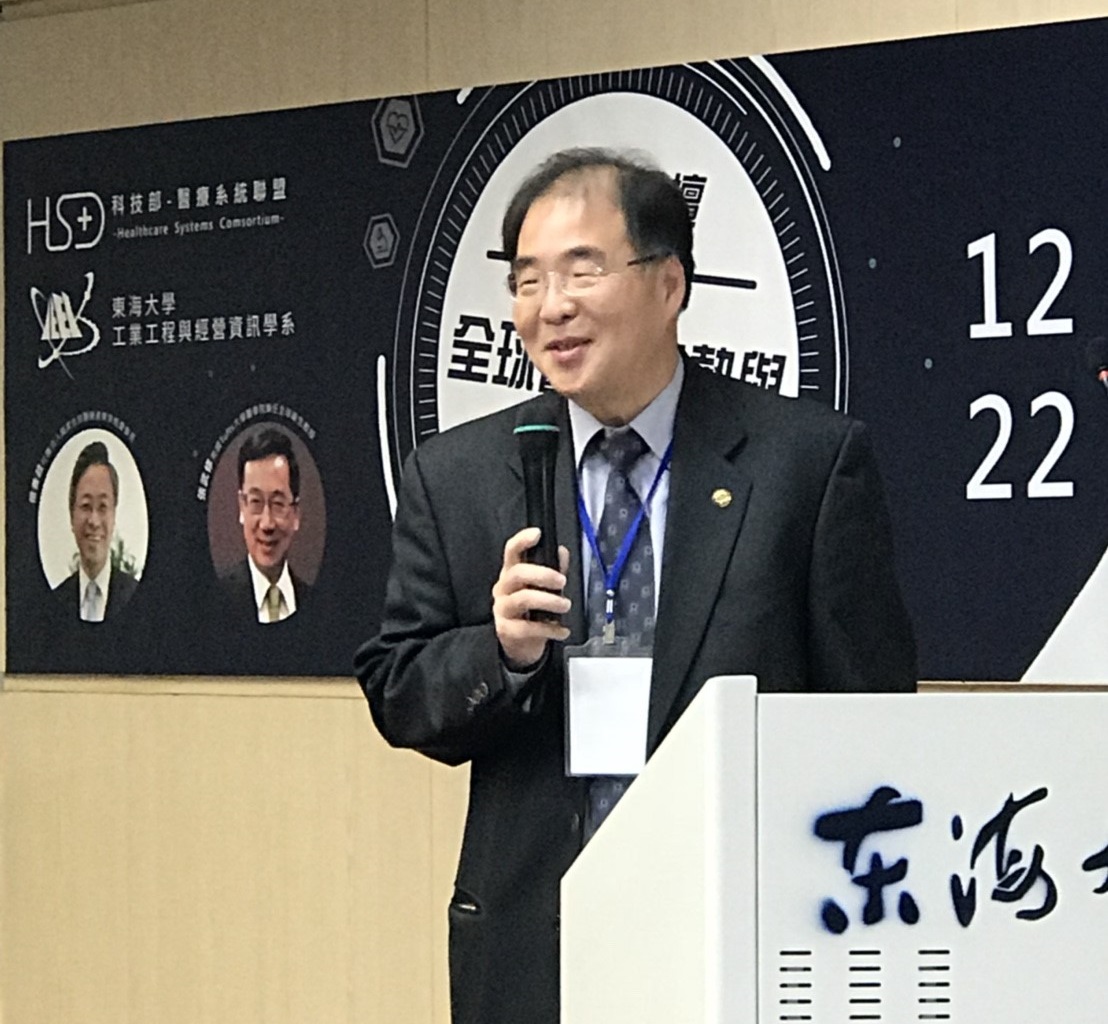
Tunghai University's Healthcare Systems Consortium is a cross-disciplinary medical industry-academia service team. To promote knowledge exchange among healthcare organizations, medical equipment suppliers and academia, to brainstorm future healthcare service activities and analyze future healthcare service trends, to raise the quality and competitiveness of Taiwan's healthcare, and to prepare in advance for service models that may arise in the future, the Consortium held the "Forward-Looking Forum on Global Healthcare Trends and Innovative Technology Services" today (December 22, 2017). At the forum, the Consortium invited former Premier 張善政 and 張武修, visiting professor at Tufts University School of Medicine, to deliver keynote speeches.
The meeting opened with an introduction by Tunghai University Vice President 王立志, who said that healthcare-related issues are a theme Tunghai is actively pursuing and developing. Examples such as the Executive Master of Healthcare Engineering and Management (EMHA) program in the Department of Industrial Engineering, and the university social responsibility initiatives the university is actively promoting, show Tunghai's concern for and emphasis on healthcare issues. The university is actively strengthening links between its research and industry, and hopes to make more industry-academia contributions to society and to students in the future.
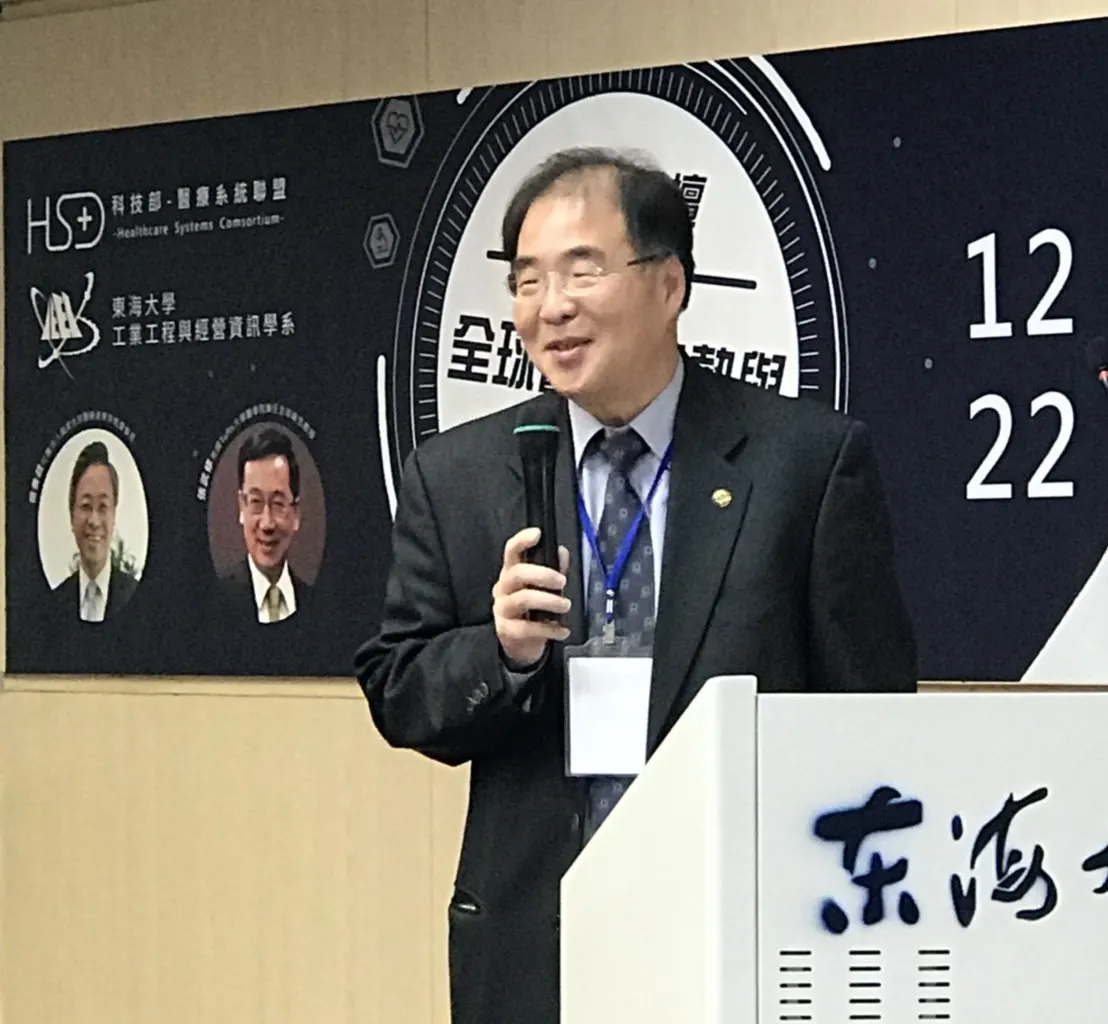
Address by Tunghai University Vice President 王立志Original image
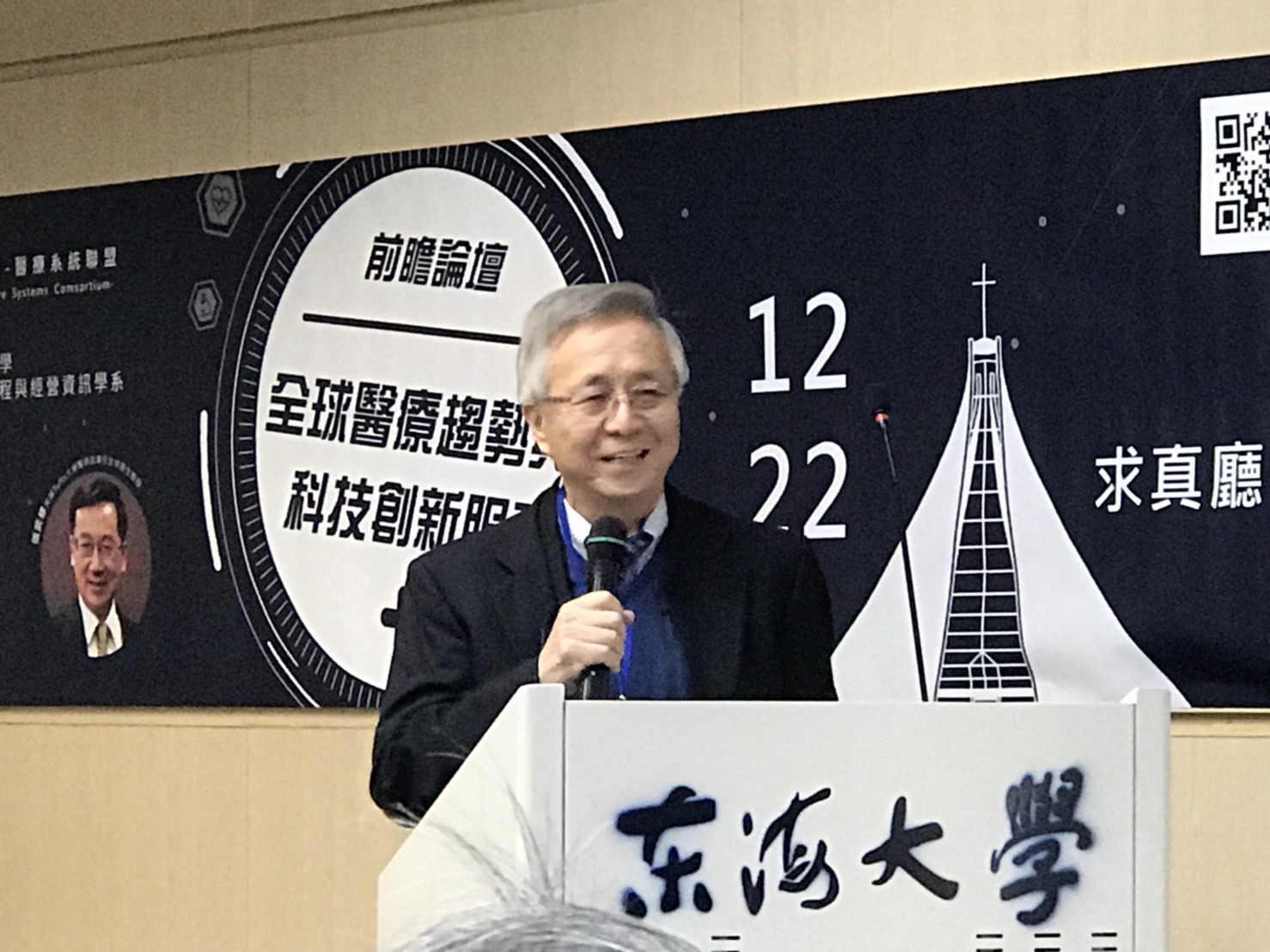
Consortium Vice Chairman Kuo-Ming Wang then said in his address that healthcare and elderly issues are now very important, and that combining medical technology to effectively solve the problems arising from population ageing is one of the most important tasks at present. He hoped that in the future everyone could work collectively on the ageing issues of Taiwan and all humanity for the benefit of society.
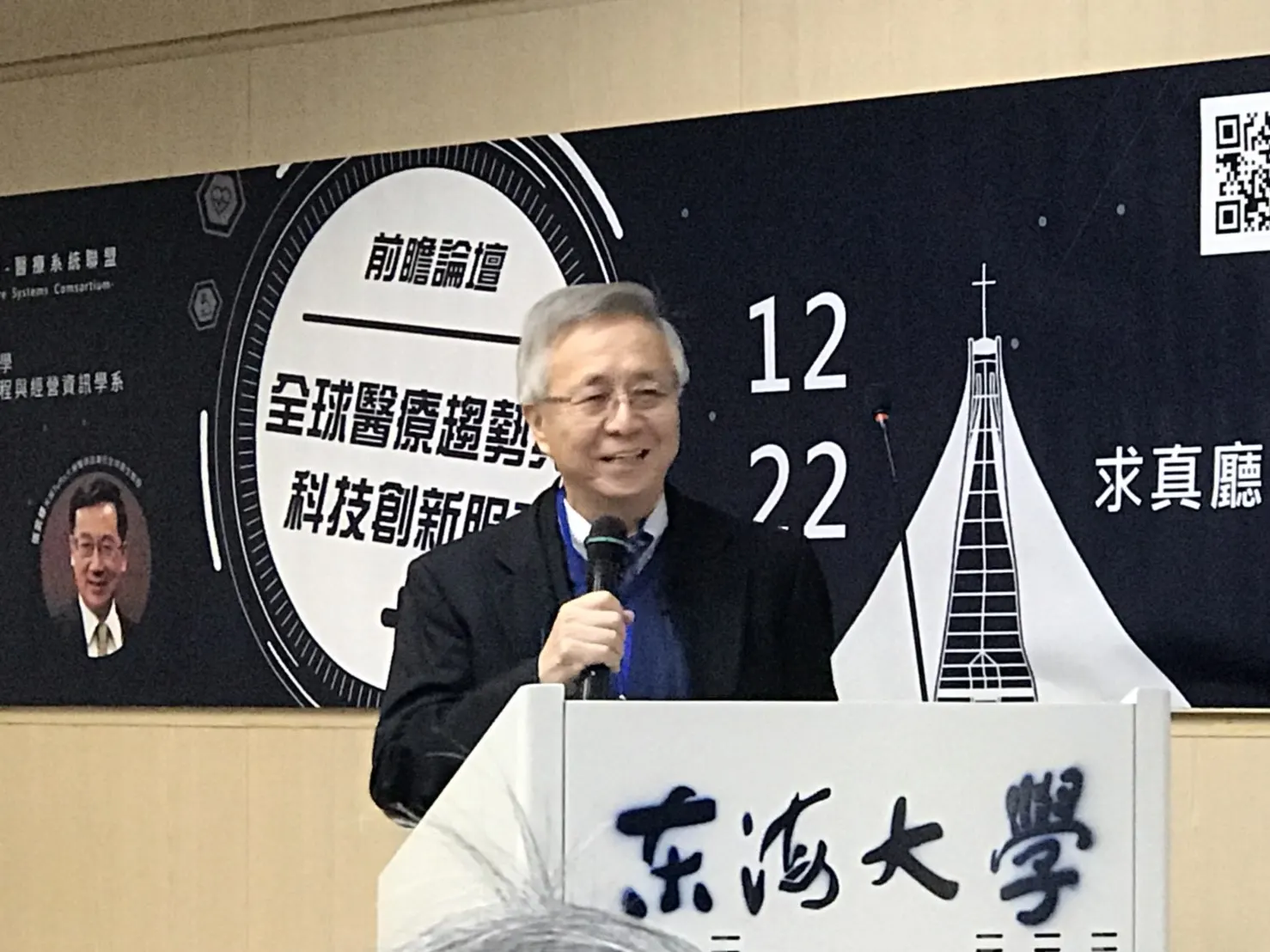
Address by Consortium Vice Chairman Kuo-Ming WangOriginal image
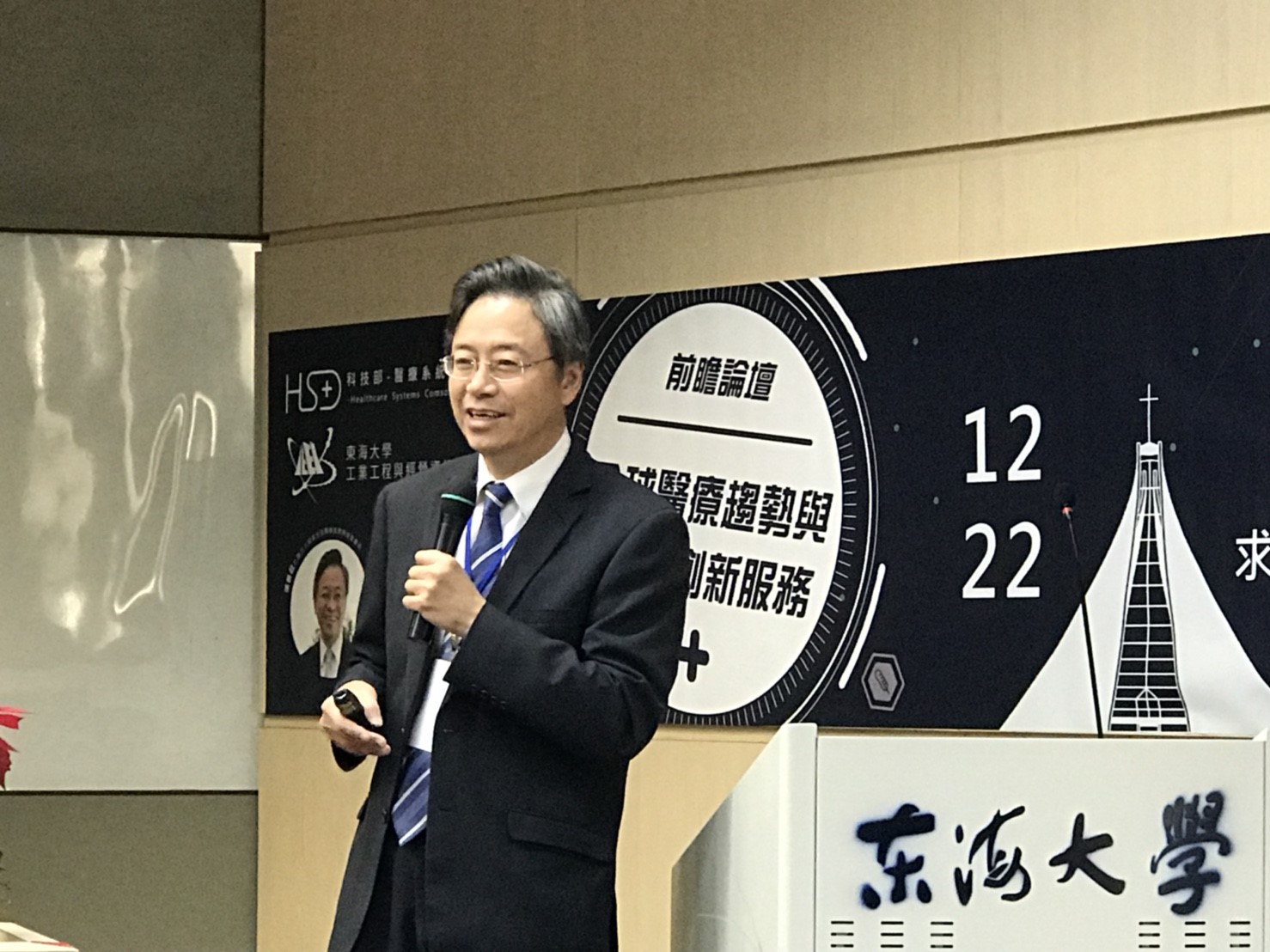
At the meeting, former Premier 張善政 explained to the experts and scholars the innovative healthcare services now being created by technology. He considers the power of artificial intelligence to be a kind of replication engineering that can quickly copy individual intelligence at scale. His talk covered business development cases of artificial intelligence, bottlenecks in AI in healthcare, commercial applications of wearable devices, and market trends in genetic testing. He interacted lively with the experts and scholars, and participants gained a great deal. 張武修, visiting professor at Tufts University School of Medicine, described global healthcare development trends. He believes that countries in Southeast Asia and Africa, where healthcare demand is high but practitioners are few, represent an opportunity for Taiwan's healthcare industry; however, because of cultural barriers, it is not easy for Taiwan's healthcare industry to enter Southeast Asia. He suggested that the Taiwanese medical community could start by establishing medical schools in Southeast Asia or serving as consultants to local hospitals there, gradually entering the Southeast Asian healthcare market.
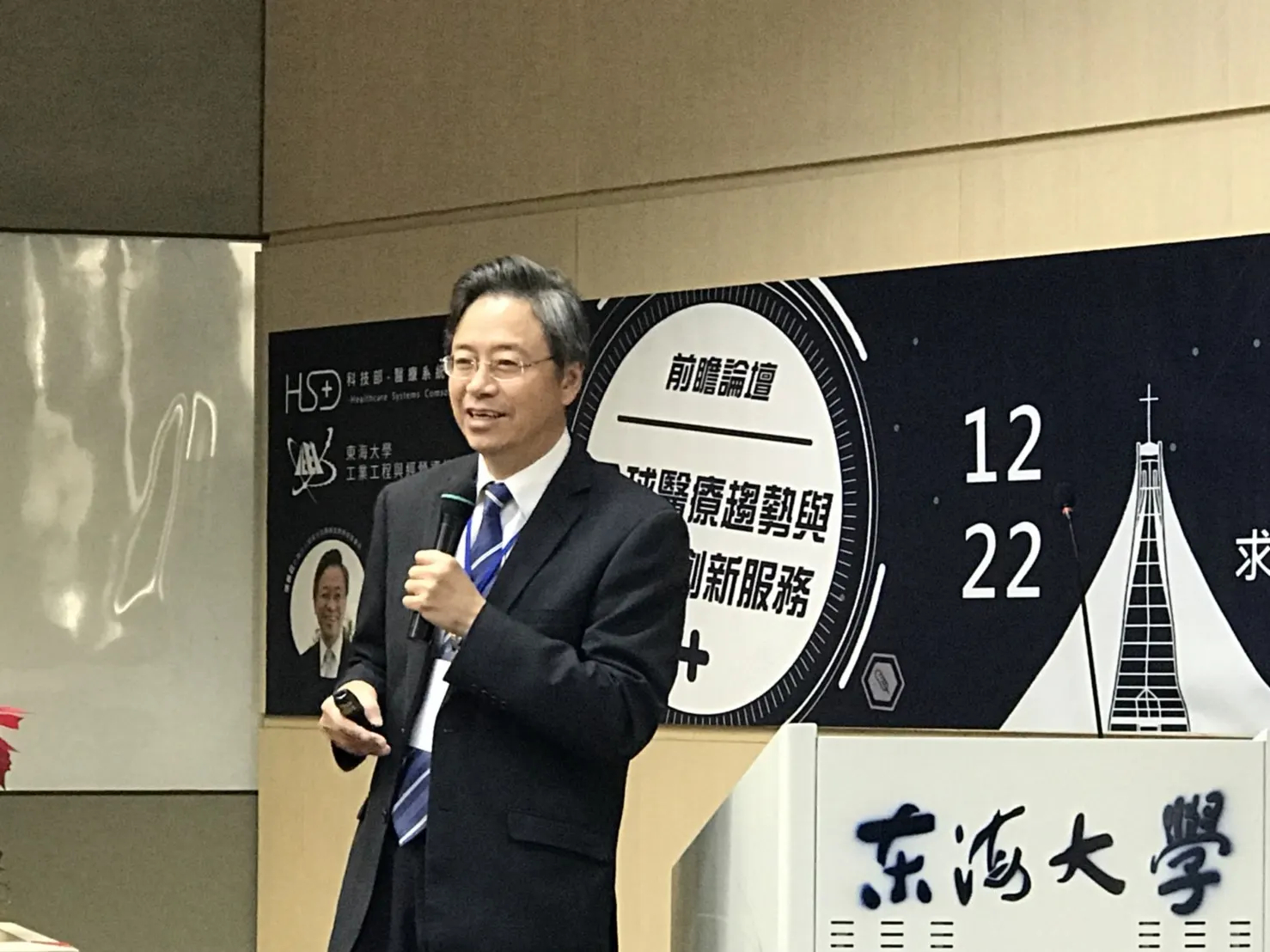
Keynote speech by former Premier 張善政Original image
To effectively promote exchange among industry, government and academia in the healthcare field, and to analyze future healthcare service activities and trends to help major hospitals plan their future medical technology development, the distinguished guests at this meeting included Director-General 呂宗學 and Deputy Director-General 陳南松 of the Taichung City Government Public Health Bureau, and supervising physician 陳治圩 of the Taichung City Fire Bureau, who attended to offer guidance. From the medical sector, the Consortium invited more than ten hospital superintendents from Taiwan's major hospitals (Ming-Che Tsai of the College of Medicine, Chung Shan Medical University, 許惠恒 of Taichung Veterans General Hospital, 王智弘 of the Taichung Armed Forces General Hospital, 鍾元強 of Cheng Ching Hospital Chung Kang Branch, and 周德陽 of China Medical University Hospital, among others) and more than twenty frontline healthcare managers from hospitals across Taiwan. From industry, more than ten companies confirmed attendance, including Chairwoman 林淑惠 of the biotechnology company 萬寶祿生物科技, Chairman 董鴻楠 of 康倍得機械股份有限公司, and Chairman 張光永 of New Energy Optoelectronics (新能光電). From academia, more than ten professors were invited, including Dean 魏正毅 of the University of Maryland, Tunghai University Vice President 王立志, and Distinguished Professor Hsin-Hung Wu of National Changhua University of Education. Together they discussed Taiwan's future healthcare service activities, analyzed future healthcare service trends, and drew up possible industry-government-academia cooperation plans for developing future healthcare service technologies and activities, covering topics such as AI in healthcare, telemedicine, healthcare automation and health fitness.
Second Annual General Meeting
In the new era of smart healthcare, using artificial intelligence and big data to improve healthcare and long-term care services has become the top priority of Taiwan's healthcare industry. Founded by Tunghai University in 2017, the cross-disciplinary "MOST Healthcare Systems Consortium", supported by the Industry-University Cooperation Alliance program of the Department of Academia-Industry Collaboration and Science Park Affairs of the Ministry of Science and Technology, provides a new platform for exchange and cooperation among industry, government, academia and the medical sector, fostering the emergence of smart healthcare as a new blue ocean and serving as a channel for Taiwan's high-quality healthcare services to go international. Consortium program director Associate Professor Shao-Jen Weng hopes the Consortium can bring new opportunities to Taiwan's smart healthcare, long-term care systems and international healthcare.
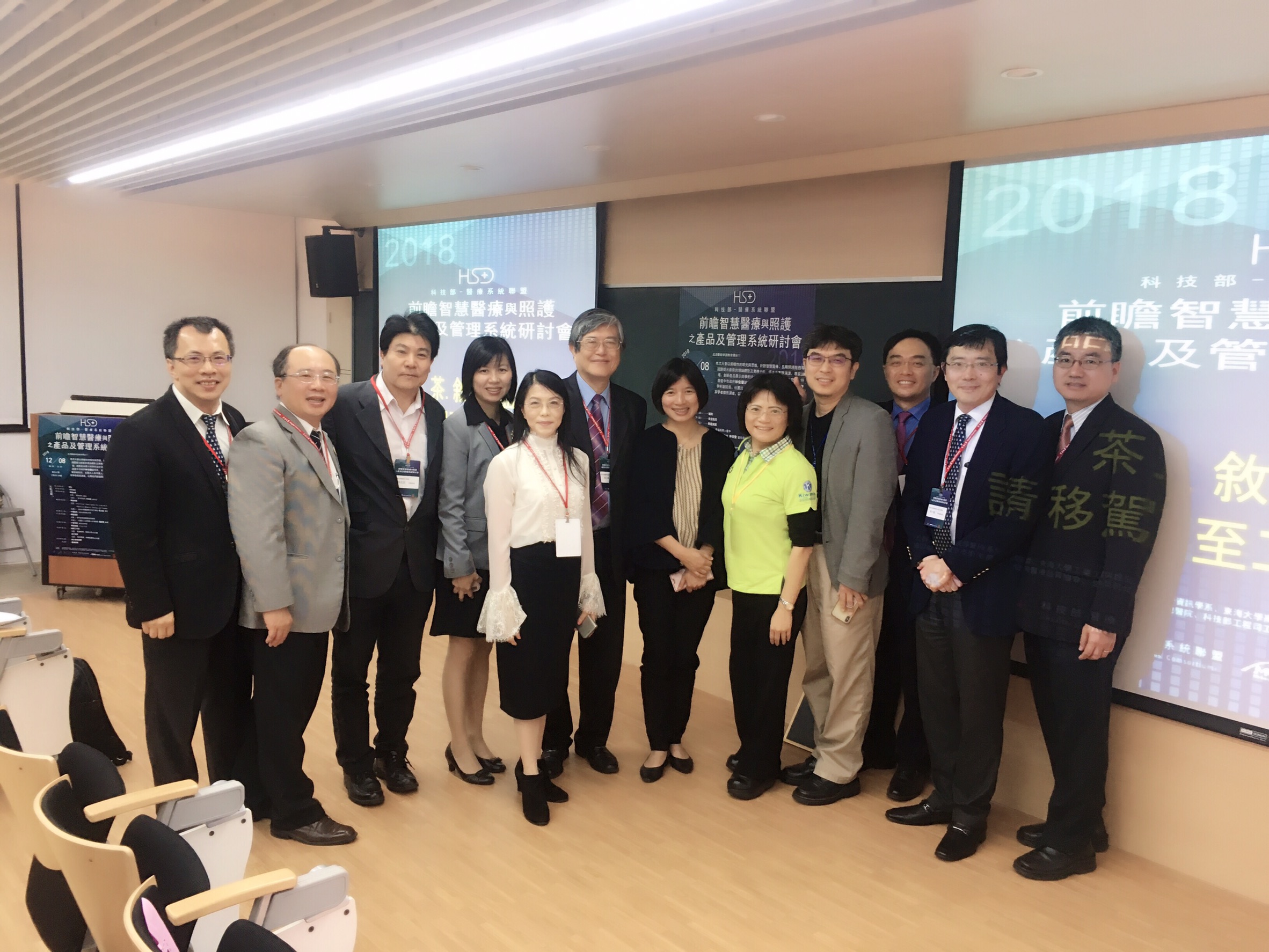
On Saturday, December 8, 2018, on the beautiful and elegant lawn of Tunghai University's College of Engineering, Tunghai University's Executive Master of Healthcare Engineering and Management program and the Consortium jointly held the "Symposium on Products and Management Systems for Forward-Looking Smart Healthcare and Care". Opening remarks were given by Consortium Chairman San-Kan Lee (former Superintendent of Taichung Veterans General Hospital and current Superintendent of Tungs' Taichung MetroHarbor Hospital) and General Manager 蕭耀貴 of the Plastics Industry Development Center. The Chairman said that in just over two years since its founding, the Consortium has achieved impressive results: more than 30 member organizations, more than 250 members in its LINE group, more than 30 industry-academia cooperation results, and a cross-disciplinary integration platform, showing that the Consortium has great growth potential in industrial development of smart healthcare and long-term care. General Manager 蕭耀貴 noted that many large medical centers and teaching hospitals lie within a radius of about ten kilometers of Tunghai University, and that the campus is adjacent to the Central Taiwan Science Park, the Taichung Industrial Park and the Taichung Precision Machinery Park; he was pleased to see Tunghai University's integration capabilities in smart healthcare and care. The meeting invited long-term care expert and Taichung Deputy Mayor 林依瑩, Associate Dean 吳士駿 of the College of Engineering at the University of California, Davis, and Secretary-General 鍾智慧 of the Taiwan Ten Thousand People Social Welfare Association (臺灣萬人社福協會) to deliver keynote speeches on three topics: happy long-term care in Taichung, applications of artificial intelligence in internet-based cognitive behavioral therapy, and opportunities and threats for the development of the long-term care industry.
In the afternoon, five innovation workshops were held on important topics including AI in healthcare, international healthcare, using big data to diagnose healthcare quality with practical case sharing, long-term care operations and care worker management, and medical assistive devices, with nearly 30 experts from industry, government, academia and medicine serving as speakers and moderators. The meeting also featured professional academic paper presentations, showcasing the application of academic theory to smart healthcare and long-term care practice and sparking many innovative ideas and opportunities for cooperation. Exhibitors included the Plastics Industry Development Center and the medical device company 永諾醫療器材股份有限公司, displaying a range of new smart equipment and instruments.
Another important part of the meeting was the Consortium expert meeting (more than 30 participants), which jointly established the collaboration mechanism for the Consortium's new strategy for 2019, to realize its industrial value and derived value. Professor Chin-Yin Huang, Head of the Department of Industrial Engineering and Enterprise Information, suggested that the Consortium take stock of its research capacity and talent pool to help industry, government, academia and medicine meet their needs in product R&D and innovation, thereby accelerating product development and access to market channels. Municipal advisor 鄭永南 highly commended the Consortium's cross-disciplinary integration capacity, and the expert committee members spoke enthusiastically. Finally, the Consortium thanked the Engineering Technology Promotion Center of the Department of Engineering and Technologies, Ministry of Science and Technology (Grant No. 107000150), for its funding, and the lighting company 旭翔照明有限公司 for its donation, which made the meeting a complete success.
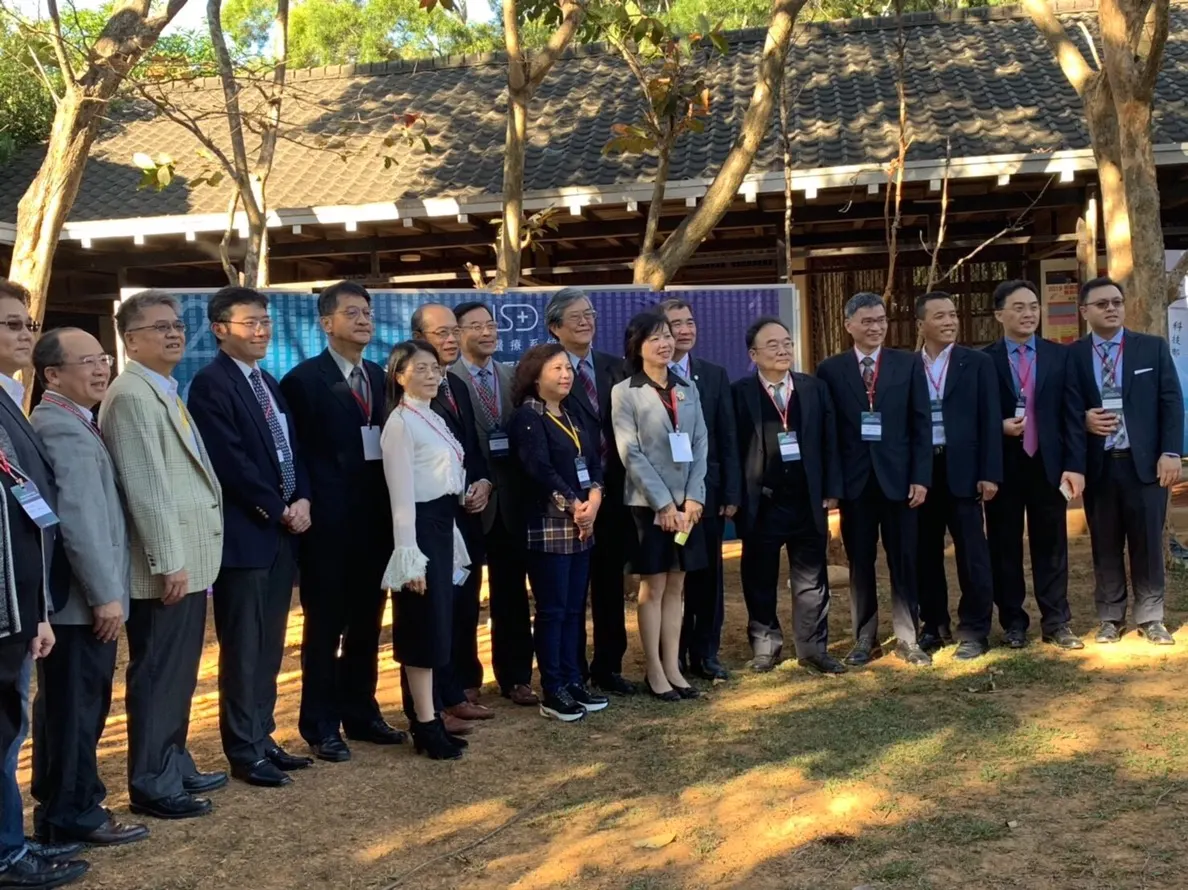
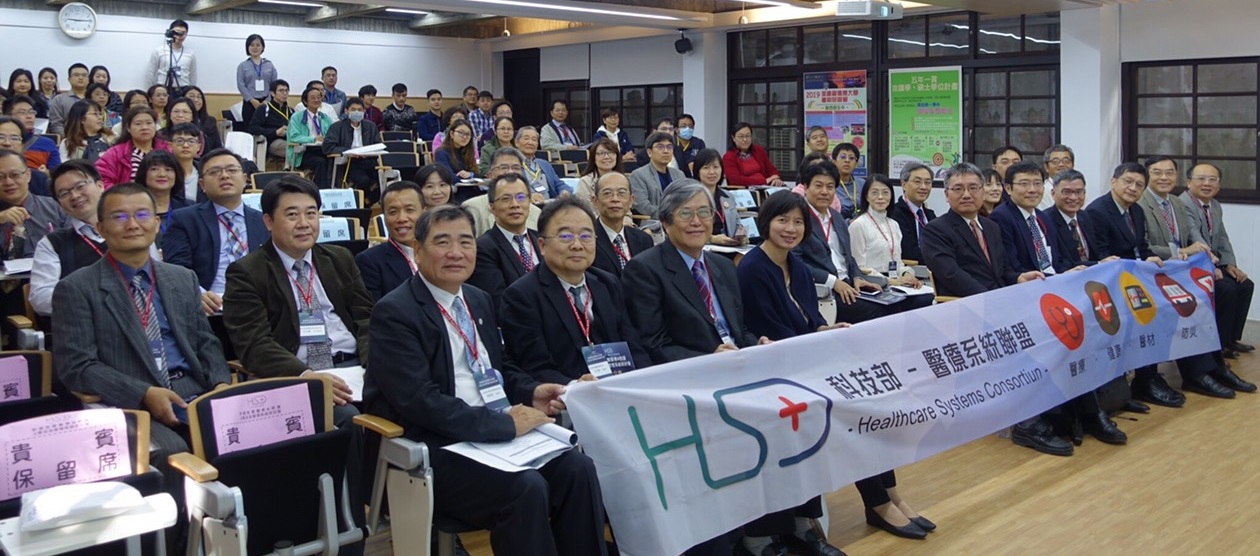
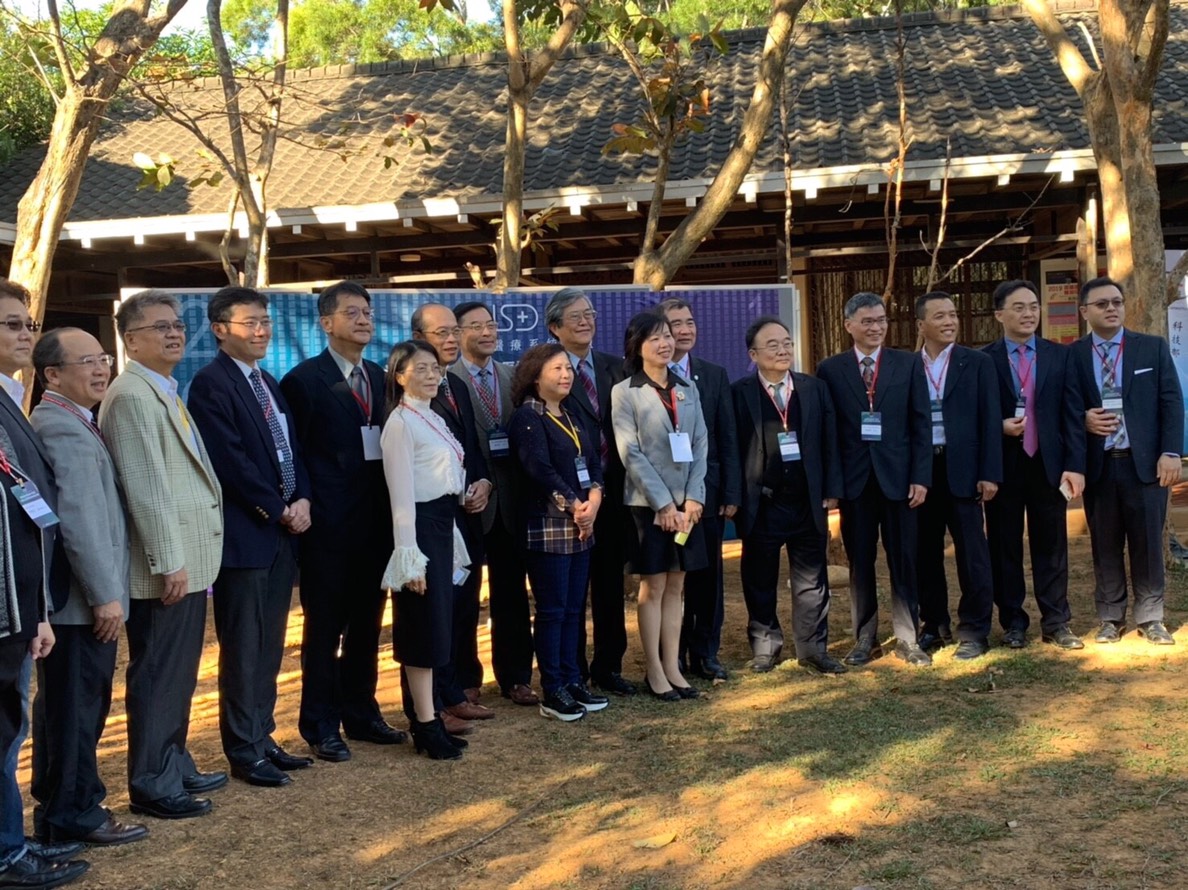
Consortium Chairman San-Kan Lee (10th from left), General Manager 蕭耀貴 of the Plastics Industry Development Center (4th from right) and Taichung City Government municipal advisor 鄭永南 (3rd from right) with distinguished guestsOriginal image 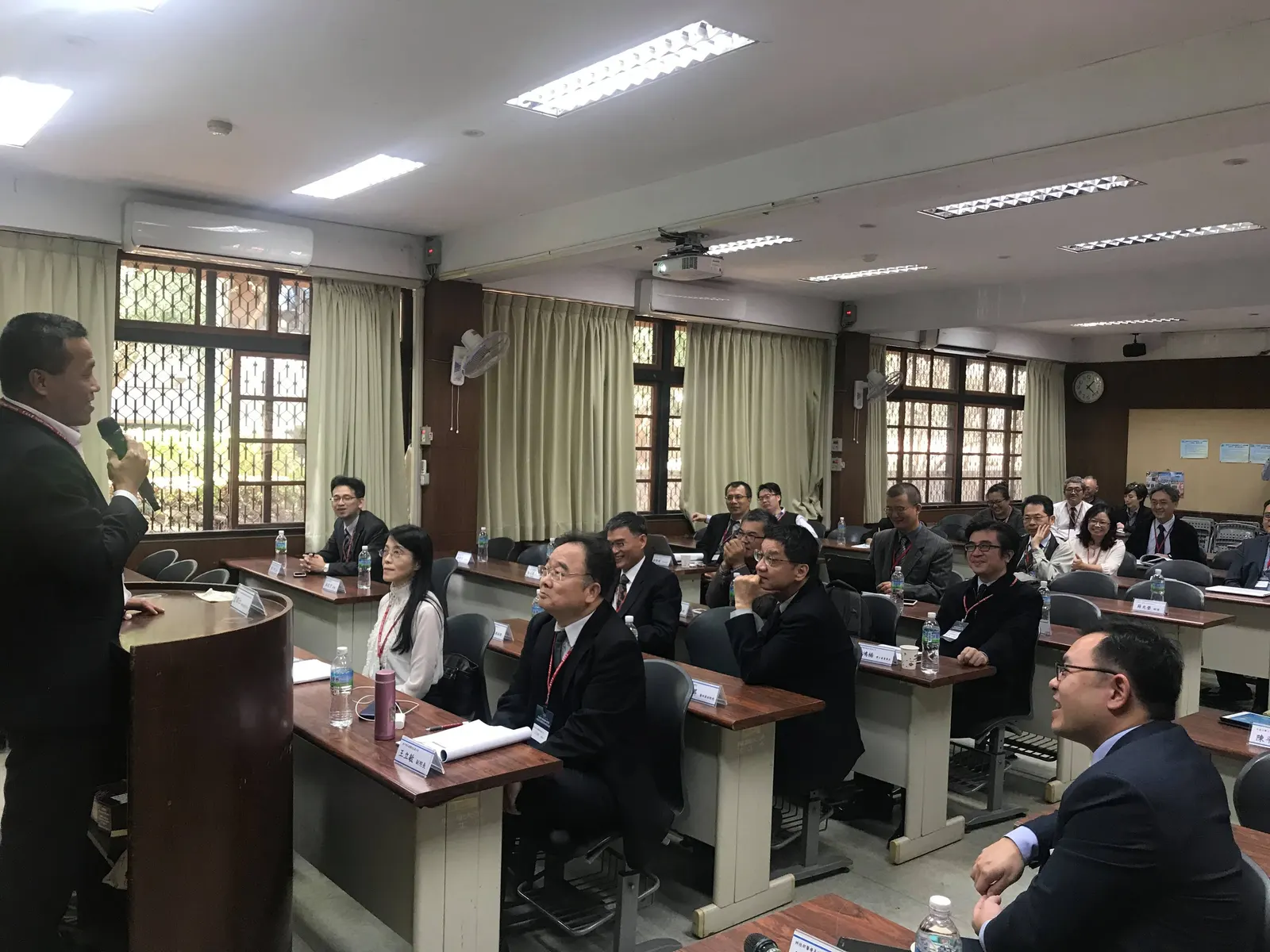
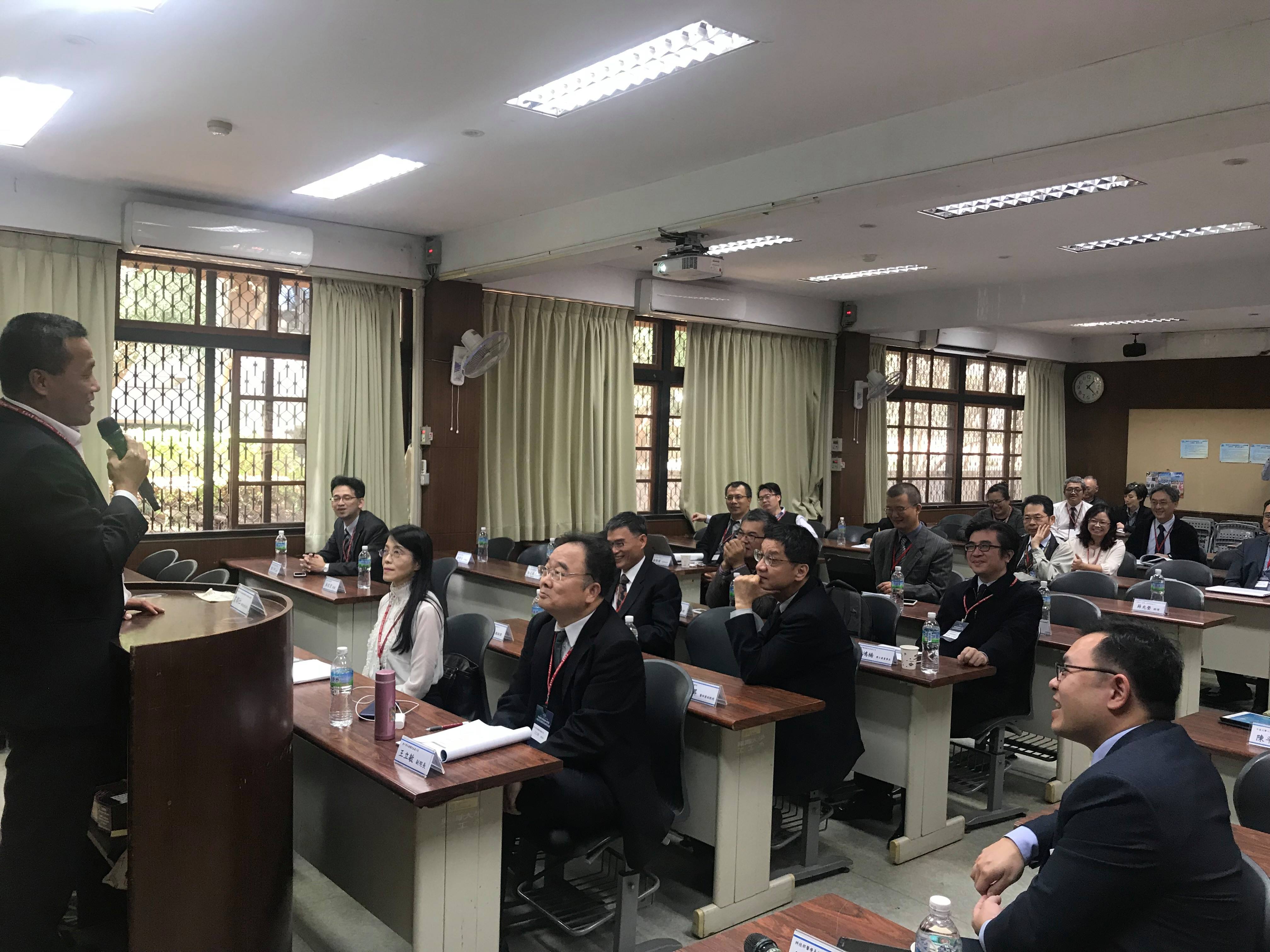
At the meeting, the Consortium held a special expert meeting to jointly establish a collaboration mechanism for its new vision, new strategy and new directionOriginal image 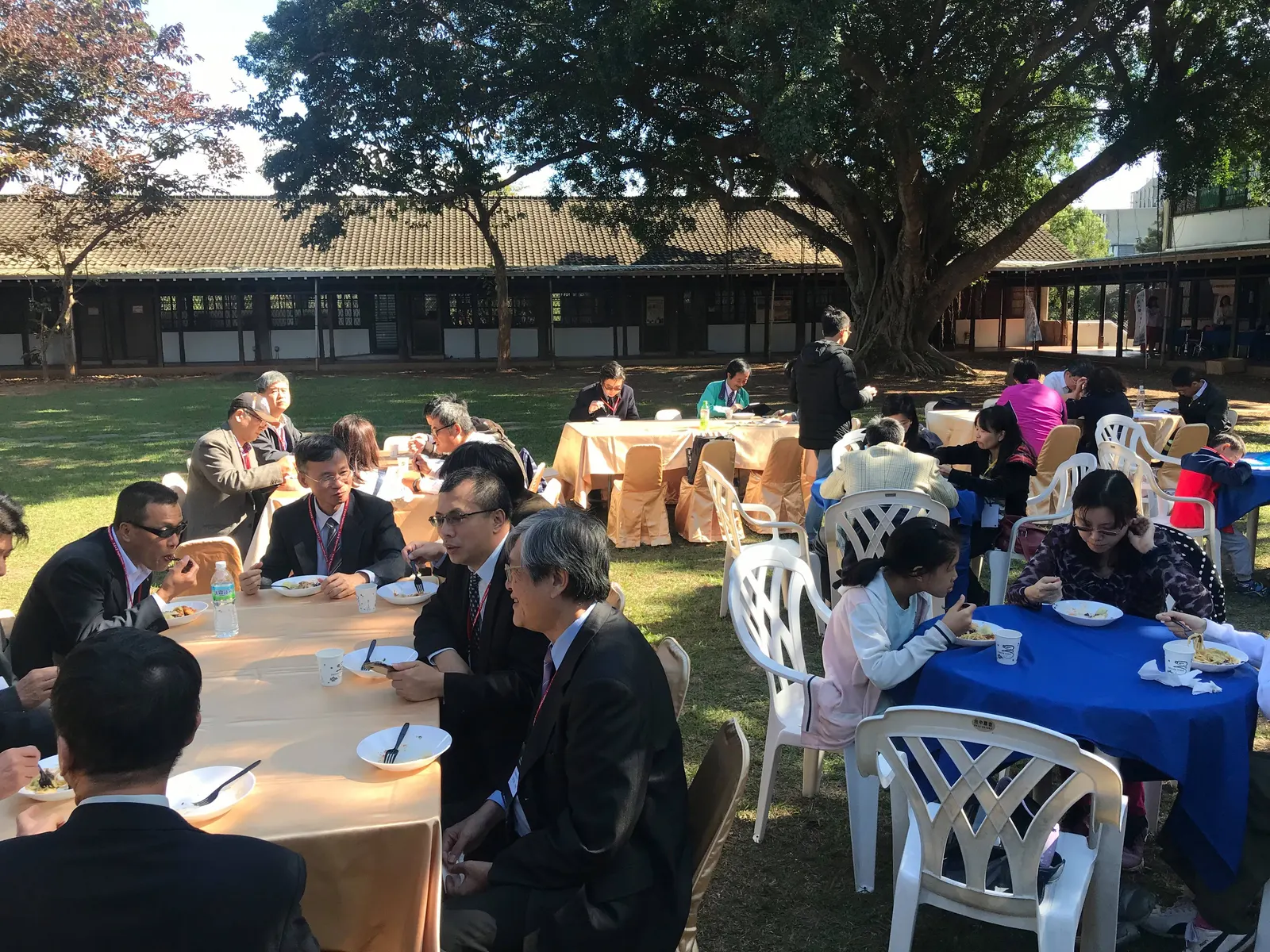
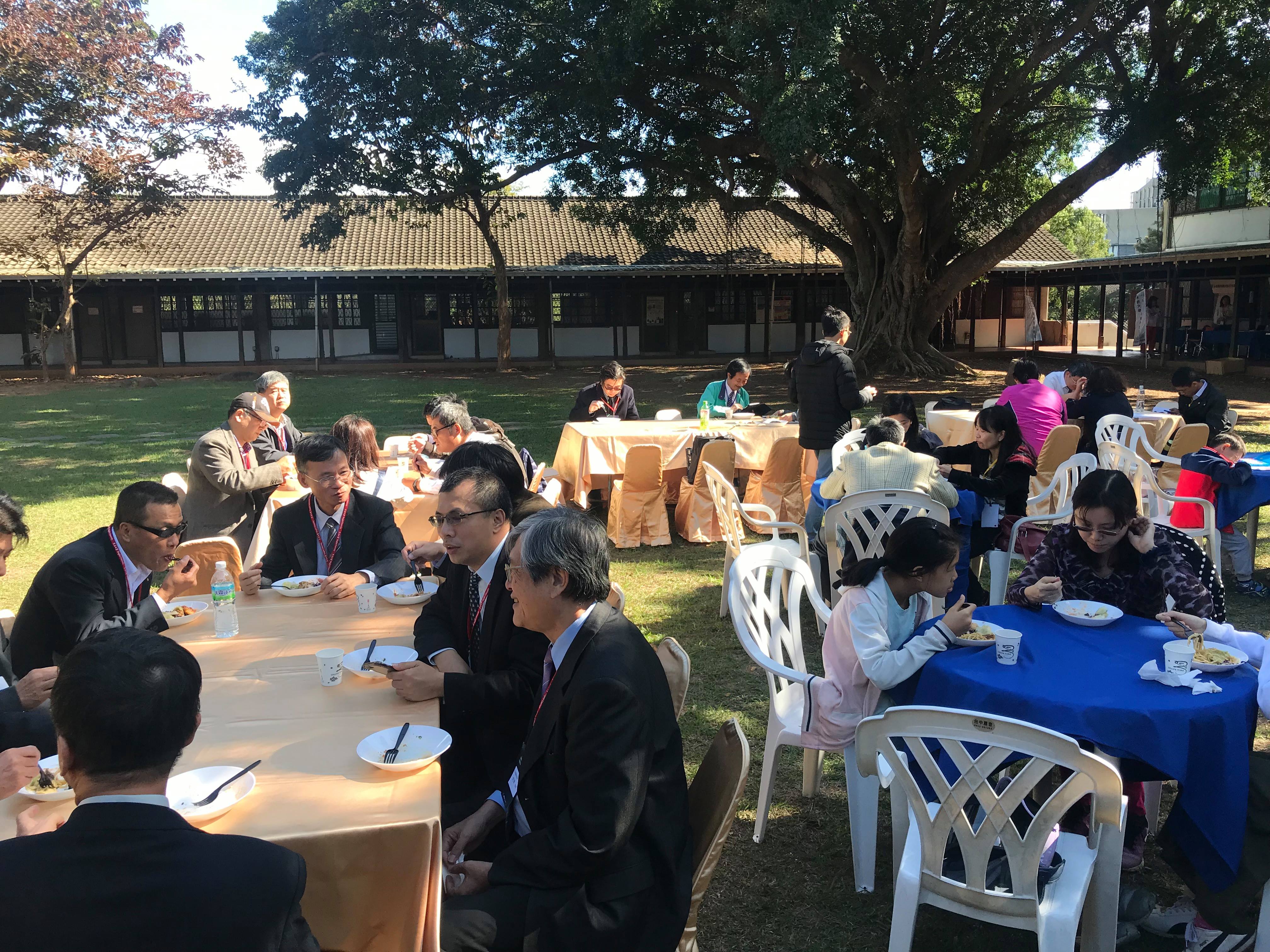
All participants in the Annual General Meeting enjoying refreshments and networking on the lawn of Tunghai University's College of EngineeringOriginal image 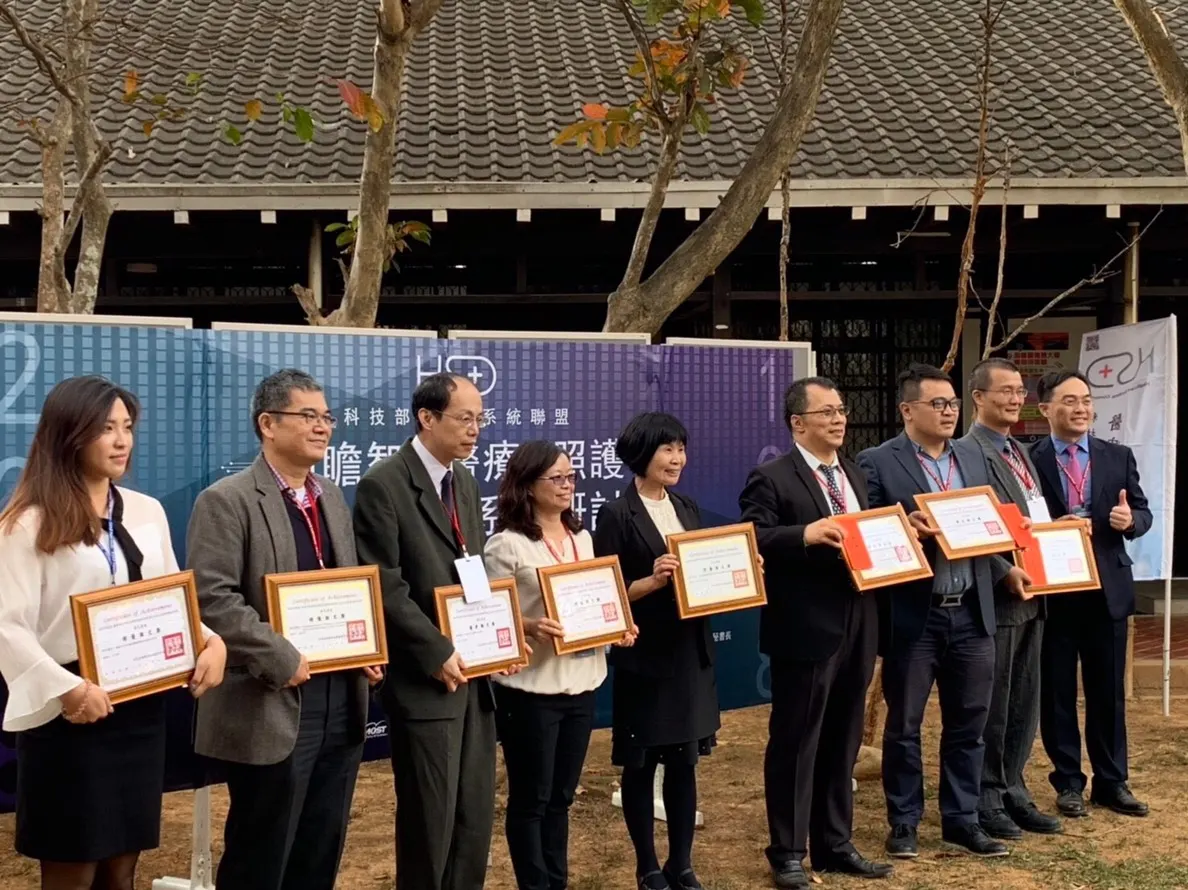
Professional academic paper presentations and competition at the meeting, showcasing applied academic research in a lively atmosphereOriginal image 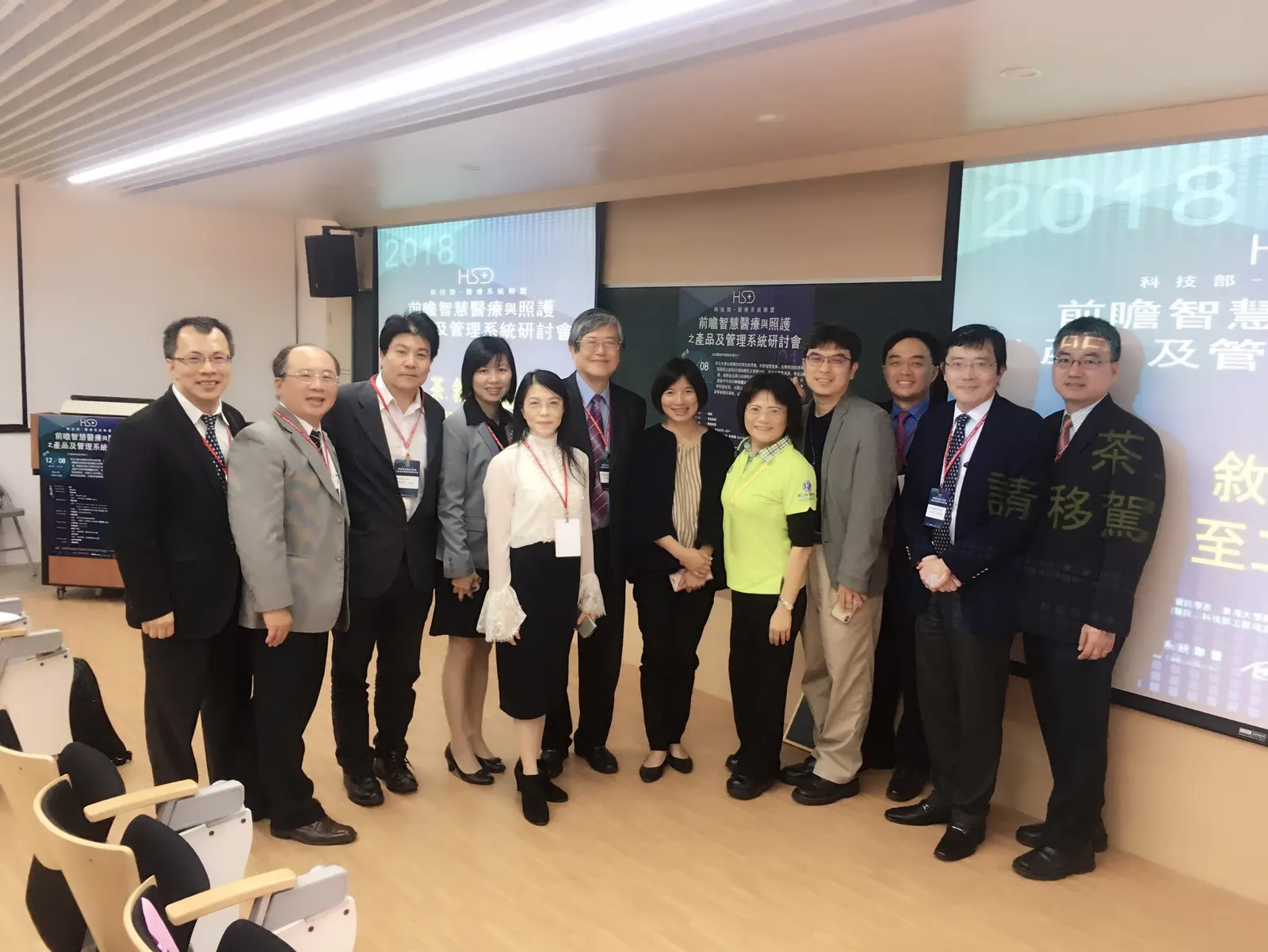
Deputy Mayor 林依瑩 (6th from right), Director-General 張耀懋 of the Chiayi City Government Public Health Bureau (4th from right), Associate Dean for Academic Affairs 吳士駿 (2nd from right) and Department Head Chin-Yin Huang (2nd from left) with distinguished guestsOriginal image
Third Annual General Meeting
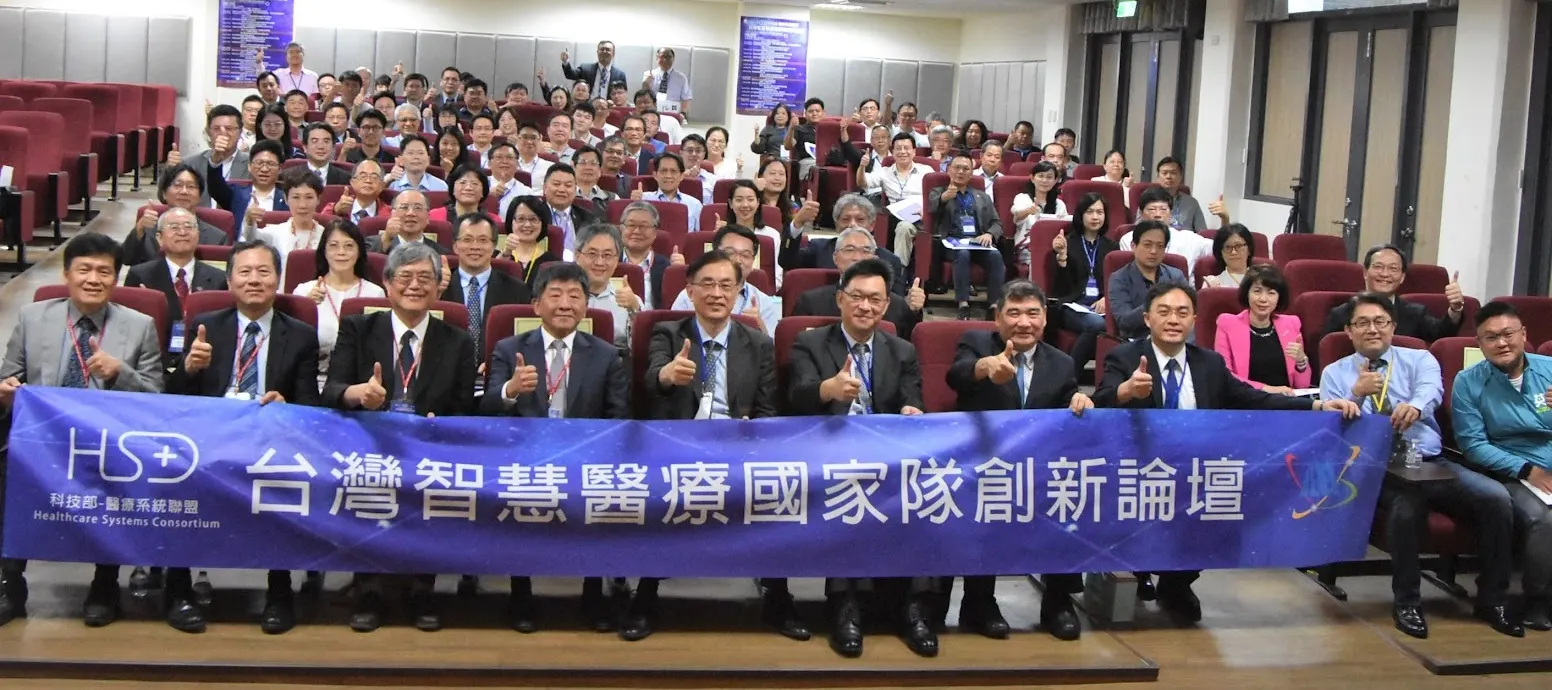
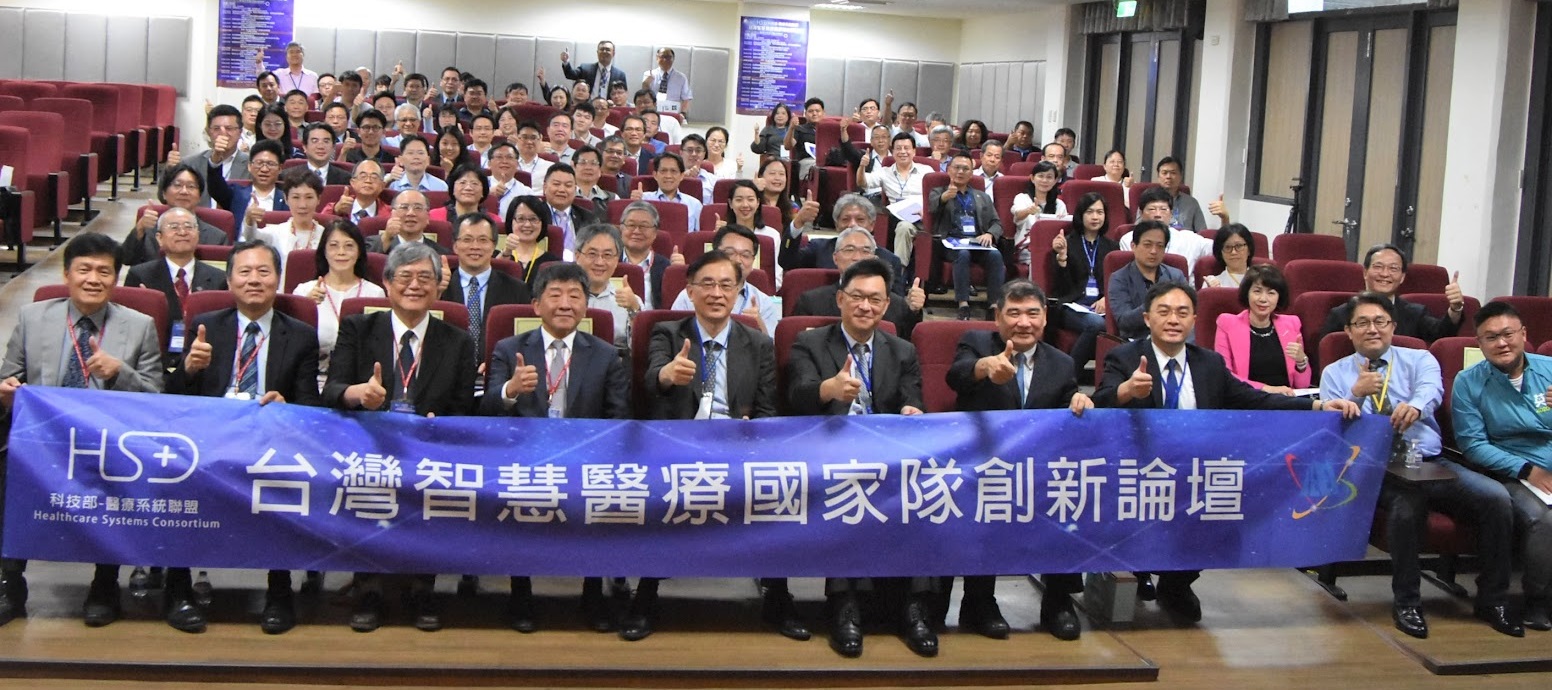
On October 26, Tunghai University's Healthcare Systems Consortium held the "Taiwan Smart Healthcare National Team Innovation Forum" at the university. The meeting opened with addresses by Consortium Chairman San-Kan Lee (former Superintendent of Taichung Veterans General Hospital and current Superintendent of Tungs' Taichung MetroHarbor Hospital), Minister of Health and Welfare 陳時中, Director-General 曾梓展 of the Taichung City Public Health Bureau, Tunghai University Vice President 詹家昌, Superintendent 許惠恒 of Taichung Veterans General Hospital, and Superintendent 王泓智 of the Taichung Armed Forces General Hospital.
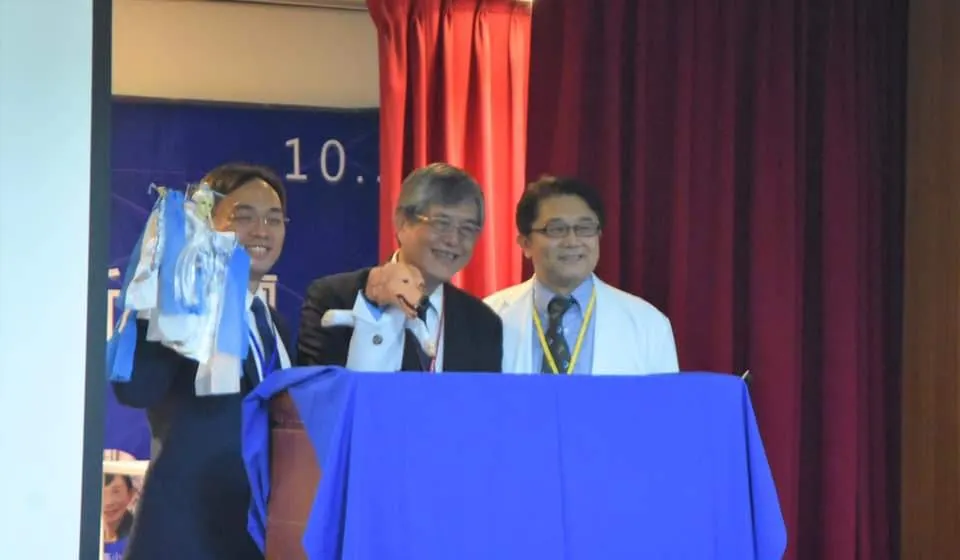
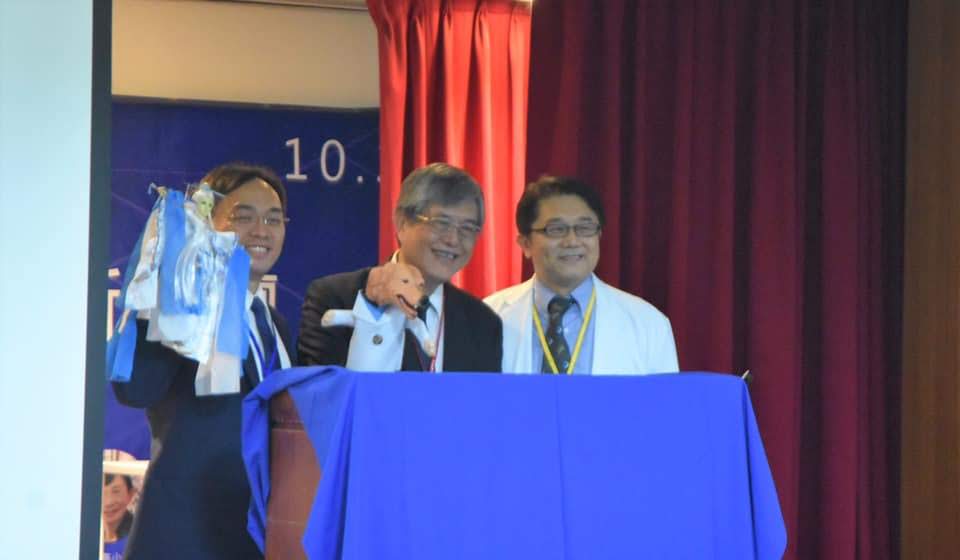
Chairman San-Kan Lee (center) at the opening ceremony with 陳道杰 (right), director of the National Veterinary Hospital, performing a glove puppetry and violin ensembleOriginal image
Superintendent San-Kan Lee said that in just a few years since its founding, the Consortium has not only continued to grow its membership but also completed many industry-academia cooperation results and built a cross-disciplinary integration platform, showing its great potential in smart healthcare and long-term care. Minister of Health and Welfare 陳時中 said that Taiwan is currently integrating health data from major hospitals and moving toward a truly healthy Taiwan, and he affirmed that the Healthcare Systems Consortium has had a positive impact on the country through cross-disciplinary integration.
Tunghai University Vice President 詹家昌 described the university's active involvement in the University Social Responsibility program, including training talent in food safety, environmental safety and senior care, as well as integration with regional revitalization and local communities—improving the educational environment and, through local capacity building, improving the environment of remote areas and revitalizing communities.
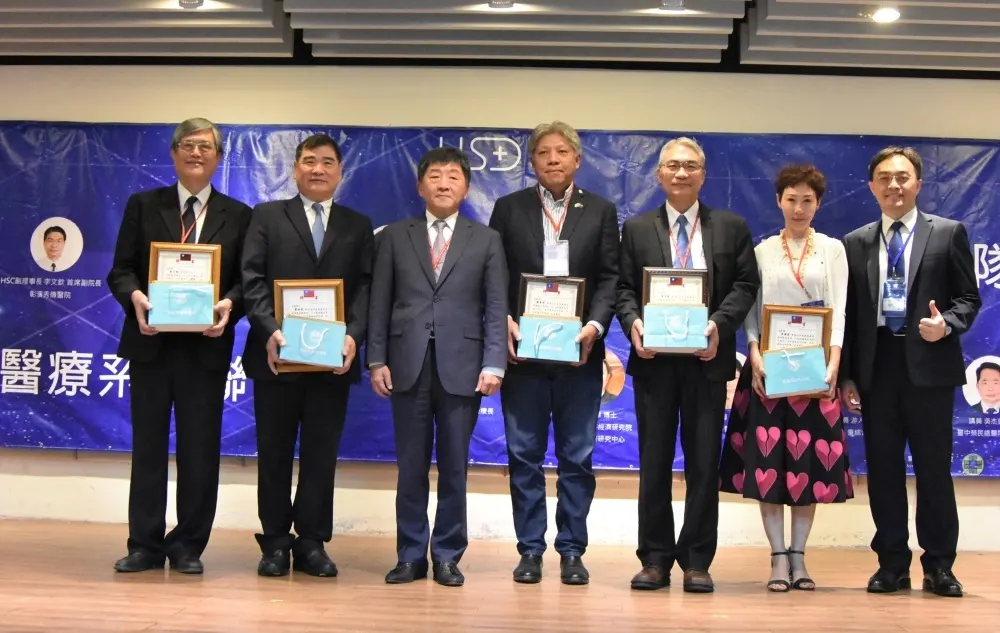
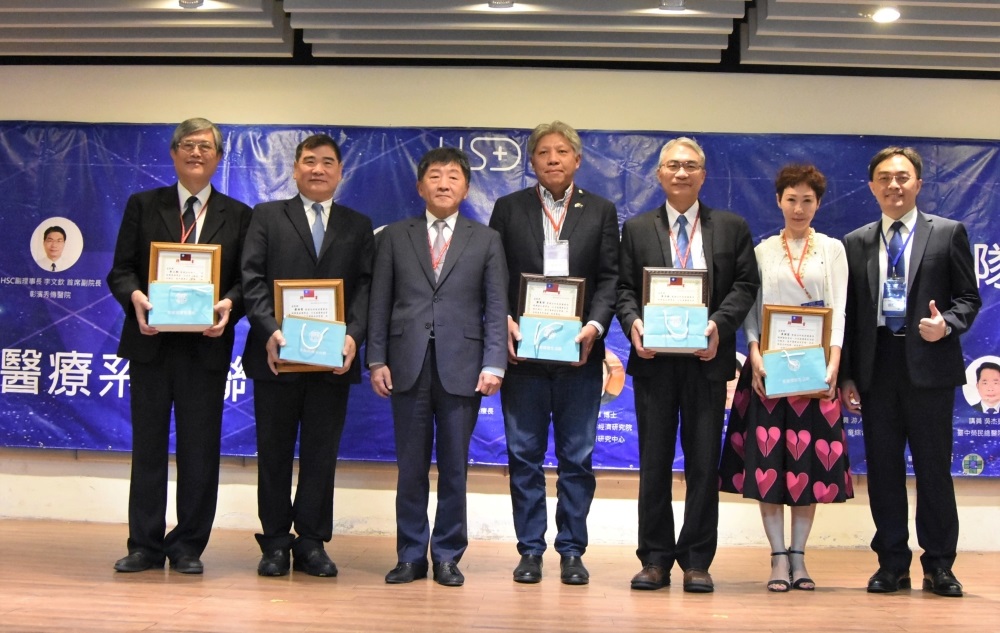
Minister of Health and Welfare 陳時中 presenting letters of appointment to the Consortium Chairman and Vice ChairmenOriginal image
The meeting also invited more than ten scholars and experts, including Deputy Director-General 蔡淑鈴 of the National Health Insurance Administration and Dr. 李淳 of the Ministry of Health and Welfare's New Southbound Policy Project Office at the Chung-Hua Institution for Economic Research, to deliver keynote speeches on the healthcare landscape of Southeast Asian countries, opportunities for Taiwan, New Southbound trade and economic interaction and market analysis, and the international deployment of AI medical technology. A number of companies also exhibited new smart medical equipment, instruments and related new technologies. Another highlight of the meeting was smart medical device R&D and startup matchmaking: ITRI's Electronic and Optoelectronic System Research Laboratories and the industry-academia matchmaking service team of MOST's Industry-Academia Collaboration Program for Research Institutes explained, respectively, the benefits of AI on chip for the healthcare industry and the program for research institutes, and conducted matchmaking. The AIoT Application Technology R&D Alliance and the Chang Gung Medical and Nursing Diversified Innovation Alliance were also invited to share their experiences on site, with the aim of creating new value through exchange among industry, government, academia, research institutions and the medical sector and through cross-disciplinary integration, jointly building a "Taiwan Smart Healthcare National Team".
Supported by the Industry-University Cooperation Alliance program of MOST's Department of Academia-Industry Collaboration and Science Park Affairs, Tunghai University's Healthcare Systems Consortium has now been operating for three years. Consortium program director Associate Professor Shao-Jen Weng gave an overview, including promoting the Consortium in the Czech Republic and other Eastern European countries at the beginning of the year, taking part in the 2019 Smart City Summit & Expo in Taipei and the 17th Taiwan–Czech Economic Cooperation Conference, and the Taiwan–Czech international cooperation project extending and adding value to the bilateral agreement linking research institutes, involving domestic industry, academia and a research institute (ITRI). The Consortium also successfully brokered smart healthcare cooperation between the Acer Group and Taichung Veterans General Hospital.
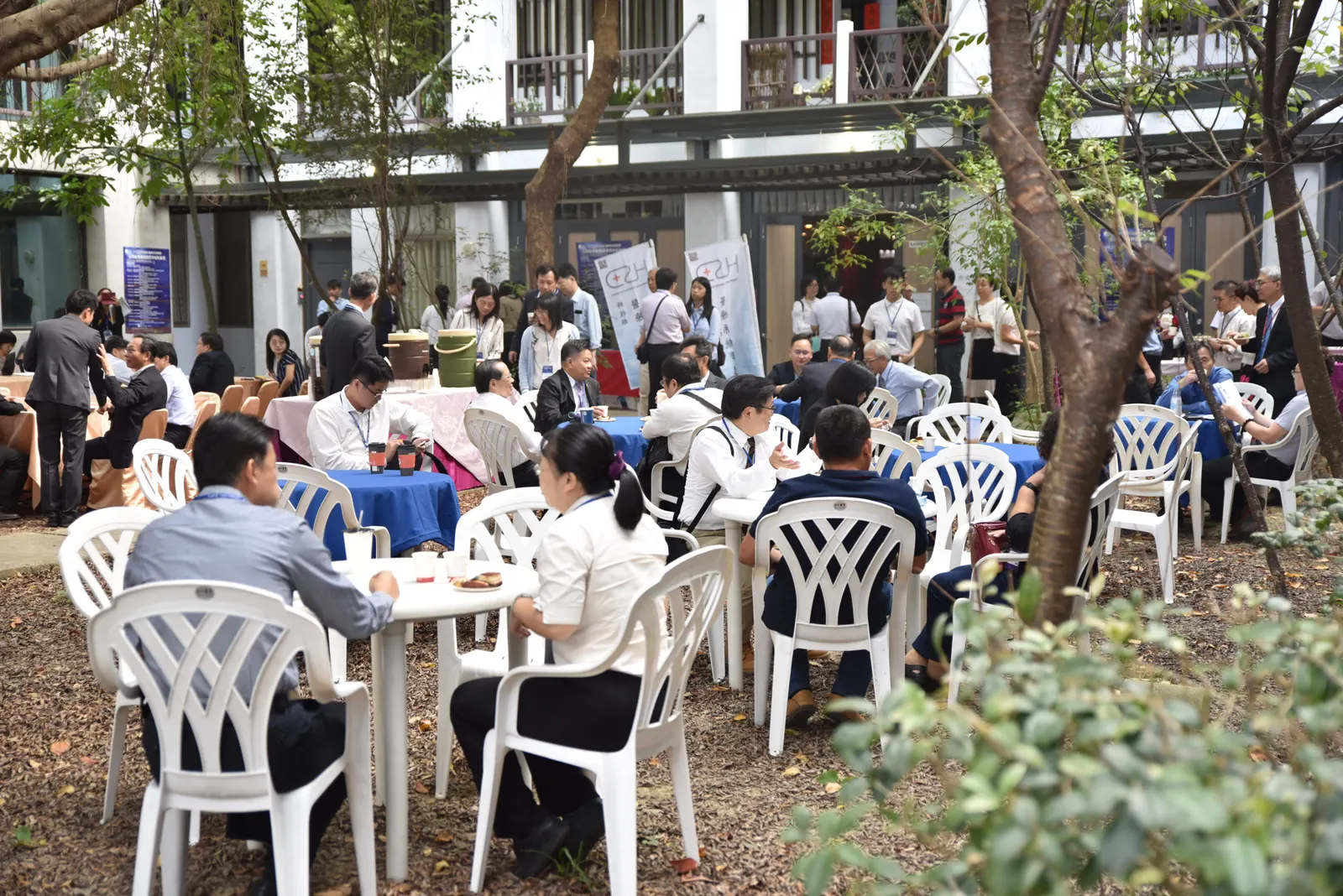
Tea reception and networking at the meetingOriginal image
Since its founding, Tunghai University's MOST Healthcare Systems Consortium has taken improving the quality of healthcare as its highest purpose, continuing to build a new platform for exchange and cooperation for the national team, fostering the emergence of smart healthcare as a new blue ocean and serving as a channel for Taiwan's high-quality healthcare services to go international. This year, given that big data, artificial intelligence, the Internet of Things and cloud technology have taken deep root in Taiwan's healthcare environment, and in line with the "New Southbound Healthcare" policy, the Consortium invited the Ministry of Health and Welfare and its related agencies (including the National Health Insurance Administration and the New Southbound Policy Project Office), major hospitals and industry partners across Taiwan to gather at the "Taiwan Smart Healthcare National Team Innovation Forum", hoping to bring new opportunities to Taiwan's smart healthcare, long-term care systems and international healthcare.
Fourth Annual General Meeting
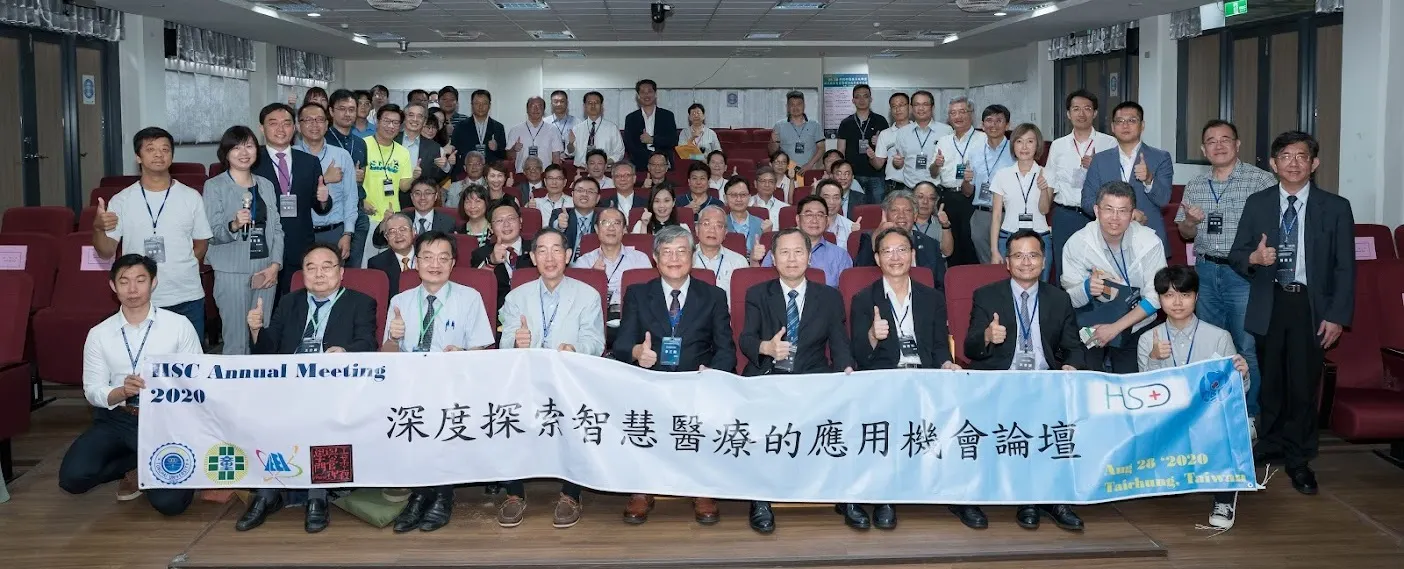
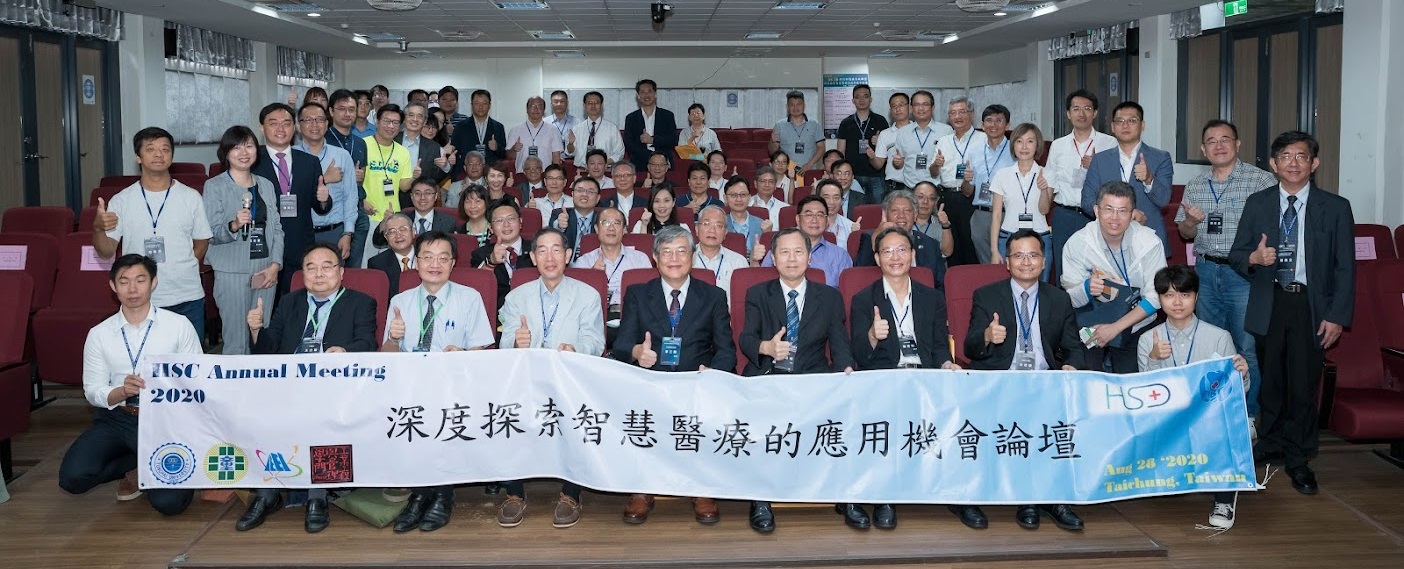
The MOST Healthcare Systems Consortium held its Annual General Meeting at Tunghai University's Language Building on August 28, 2020. Supported by the Industry-University Cooperation Alliance program of MOST's Department of Academia-Industry Collaboration and Science Park Affairs, the MOST Healthcare Systems Consortium of Tunghai University's Department of Industrial Engineering and Enterprise Information has successfully entered its fourth year.
The meeting opened with a wonderful musical performance by the 騷貓千歲 charity choir led by the National Animal Group's Pet Life Research Lab (全國動物事業群寵物生活研究室), followed by addresses from distinguished guests including Consortium Chairman Professor San-Kan Lee, Tunghai University Board Chairman Dr. 吳清邁, Superintendent 許惠恒 of Taichung Veterans General Hospital, Superintendent 洪恭誠 of the Taichung Armed Forces General Hospital, and Deputy Director-General 陳南松 of the Taichung City Public Health Bureau. At the meeting, Dr. 吳清邁, Superintendent 許惠恒, Superintendent 王智弘 and Superintendent 洪恭誠 were also appointed as Honorary Advisors to the Consortium.
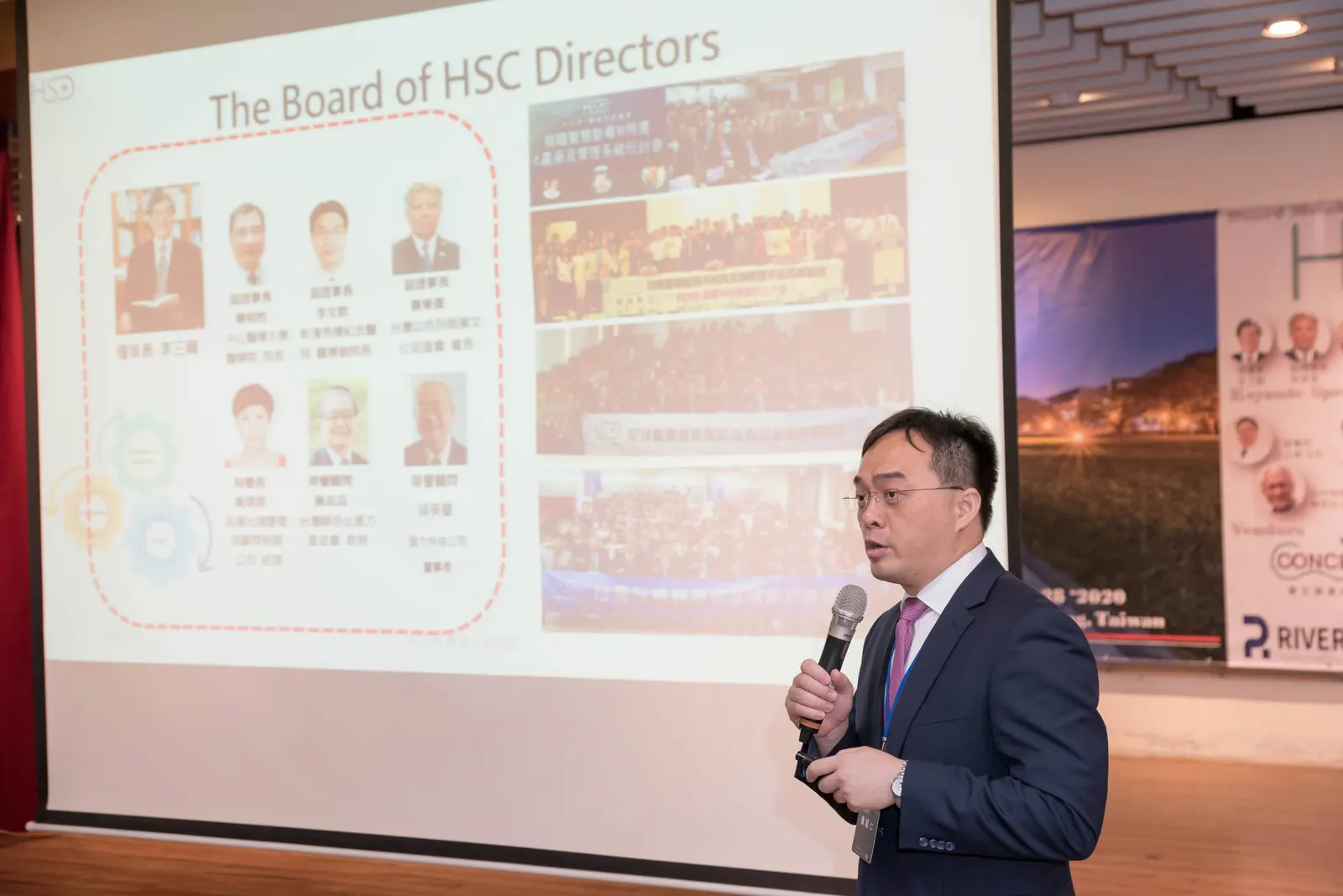
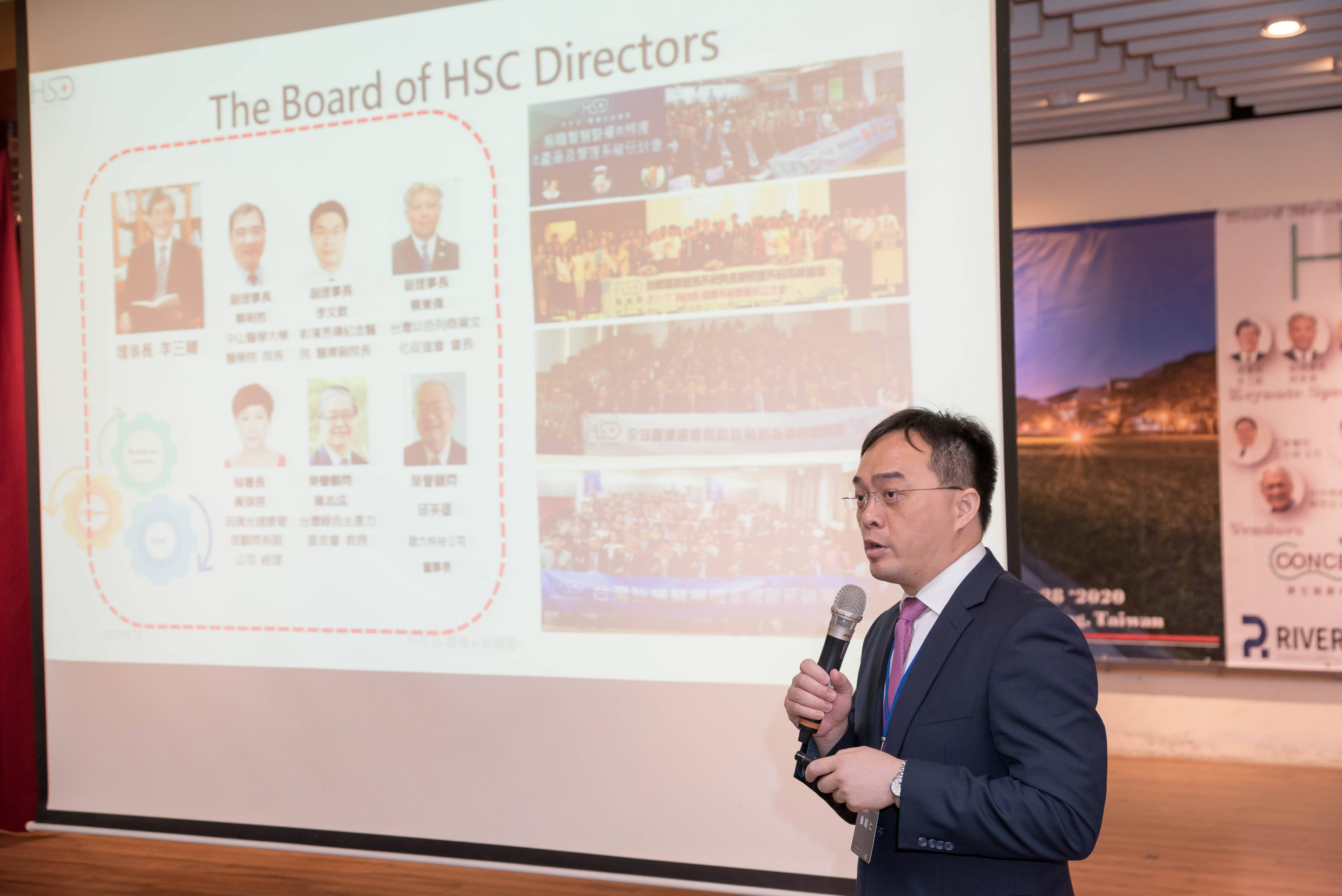
Professor Shao-Jen Weng, director of Tunghai University's MOST Consortium program, introducing the Consortium's organization and visionOriginal image
Professor Shao-Jen Weng, director of the MOST Healthcare Systems Consortium program, then introduced the Consortium's development to the guests. Over the past nearly four years, the Consortium has worked closely on many projects with domestic hospitals, research institute teams (such as ITRI and the Institute for Information Industry) and medical product companies, creating cross-industry, cross-domain integration. The Consortium has also worked on building cooperative links with the European and American healthcare industry chains, with healthcare and health industry cooperation and exchanges with both the Czech Republic and Poland. In a future international cooperation project, the Consortium and the Czech company ROBOTSYSTEM plan to develop an AI-assisted healthcare robot. This international cooperation project is in the field of smart healthcare and applies human body sensing and monitoring modules to medical rehabilitation transport robots. The target product, MULTIROBOT (SMART WALKER), has been under development in the Czech Republic for years; its mechatronic control system is now largely complete, but its advanced capabilities in signal processing and artificial intelligence are still somewhat lacking, and this is where the Consortium's partners will assist. With global ageing and people's pursuit of healthy living, the medical and care robot industry will see new opportunities for growth.
The theme of this forum was "In-Depth Exploration of Application Opportunities in Smart Healthcare". Program director Professor Shao-Jen Weng said he hoped to explore the pain points of smart healthcare operations in depth so that industry can understand hospitals' operational pain points and needs; this will help future smart medical technology product development better match practice, shorten product and system development time and costs, and thereby advance the development of smart medical technology in Taiwan. Senior executives from five major partner hospitals were specially invited to share at the forum. The speakers were Director Li-Min Wang of Jen-Ai Hospital, Deputy Superintendent Tsung-Lun Wang of Chang Bing Show Chwan Memorial Hospital, Assistant Professor 李秋香 of Chung Shan Medical University, Deputy Superintendent Che-Hung Tsai of the Puli Branch of Taichung Veterans General Hospital, and Professor 白佳原 of Chung Shan Medical University. Drawing on decades of medical experience in disaster medicine, nursing operations, medical procedures and healthcare systems, they presented the current difficulties and future challenges of smart healthcare and AI technology in major hospitals.
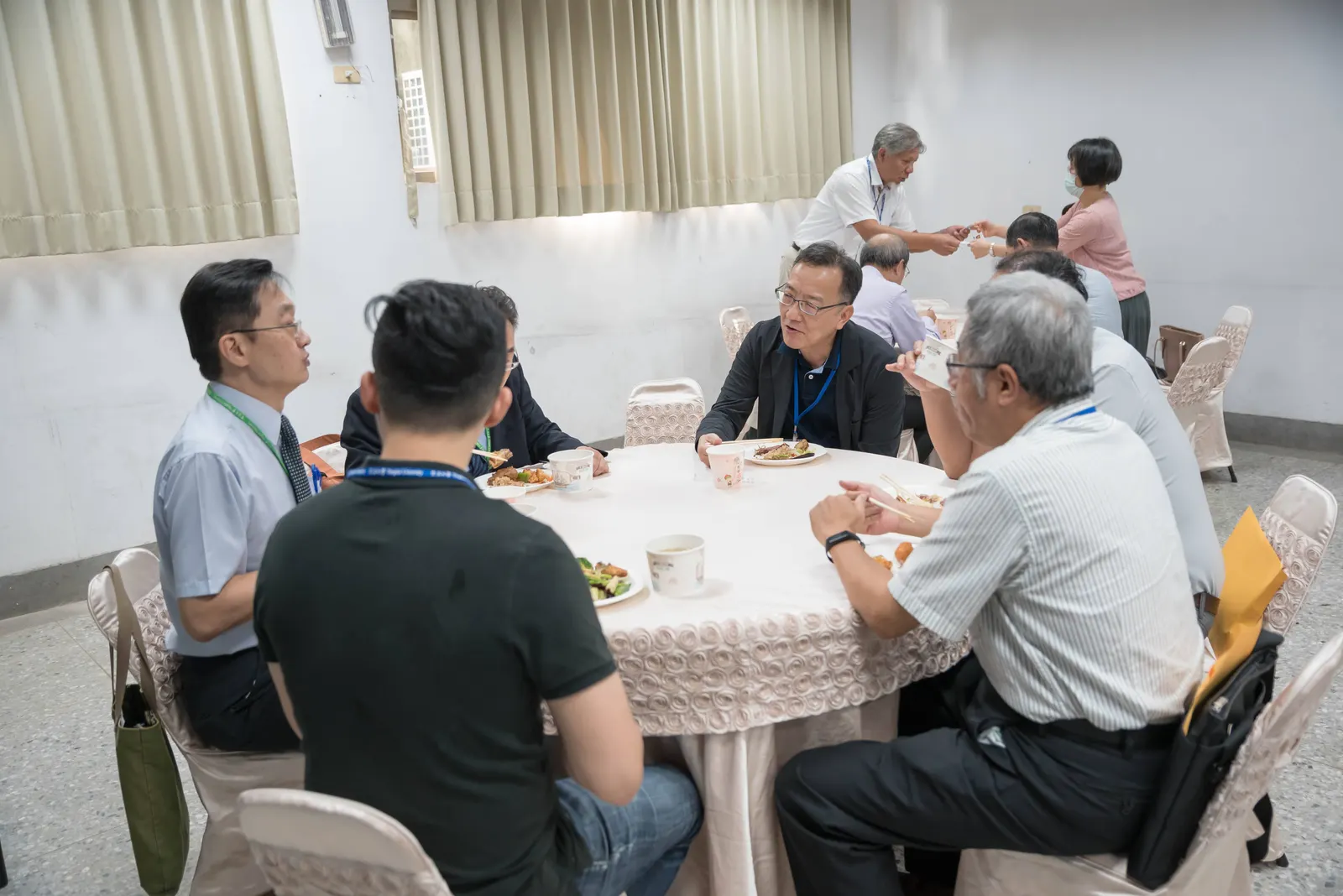
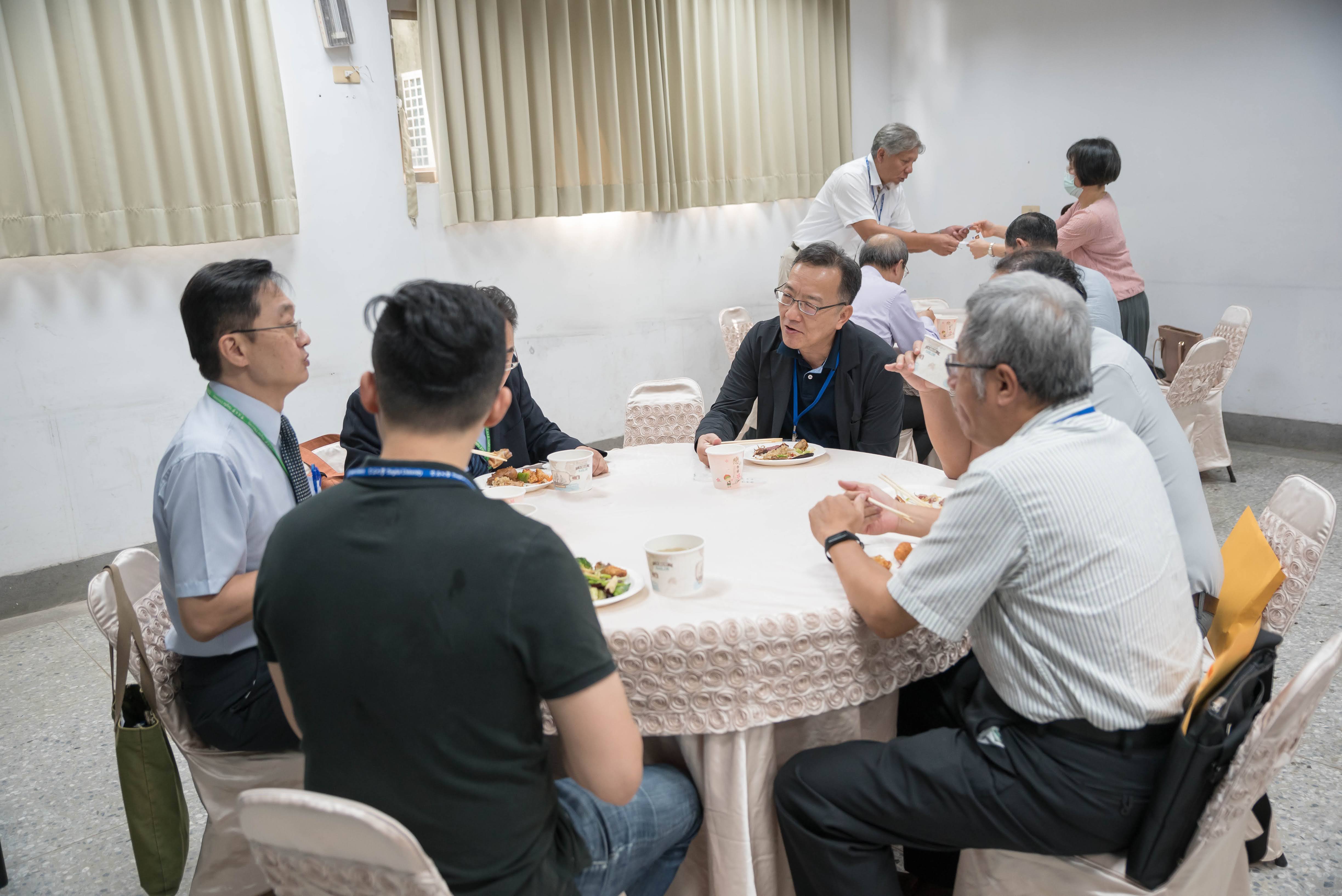
Tea break and networking at the meetingOriginal image
After the meeting, in-depth discussions on future cooperation were arranged between participating companies and the Consortium, with the hope of expanding cross-disciplinary cooperation in many directions. Sponsoring companies displayed a range of new smart instruments, equipment and related new technologies at the venue. The MOST Healthcare Systems Consortium can be described as a substantive platform for cross-disciplinary exchange among industry, government, academia, research institutions and the medical sector in Taiwan, promoting multi-party exchange and cooperation, building alternative high-quality healthcare services for Taiwan, serving as a channel to go international, and bringing comprehensive cross-disciplinary new opportunities to Taiwan's smart healthcare.
Fifth Annual General Meeting
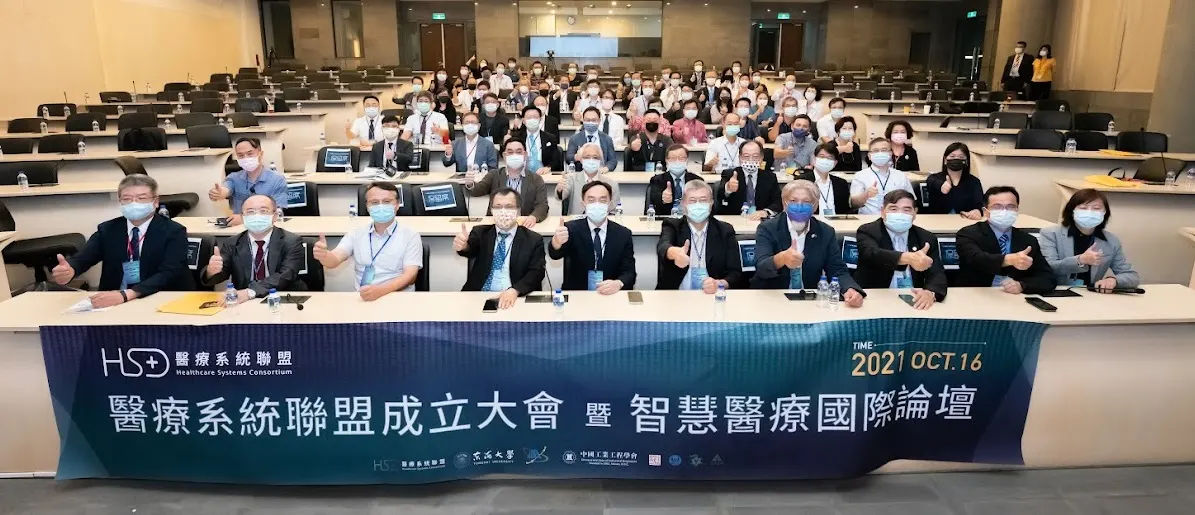
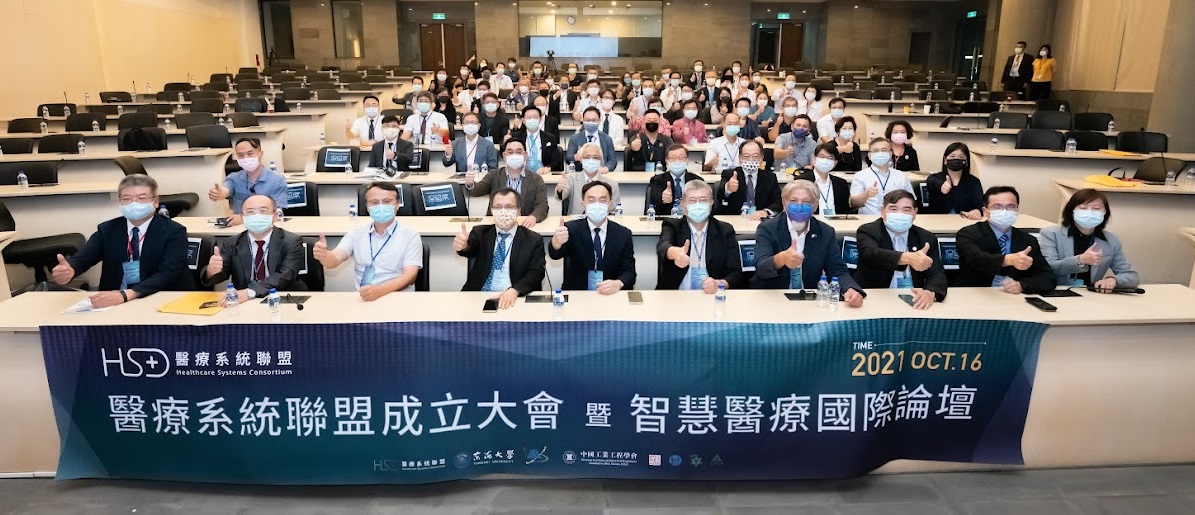
Through the dedicated efforts of Consortium Chairman San-Kan Lee (currently Chief Strategy Officer of Tungs' Taichung MetroHarbor Hospital and former Superintendent of Taichung Veterans General Hospital) and Secretary-General Professor Shao-Jen Weng (Department of Industrial Engineering and Enterprise Information, Tunghai University, and director of the Healthcare Systems Consortium (HSC)), the Consortium has successfully entered its fifth year. It has applied to the Ministry of the Interior to become a civil association and has completed the founders' and preparatory meeting, reaching an important milestone. Today, 15 hospitals, 7 universities and 10 corporate groups took part in the founding of the Healthcare Systems Consortium (HSC) and its first meeting of Directors and Supervisors. About 30% were senior figures from the medical sector, 25% from academia, and nearly half from industry, with more than 200 members in total joining the occasion.
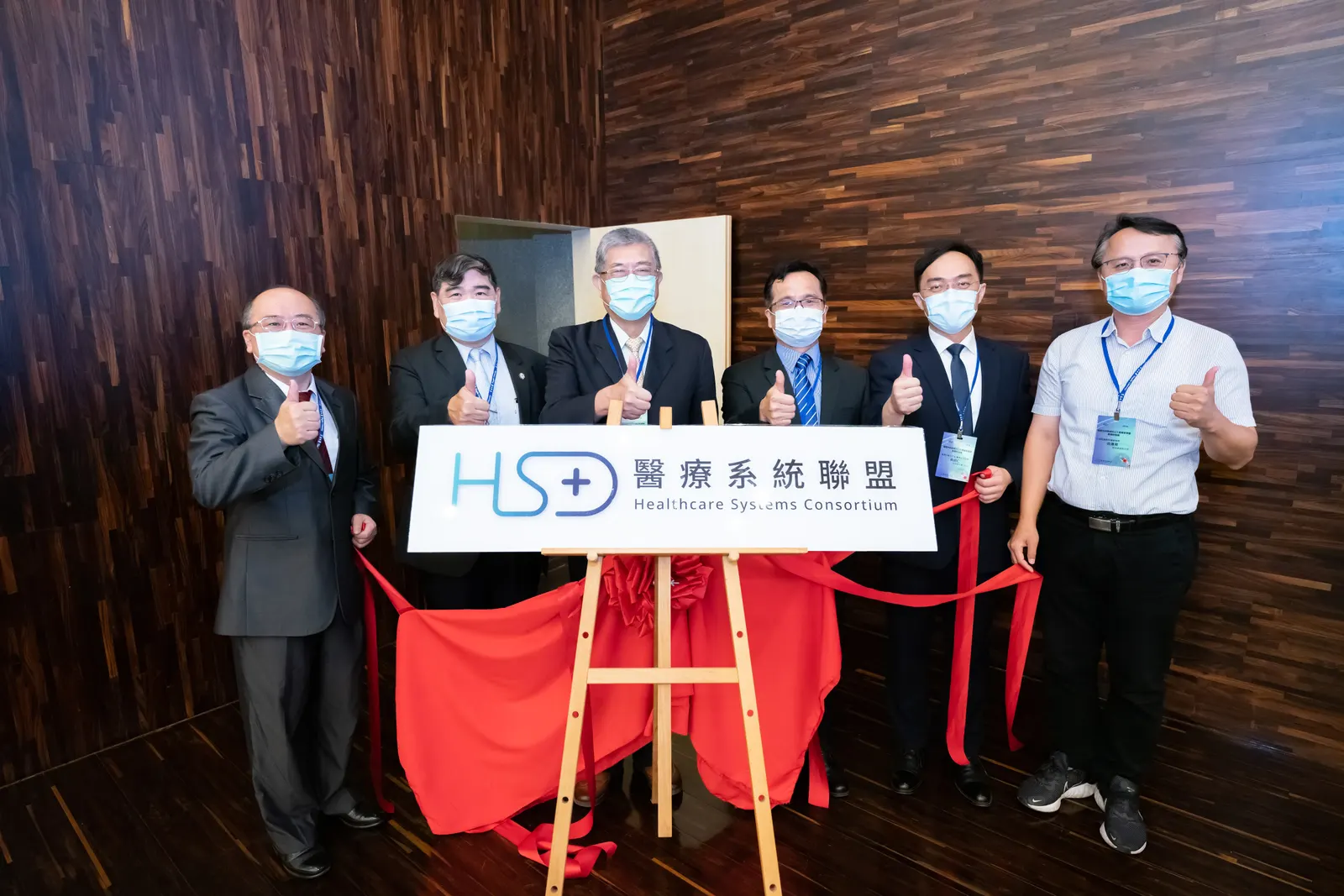
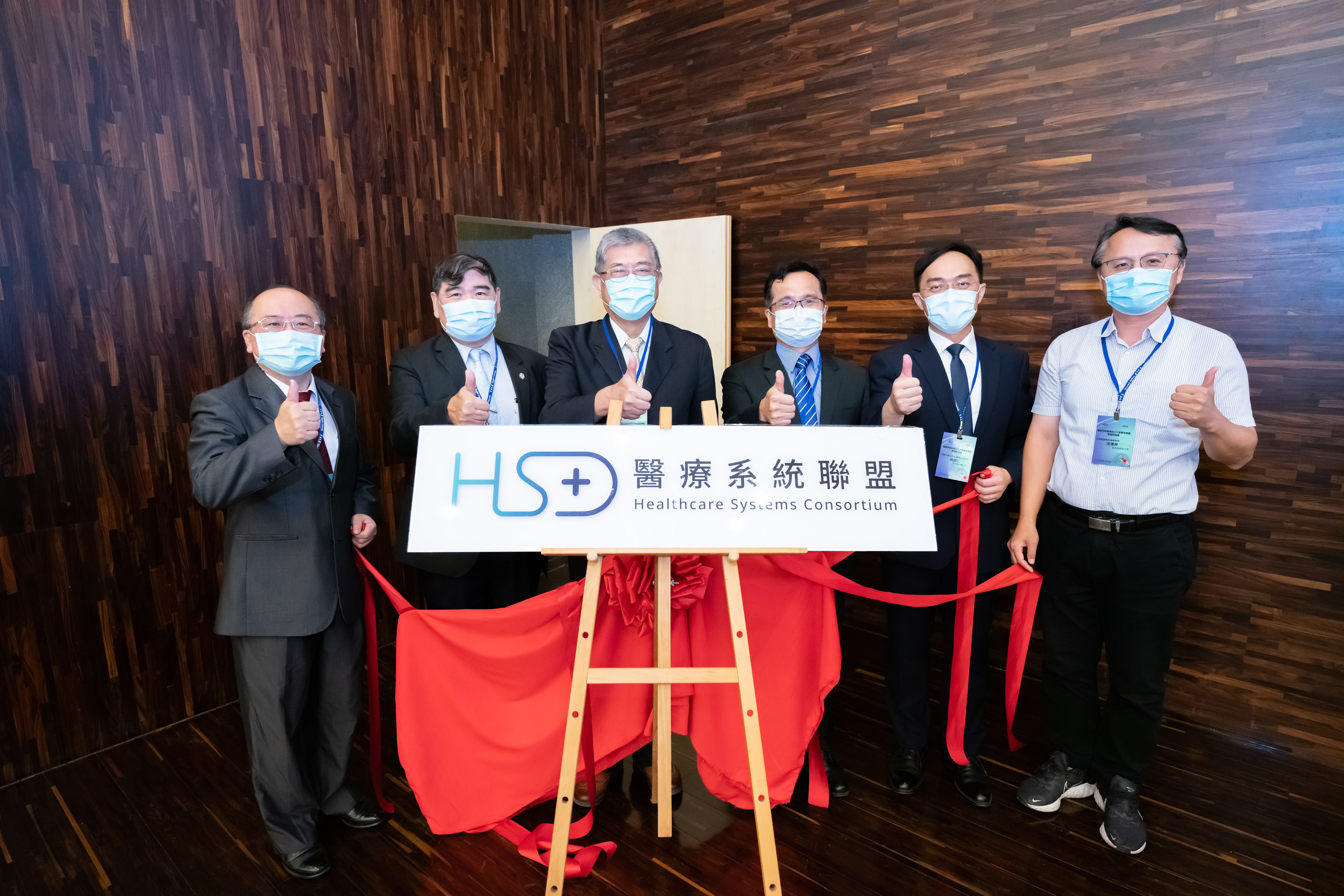
Official plaque unveiling of the Healthcare Systems Consortium as an incorporated associationOriginal image
We are honored that, with the support of Consortium members, the first-term Directors and Supervisors of the Consortium were elected: Professor San-Kan Lee, currently Chief Strategy Officer of Tungs' Taichung MetroHarbor Hospital, serves as first-term Chairman; Superintendent Ming-Che Tsai of Chung Shan Medical University Hospital, Chairman Simon Chen of ADATA Technology, and Superintendent Shih-Wei Huang of Chang Bing Show Chwan Memorial Hospital serve as Vice Chairmen; and Deputy Superintendent Che-Hung Tsai of the Puli Branch of Taichung Veterans General Hospital serves as Executive Supervisor. Chairman San-Kan Lee appointed Professor Shao-Jen Weng of Tunghai University's Department of Industrial Engineering and Enterprise Information as the first Secretary-General of the Healthcare Systems Consortium. In addition, the Consortium has set up a number of working committees covering many related fields, including medical device processing, international affairs, medical artificial intelligence, personalized medicine, traditional Chinese medicine, human factors engineering and related regulations, and will continue to serve and contribute to healthcare and technology.
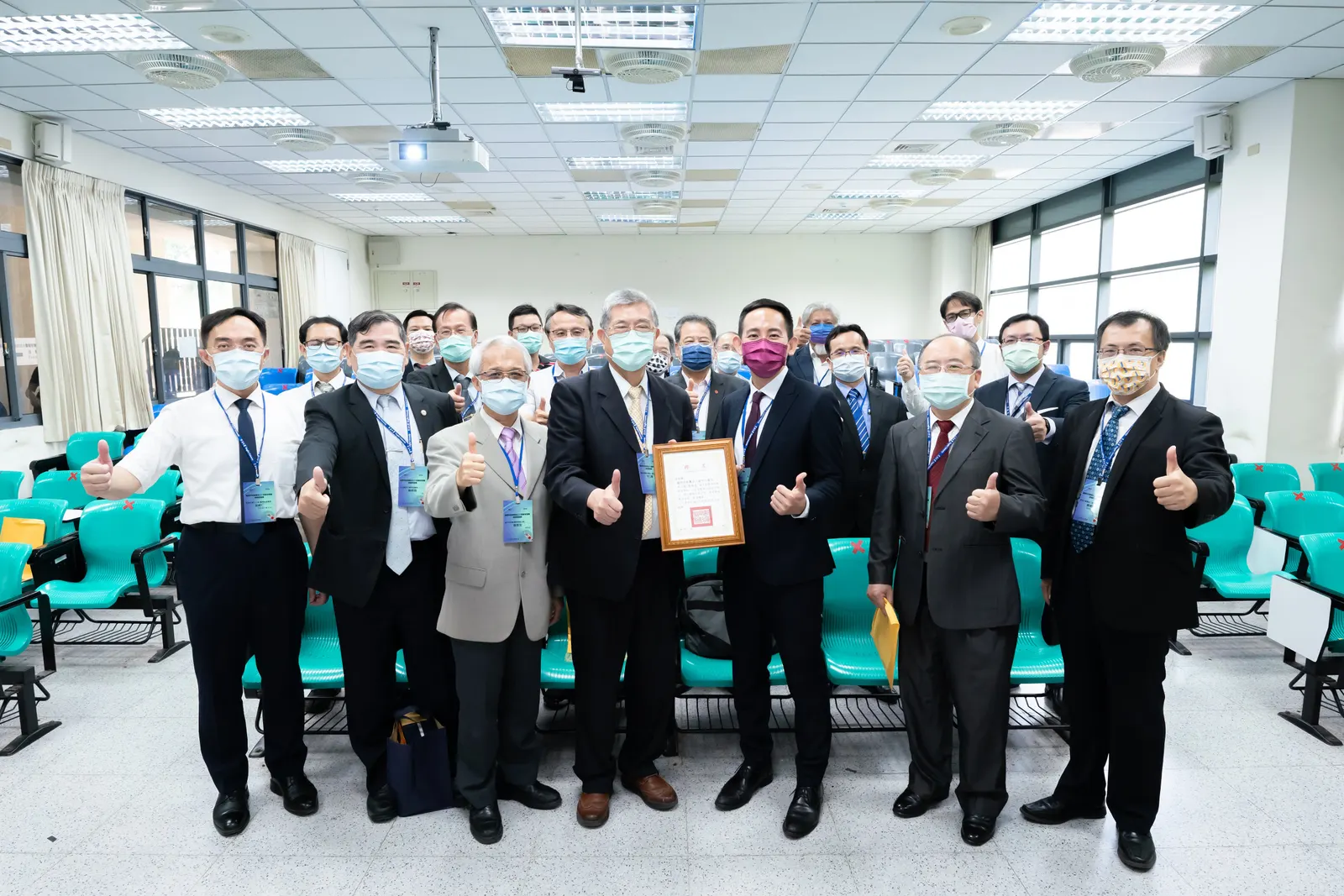
Group photo of the Consortium's first-term Directors and SupervisorsOriginal image
Consortium Chairman San-Kan Lee said that Taiwan has world-class medical professionals and technology, as well as the world's strongest electronics and semiconductor industries; if these two strengths in healthcare and technology are combined, Taiwan's smart healthcare will surely lead the world. This is also the Consortium's future vision and mission. As early as two years ago, the Consortium team began working on international cooperation and development, such as taking part in international economic cooperation conferences, the EU Investment Forum 2020, the 8th Taiwan–Finland Economic Cooperation Conference, the Taiwan–Estonia economic cooperation conference, and the Poland cooperation business opportunity day, all of which help bring Taiwan's smart healthcare onto the international stage.
Secretary-General Professor Shao-Jen Weng explained that this forum differs from smart healthcare forums held by other organizations: the "Healthcare Systems Consortium Founding Assembly and International Smart Healthcare Forum" focuses on in-depth exploration of the pain points of smart healthcare. CEO 錢宗良 of the Institute for Biotechnology and Medicine Industry (IBMI), Senior Director 李宗洲 of the Biomedical Translation Research Center of Academia Sinica, Professor 郭榮富 of the Medical Device Innovation Center of National Cheng Kung University, and Dr. 柯錦和, founder of the biomedical company 康德生醫, were specially invited to share with participants on smart healthcare marketing strategies, the biotechnology field, the Southbound healthcare policy, and the medical device industry.
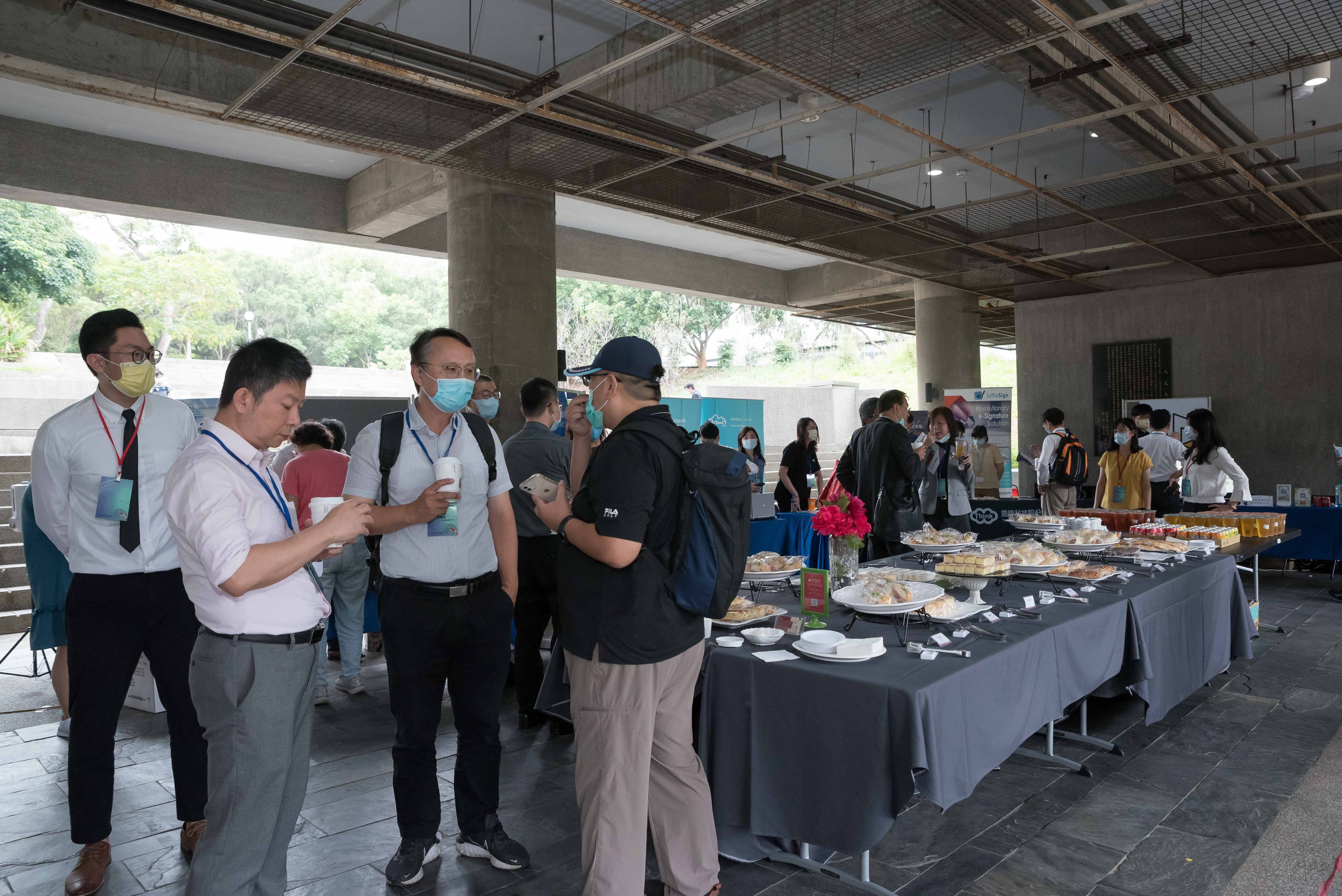
Outside the venue it was also very lively: Consortium members were specially invited to set up exhibition booths, including the precision machinery company 東野精機, Eray Information Co., Ltd., the National Veterinary Hospital, the technology company 雲想科技, the research and innovation company 釩泰研究創新, ADATA Technology, the fintech company 英特拉金融科技, the health company 寶家健康, the technology company 桓基科技 and others from health-related fields, displaying new smart equipment, instruments and new technologies.
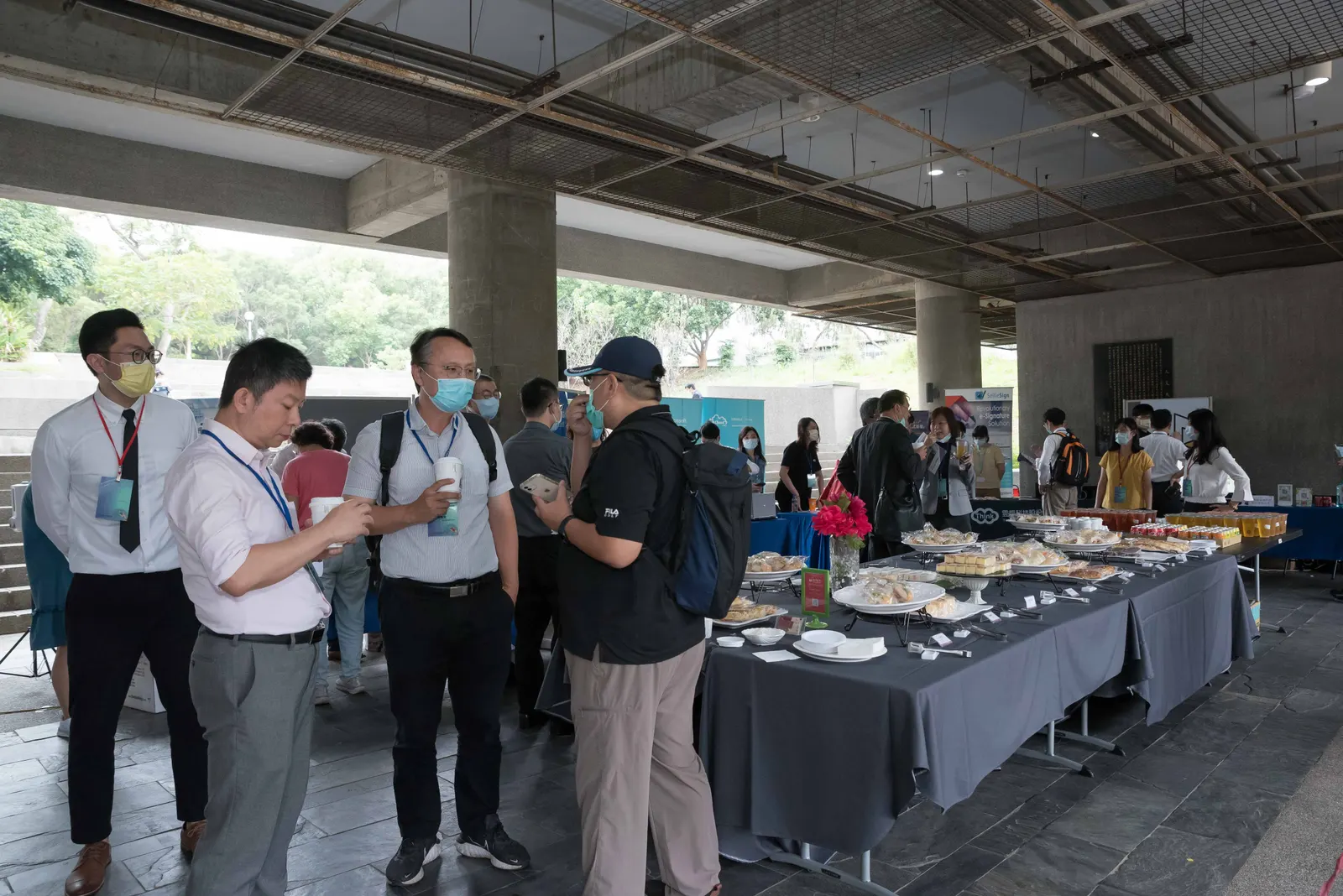
Vendor networking and tea breakOriginal image
The Consortium is currently one of Taiwan's large cross-disciplinary exchange platforms. It aims to create services for the medical community and improve healthcare quality, to provide a platform for cross-sector exchange, and to become a channel for exporting Taiwan's high-quality healthcare services. We also thank officials from all sectors for their support in working together so that the Healthcare Systems Consortium can contribute to Taiwan's healthcare and technology.
Sixth Annual General Meeting
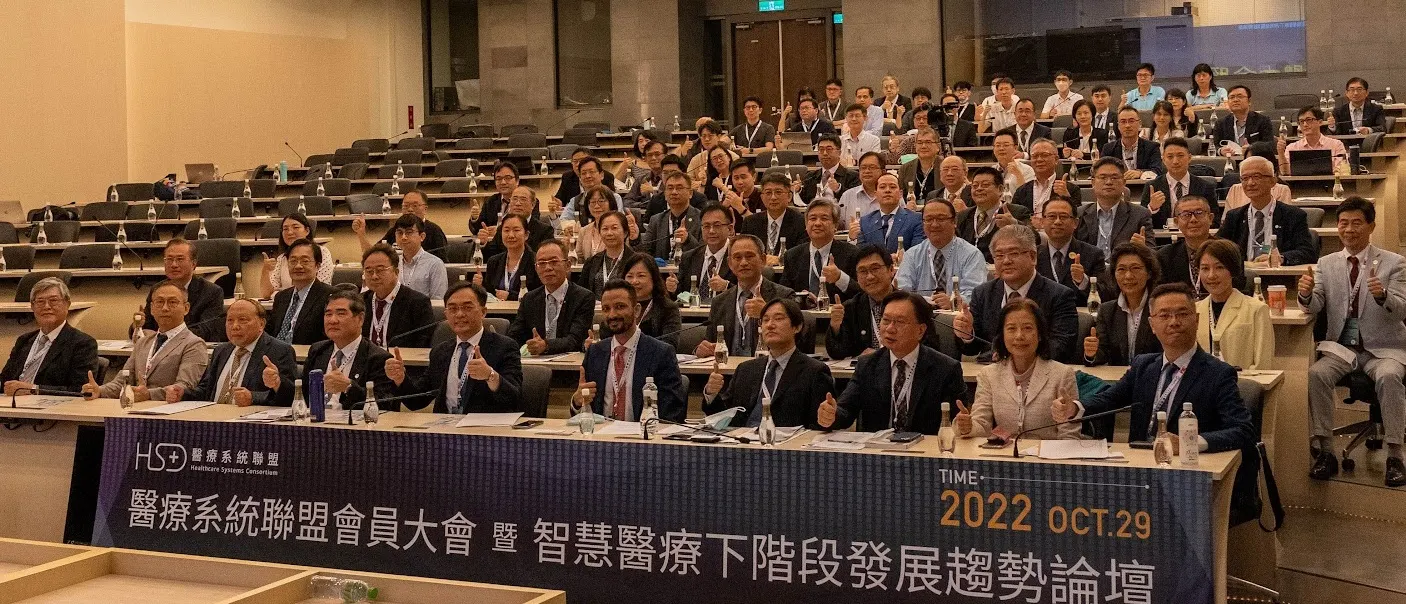
The Healthcare Systems Consortium's industry-academia cooperation between Tunghai University and the large hospitals of central Taiwan has now reached a mature stage. This September, arranged by CBIA Chairman 陳建州 and advisor 蔡育翰, CEO Shao-Jen Weng met with the chairs of several associations to jointly advocate the concept of a national medical and pharmaceutical cooperation alliance, expanding the Healthcare Systems Consortium's cooperation with other organizations, achieving functional and regional complementarity, and creating new cross-industry business opportunities.
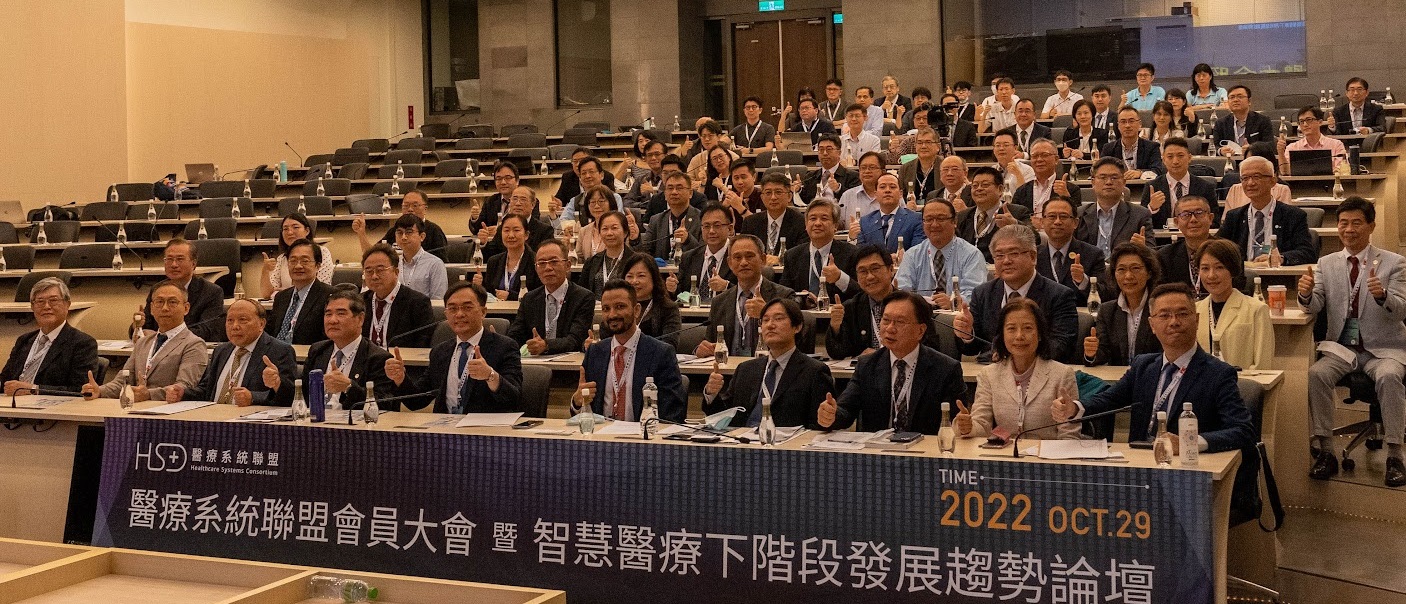
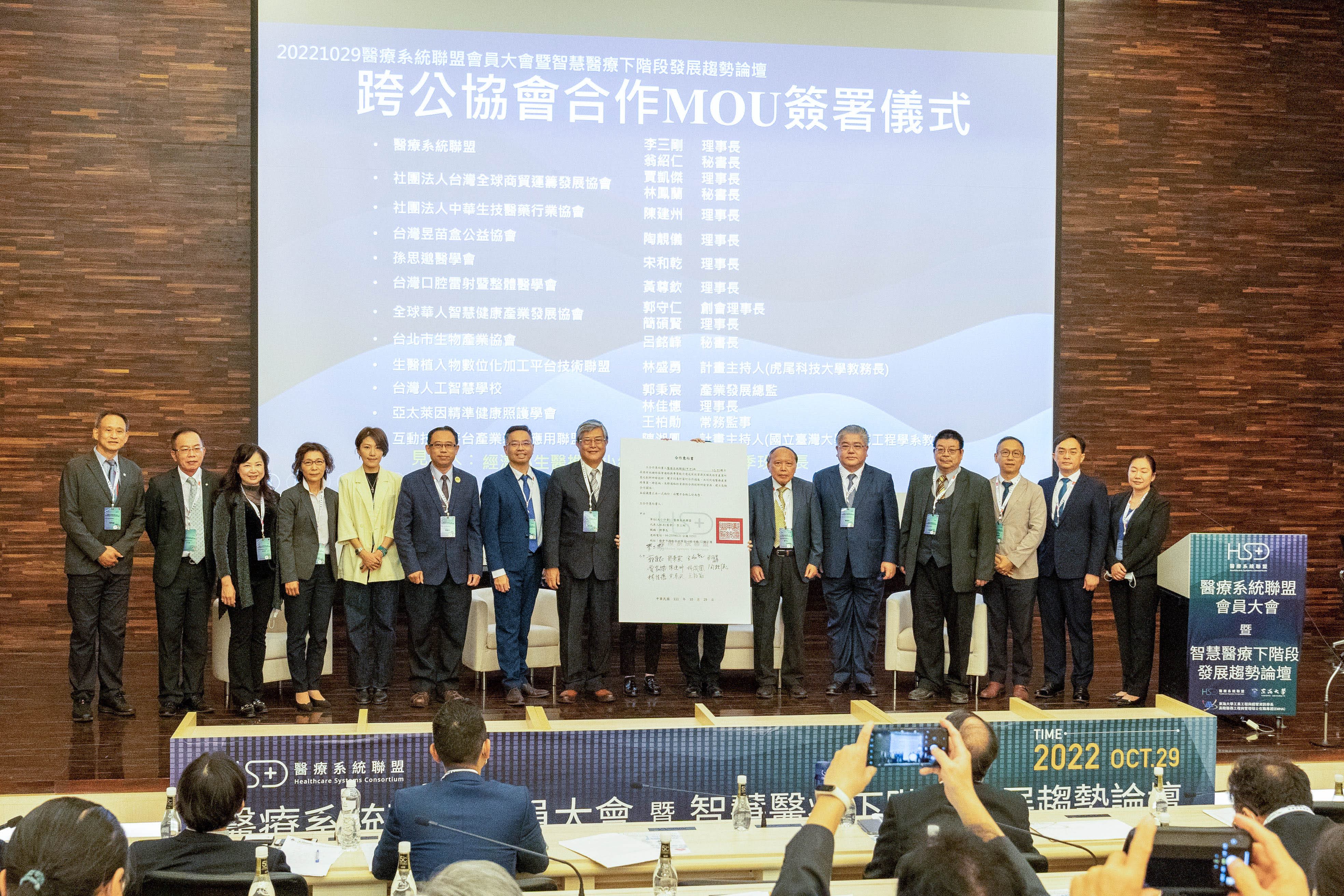
Twelve major organizations gather at Tunghai University to sign an MOU
On October 29, the Healthcare Systems Consortium (HSC) held the "Healthcare Systems Consortium General Assembly and Forum on Next-Stage Trends in Smart Healthcare" in the 茂榜廳 hall of Tunghai University. Chairman San-Kan Lee said that the highlight of this General Assembly was the joint signing of a letter of intent for cooperation by the heads of twelve major organizations, committing to effectively link the associations' channels and professional capabilities, achieve effective complementarity of resources, and develop the innovative R&D technologies the industry needs. After signing, the parties agreed to jointly promote cross-professional, cross-regional and cross-channel integration of resources and innovative R&D resources in the healthcare industry, and to establish a long-term cooperative relationship. The signatories were: Chairman San-Kan Lee of the Healthcare Systems Consortium; Founding Chairman 郭守仁 of the Global Chinese Smart Health Industry Development Association (全球華人智慧健康產業發展協會); Chairman 賈凱傑 of the Taiwan Global Trade and Logistics Development Association (社團法人台灣全球商貿運籌發展協會); Chairman 陳建州 of the Chinese Biotech and Pharmaceutical Industry Association (CBIA) (社團法人中華生技醫藥行業協會); Chairwoman 陶靚儀 of the Taiwan Seedling Box Charity Association (台灣昱苗盒公益協會); Chairman 黃尊欽 of the Taiwan Society of Oral Laser and Holistic Medicine (台灣口腔雷射暨整體醫學會); Chairman 宋和乾 of the Chinese International Sun Simiao Medical Association (中華國際藥王孫思邈醫學會); Secretary-General 呂銘峰 of the Taipei Biotechnology Industry Association (台北市生物產業協會); program director 林盛勇 of the Biomedical Implant Digital Processing Platform Technology Alliance (生醫植入物數位化加工平台技術聯盟); Director of Industry Development 郭秉宸 of the Taiwan AI Academy (台灣人工智慧學校); Chairwoman 林佳憓 of the Asia-Pacific Rhein Precision Health Care Society (亞太萊因精準健康照護學會); and Chairwoman 陳湘鳳 of the Interactive Technology Platform Emerging Industry Applications Alliance (互動技術平台產業新興應用聯盟). The twelve major organizations jointly signed the letter of intent for cooperation.
The Healthcare Systems Consortium builds a national alliance through cross-industry cooperation
Healthcare Systems Consortium CEO Shao-Jen Weng said that the Consortium is positioned to recruit Consortium members, promote the Consortium's core technologies, and interact and match with the medical sector, so that Consortium members can upgrade their technology and build capabilities for service innovation and development, creating excellent healthcare service quality. It provides a platform for industry to get to know the medical sector and actively invites local governments to explain future healthcare-related policies, so that through their participation Consortium members gain more interaction and business service opportunities with the medical sector, reducing communication barriers in both directions; and, in line with government regulations, it matches hospitals and companies to jointly develop healthcare products or services that meet real needs. The Consortium's industry-academia cooperation between Tunghai University and the large hospitals of central Taiwan has now reached a mature stage. This September, arranged by CBIA Chairman 陳建州 and advisor 蔡育翰, CEO Shao-Jen Weng met with the chairs of several associations to jointly advocate the concept of a national medical and pharmaceutical cooperation alliance, expanding the Consortium's cooperation with other organizations, achieving functional and regional complementarity, and creating new cross-industry business opportunities.
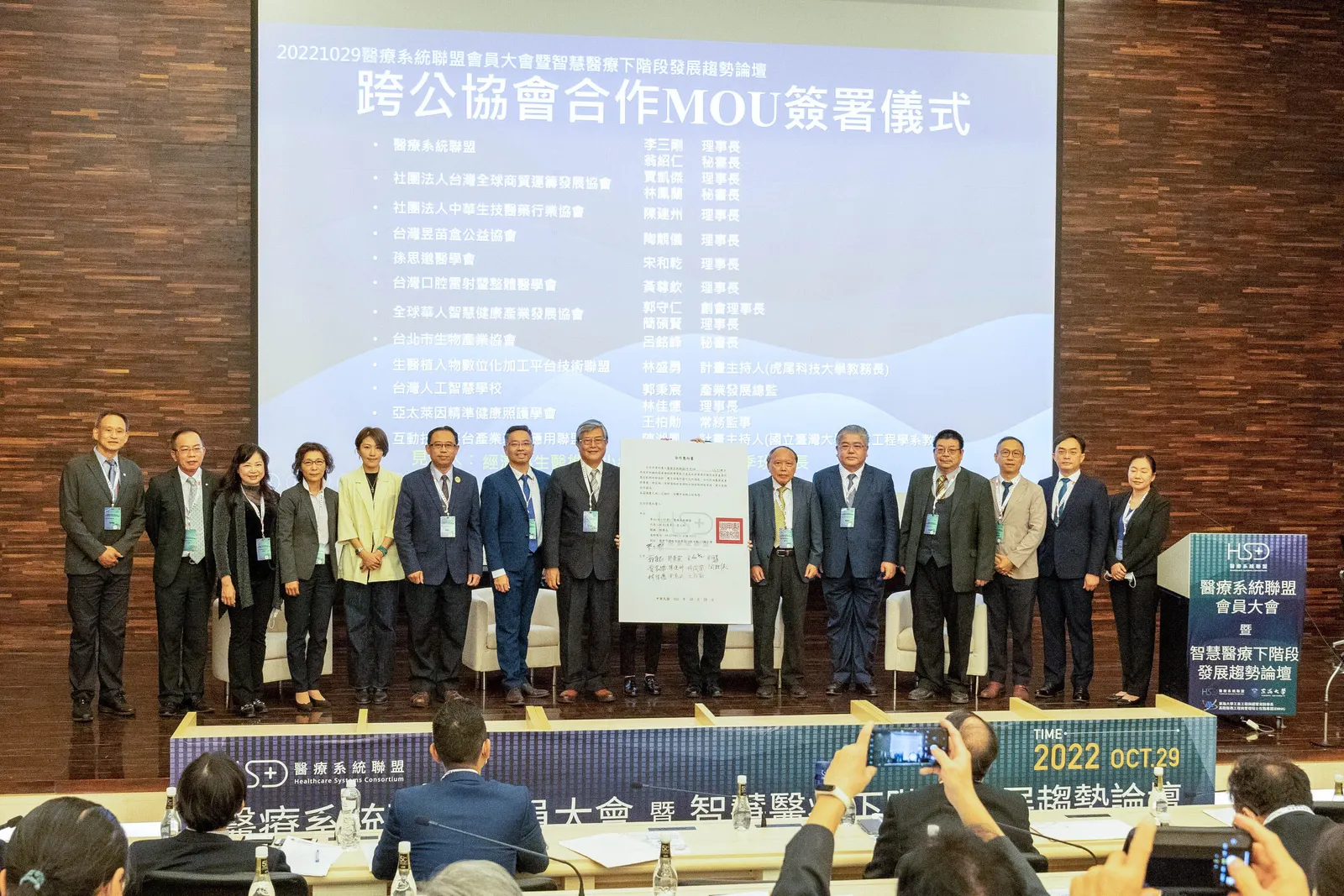
Twelve major organizations sign the MOU togetherOriginal image
Chinese Biotech and Pharmaceutical Industry Association expands the biotech and pharmaceutical ecosystem
Chairman 陳建州 of the Chinese Biotech and Pharmaceutical Industry Association said that Taiwan's biotech and pharmaceutical products combine good prices and quality, and its talent is of excellent caliber; however, the Taiwanese market is small, small and medium-sized biotech and pharmaceutical companies have limited resources, and there is no suitable international biotech and pharmaceutical cooperation platform. In view of this, the association was founded at the joint urging of experts from industry, government and academia, hoping to work for the development of Taiwan's biotech and pharmaceutical industry. CBIA's members include manufacturers and distributors (pharmaceuticals, medical devices and instruments, health supplements, cosmetics, assistive devices, etc.), healthcare channels (medical institutions, pharmacies, traditional Chinese medicine, retirement villages, long-term care facilities, training institutions, etc.), pharmaceutical e-commerce, cloud systems, logistics providers and financial holding companies. Combining the resources of three major foundations—ITRI, the Institute for Information Industry and the Pharmaceutical Industry Technology and Development Center—the association has obtained Industrial Development Bureau projects for two consecutive years. In May this year it set up an overseas branch exhibition center in Taipei World Trade Center Exhibition Hall 1 to connect with importers and exporters, with the goal of building a self-sufficient biotech and pharmaceutical ecosystem for its members.
Professional division of labor among twelve major organizations: coexistence, co-prosperity, sharing and win-win
Chairwoman 陶靚儀 of the Taiwan Seedling Box Charity Association (TSSA) said that the twelve major organizations each have their professional role: the Healthcare Systems Consortium, backed by Tunghai University, integrates the medical resources of large hospitals, while TSSA integrates Taiwan's excellent medical and technological innovation capacity and applies it to charitable services for healthy ageing, child development and pets, building a cross-disciplinary, cross-professional technology-for-good ecosystem. TSSA also places great emphasis on sustainable development, hoping to create a better altruistic social atmosphere through sustainable cooperation models.
The signing of this MOU allows the resources of the associations and alliances to cover biotech and pharmaceuticals, agricultural technology, food, health and beauty, dental channels, traditional Chinese medicine channels, chain drugstore channels, medical information technology, artificial intelligence, biomedical implants, precision health care, smart senior care, high-efficiency buildings, green building materials, pharmaceutical warehousing, and logistics. In the future, through the professional division of labor among the twelve major organizations, they hope to create an ecosystem of coexistence, co-prosperity, sharing and win-win.
Seventh Annual General Meeting
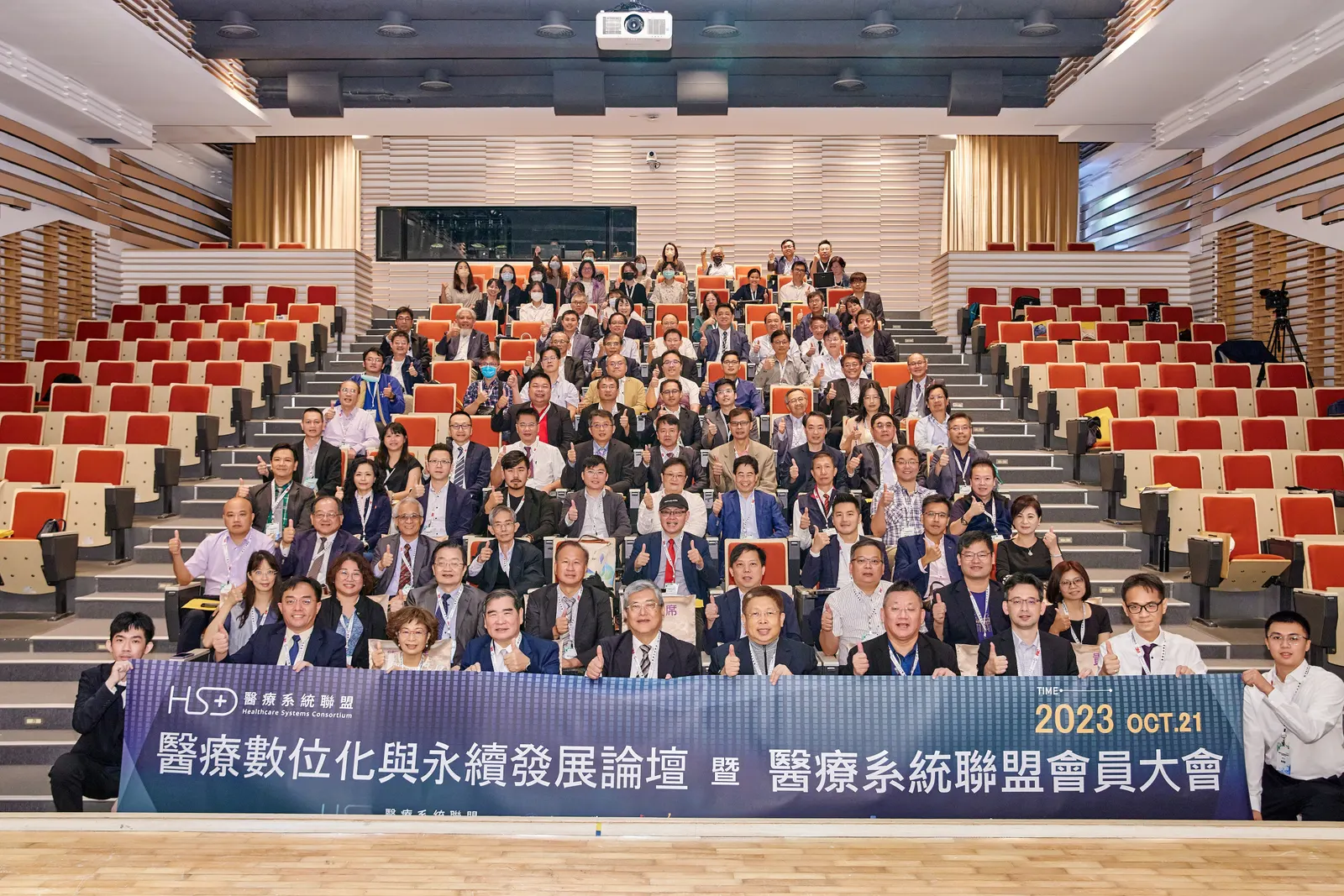
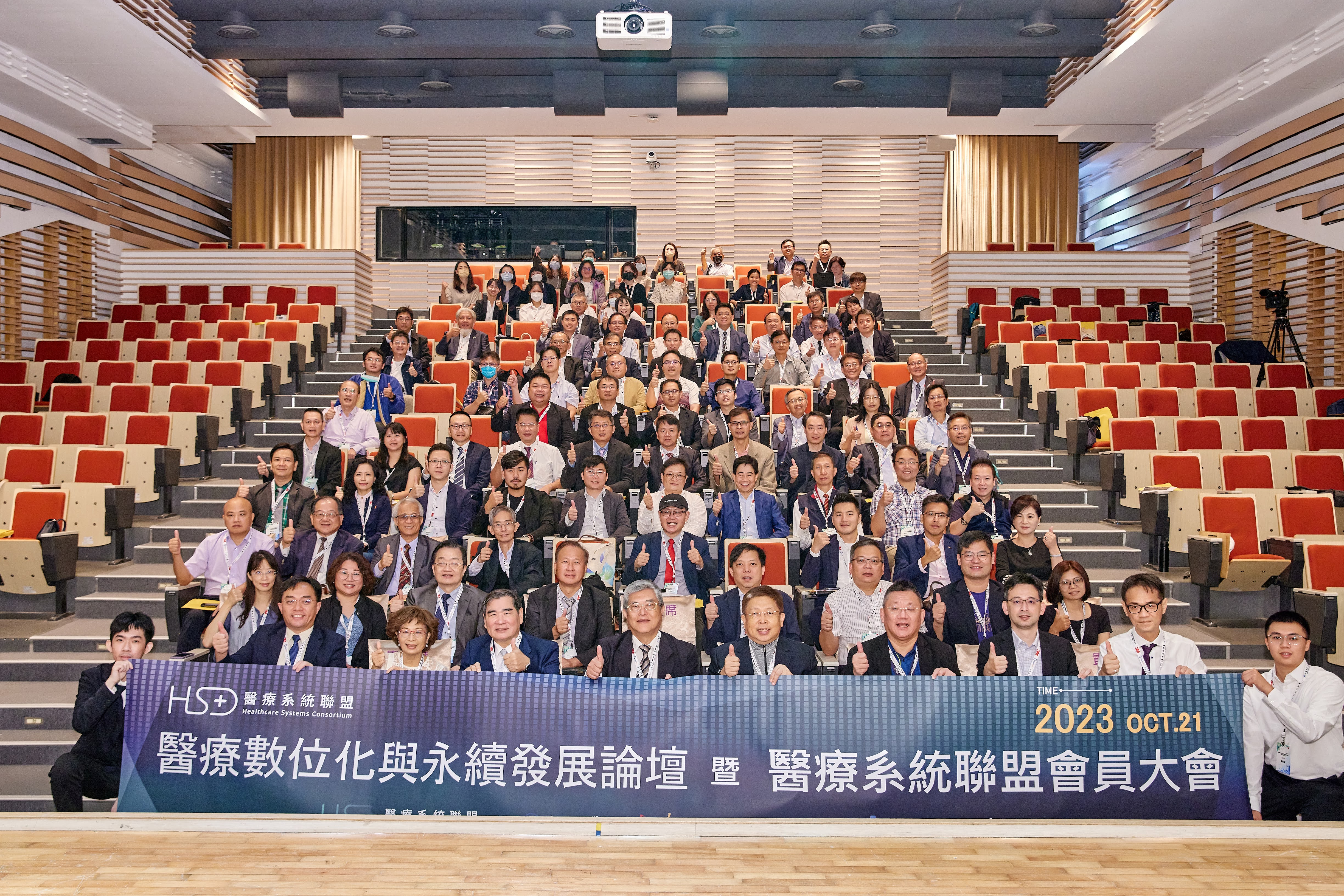
The "Forum on Healthcare Digitalization and Sustainable Development and Consortium General Assembly", organized by the Healthcare Systems Consortium (HSC), was held at Tunghai University in Taichung on October 21, 2023, bringing together leading figures from the medical, industrial and academic sectors to discuss how to use technology to implement sustainable business policies. The meeting also invited several heavyweight speakers from industry, academia and research to give outstanding keynote speeches; this report examines the highlights of each talk in turn. Spending on healthcare digitalization and sustainable development is an investment, not a cost. With the rapid advance of technology, healthcare digitalization has become an important way to improve the efficiency and quality of medical services and patient safety. It not only makes the exchange of information faster and more accurate but also provides patients with more personalized and convenient medical services. However, with population ageing and the rise in chronic diseases, demand for medical resources is becoming increasingly acute, making sustainable development an issue that cannot be ignored. Sustainable development aims to ensure the rational use and long-term sustainability of resources, meeting present needs while considering the needs of future generations. Against this background, the link between healthcare digitalization and sustainable development is particularly important.
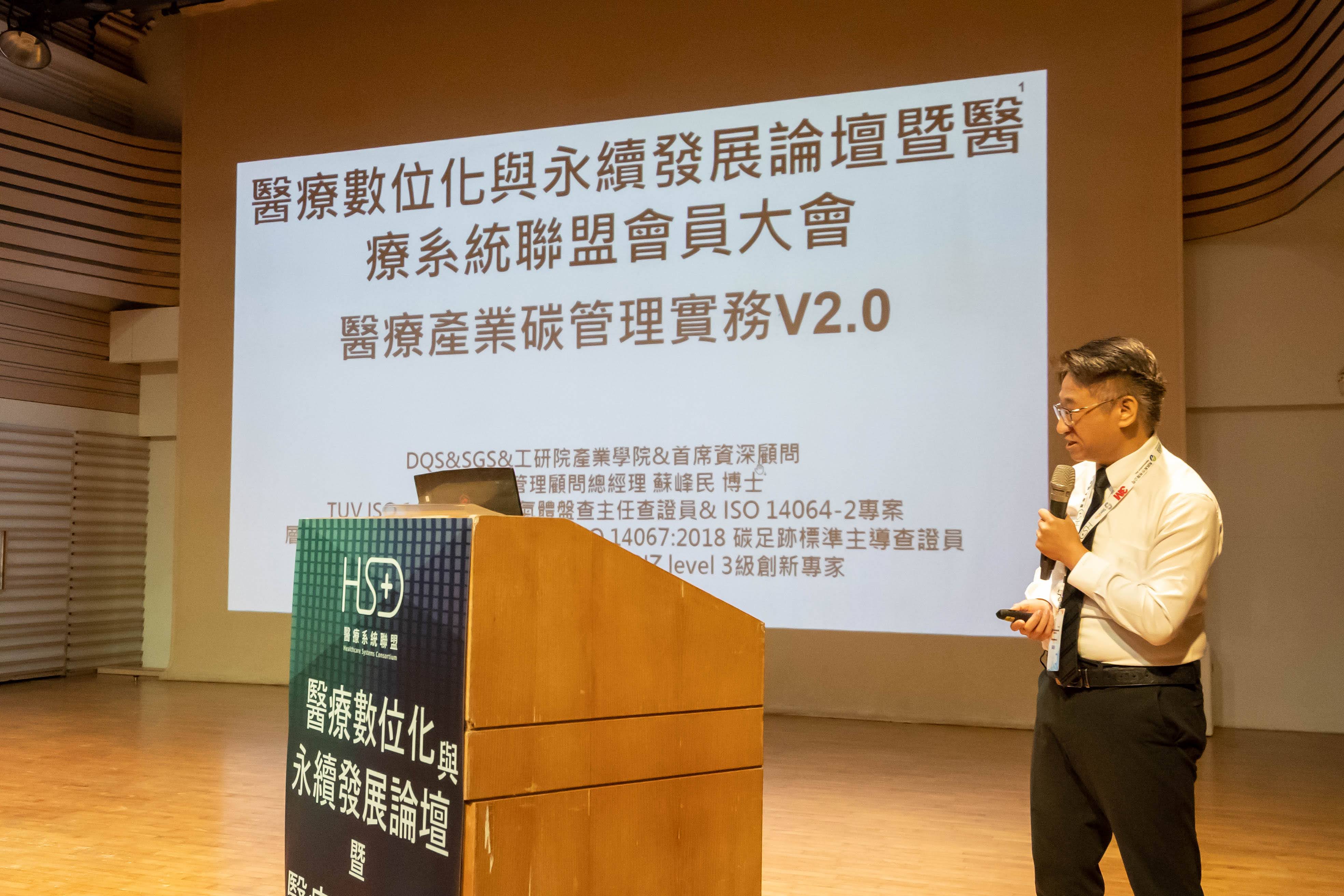
Talk by Director 蘇峰民
Facing the great challenges of global climate change and net-zero emissions, 蘇峰民 explored "Carbon Management Practice in the Healthcare Industry" in depth in his recent talk. As a director, special advisor and general manager at DQS, the ITRI College, CPC, the Chinese Six Sigma Management Association and an institutional innovation management consulting company, Director 蘇峰民 emphasized the important role Taiwan's high-quality healthcare system can play in pursuing reductions in greenhouse gas emissions and achieving net-zero greenhouse gas emissions. He pointed out that the COP26 health initiatives are an important starting point for building climate-smart health systems. For the first time, the United Nations has included health systems in its climate change work program, setting out five main asks: building climate-resilient health systems, developing sustainable low-carbon health systems, conducting health-related climate adaptation research, including health systems in nationally determined contributions for greenhouse gas reduction targets and plans, and increasing the participation of health professionals in climate action.
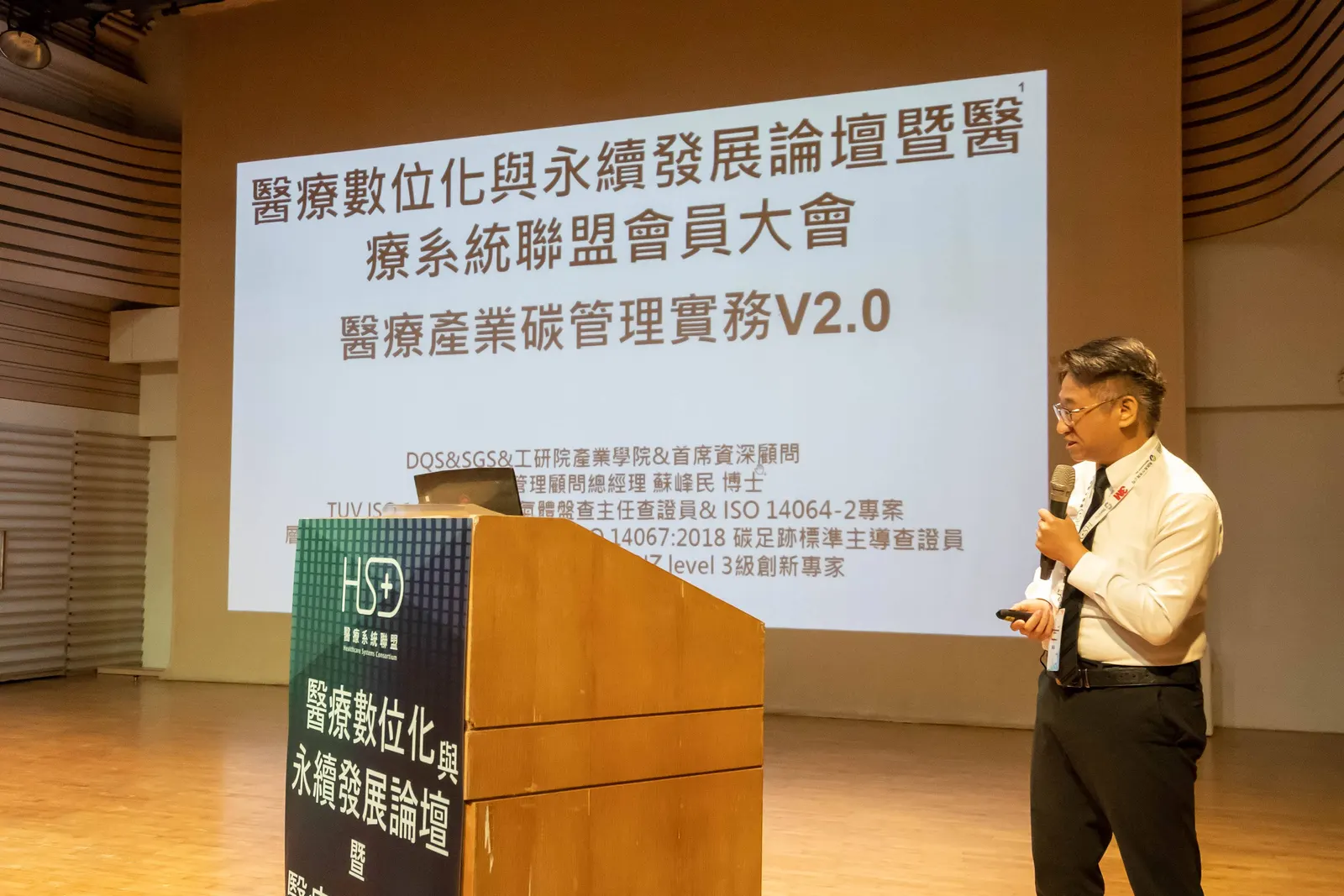
Director 蘇峰民 generously shares recent key healthcare issuesOriginal image
Talk by Director 范建德
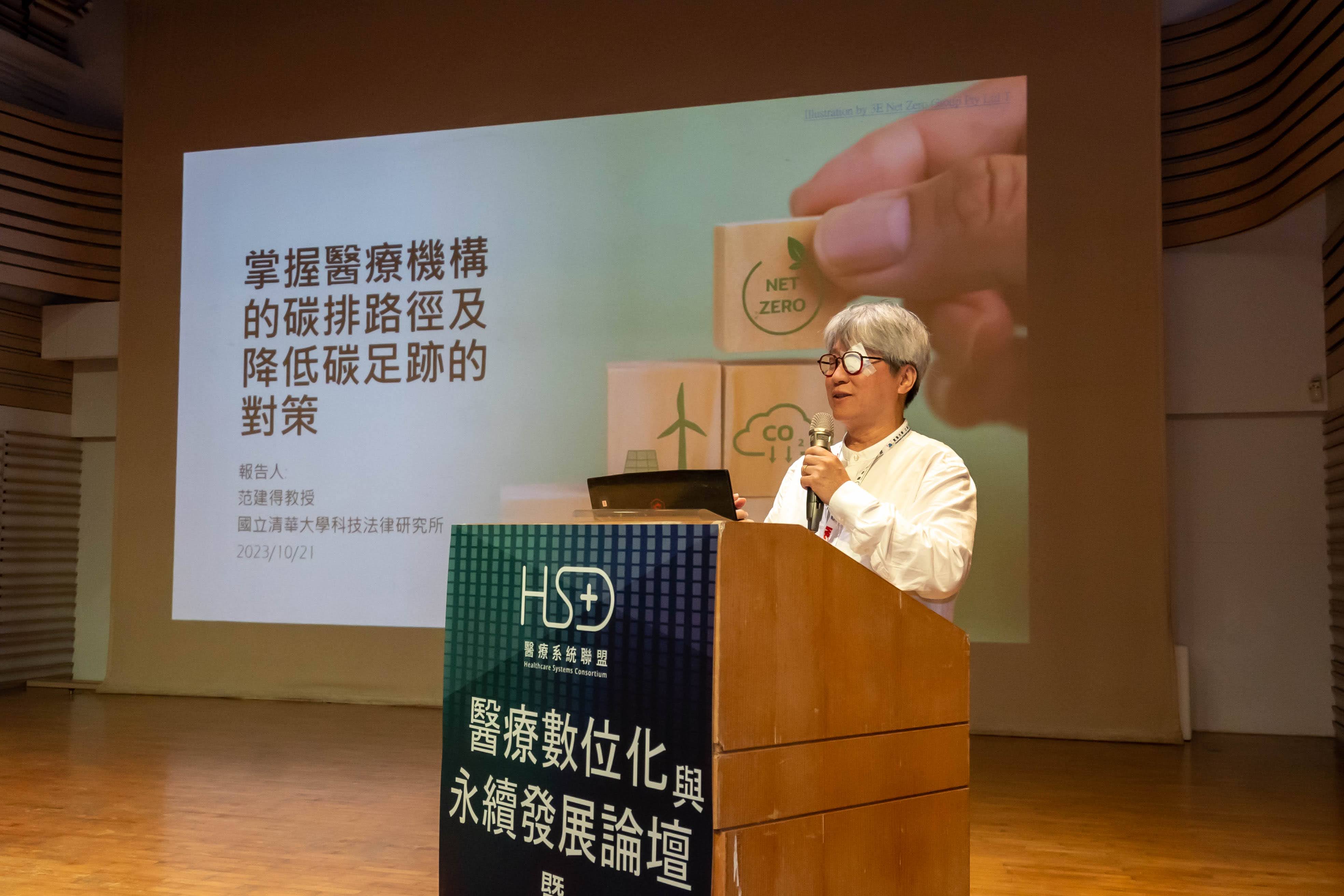
Under the broad trends of global warming and climate change, understanding and reducing carbon emissions has become an important task for every industry. Professor 范建得 of the Institute of Law for Science and Technology at National Tsing Hua University gave a detailed discussion in this talk on "Understanding the Carbon Emission Pathways of Healthcare Institutions and Strategies to Reduce Their Carbon Footprint".
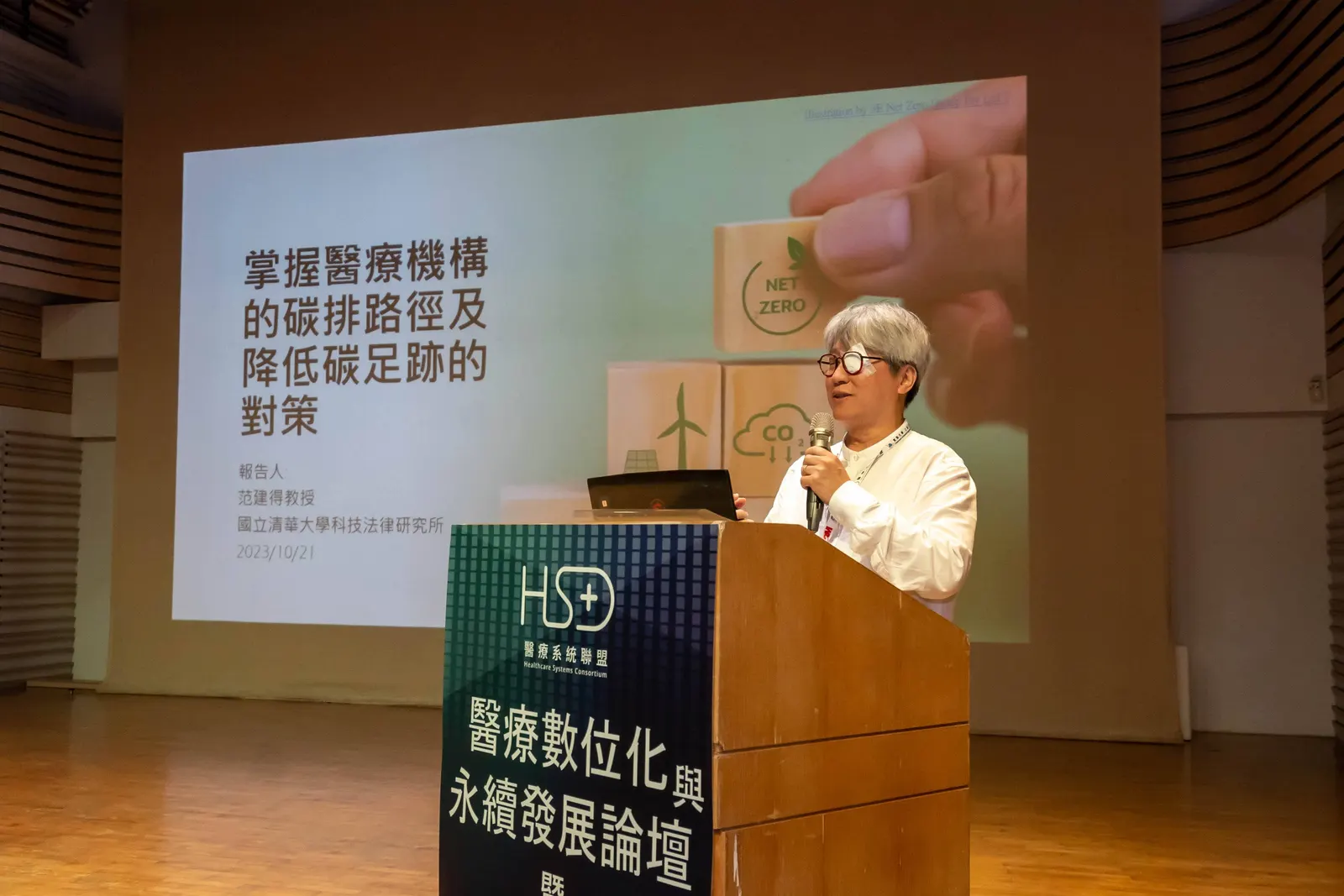
Professor 范建得 discusses net-zero trends in global supply chainsOriginal image
Talk by President 周志鴻
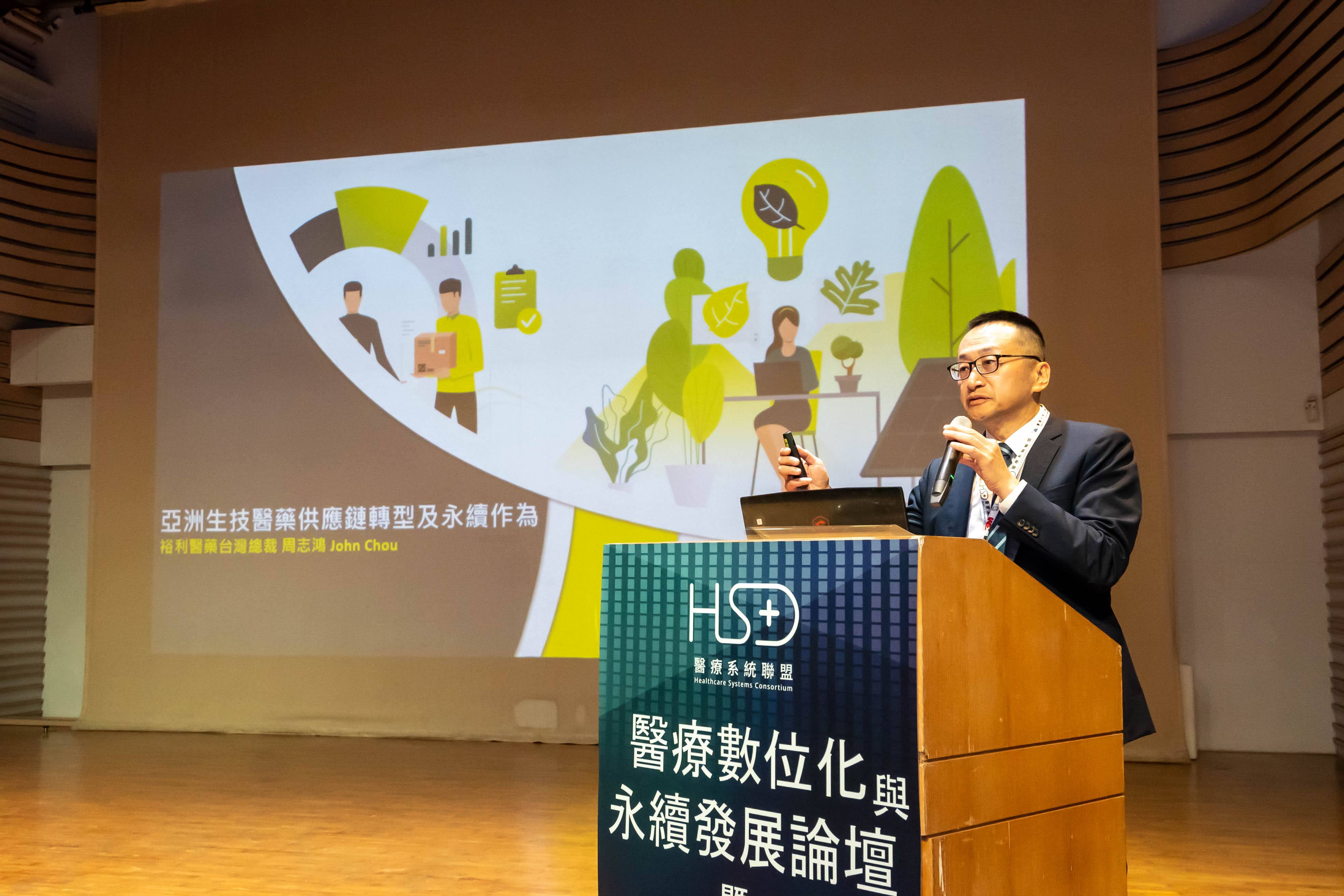
周志鴻, President of Zuellig Pharma Taiwan, explored in depth many aspects of the transformation and sustainability actions of the Asian pharmaceutical supply chain. He first described Zuellig Pharma's commitment to reducing greenhouse gas emissions, including reduction targets for both direct and indirect emissions. He noted that the company plans to cut direct emissions by 35% by 2025 and achieve carbon neutrality by 2030. These targets are aligned with the Science Based Targets initiative (SBTi), jointly launched by several international organizations. Beyond emission reductions, he also discussed Zuellig Pharma's sustainability plan, which covers four main pillars: improving health, talent development, environmental friendliness and setting standards of integrity. He stressed that these pillars not only demonstrate corporate social responsibility but are also key to the company's sustainable operation.
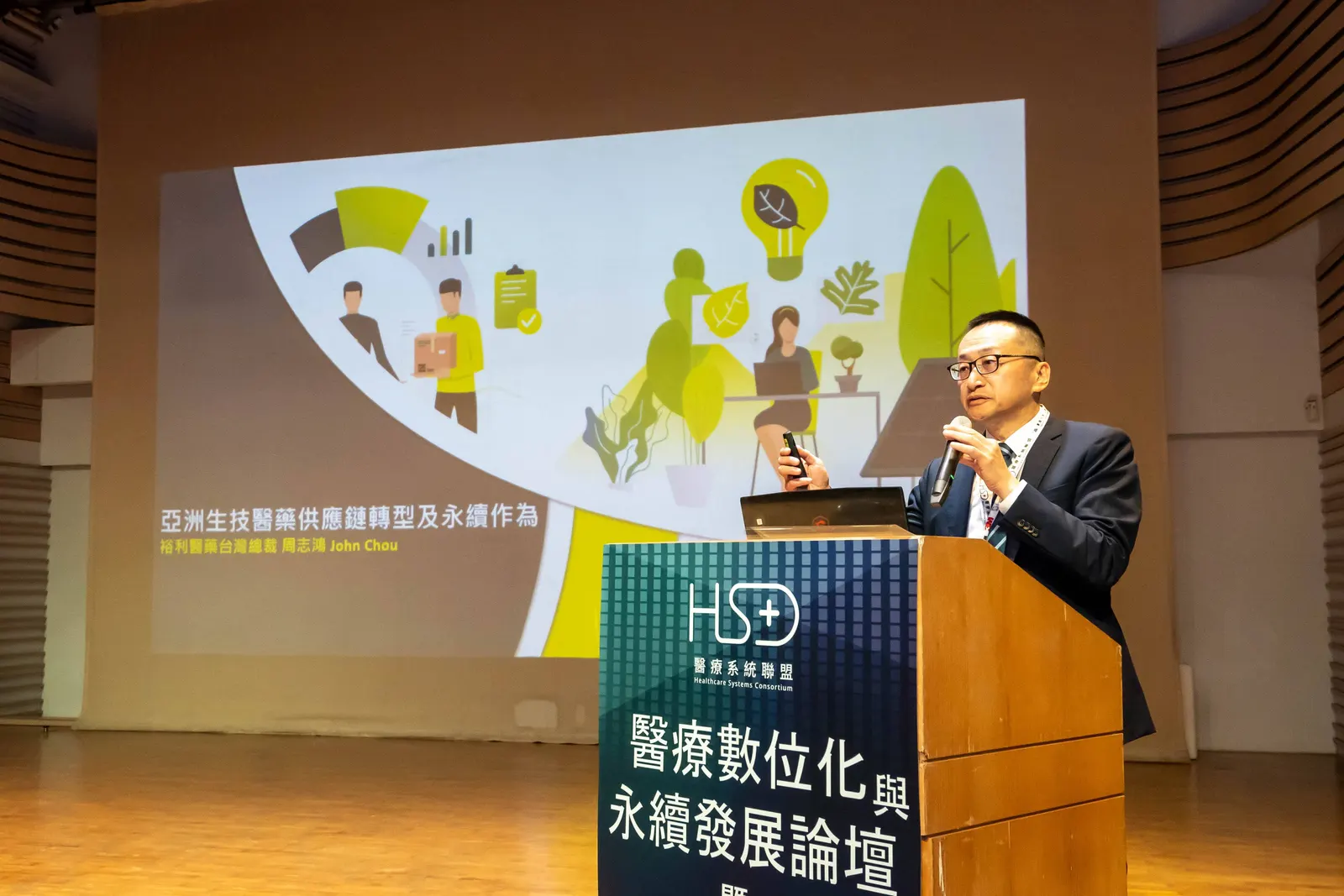
President 周志鴻 shares Zuellig Pharma's sustainability planOriginal image
Our hard-working staff
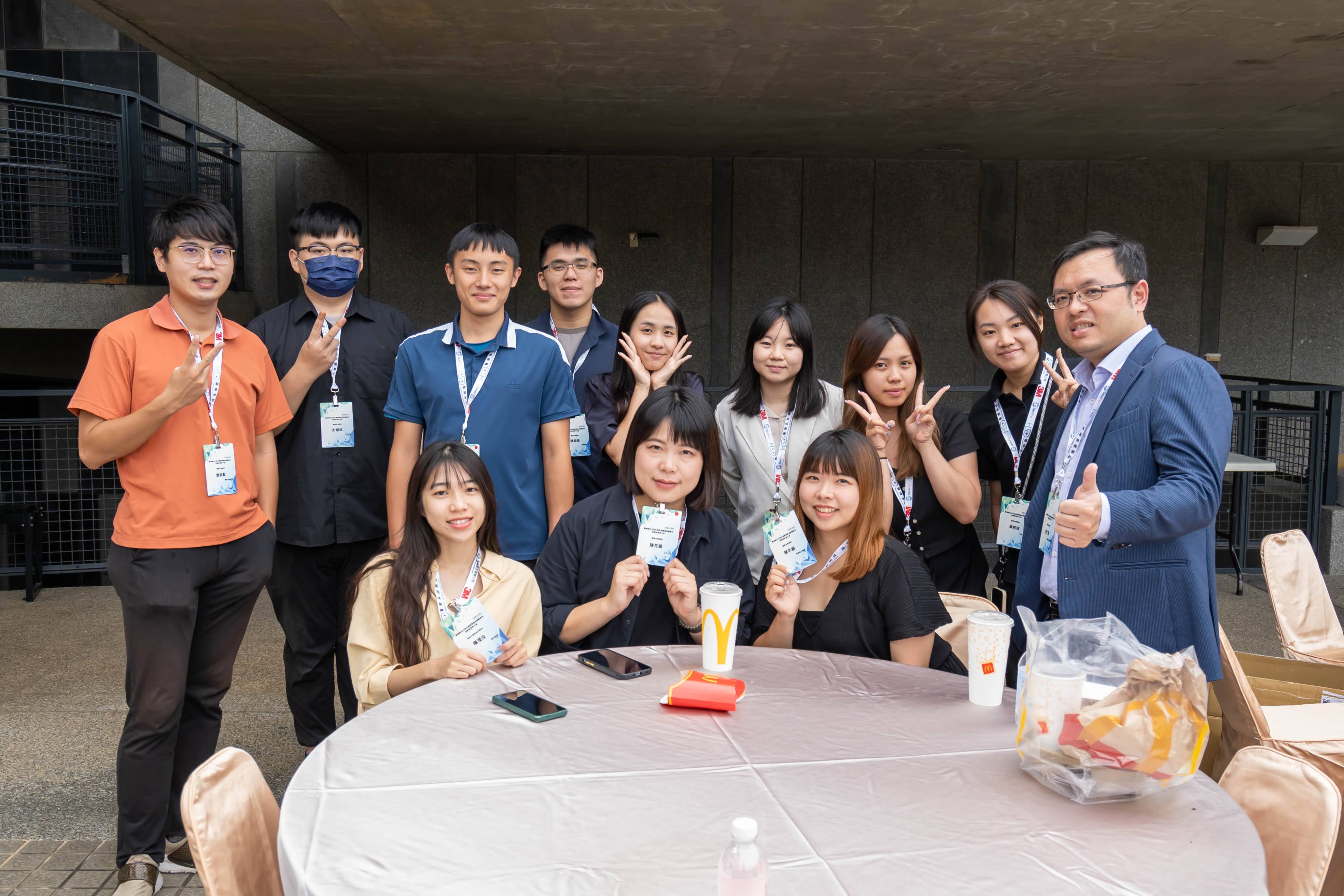
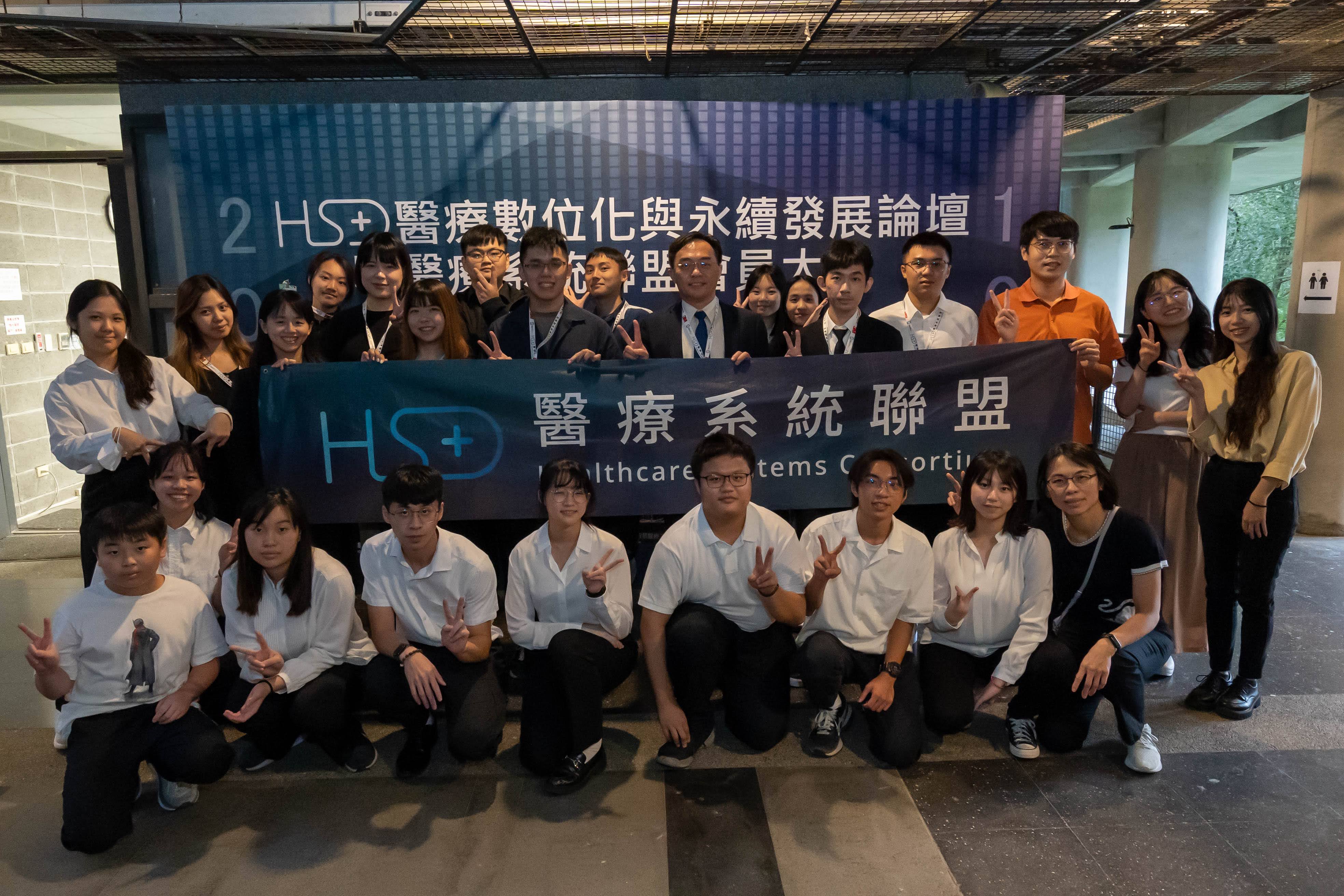
Finally, we want to mention the staff who worked behind the scenes at this event. Thank you to the event staff for your careful planning and hard work; your enthusiasm and professionalism brought the event to life. With everyone's help, the event ran smoothly and gave participants an unforgettable experience. Your efforts not only demonstrated outstanding organizational skills but also ignited the enthusiasm of participants. Thank you for making the event such a success—we look forward to creating more wonderful moments together in the future!
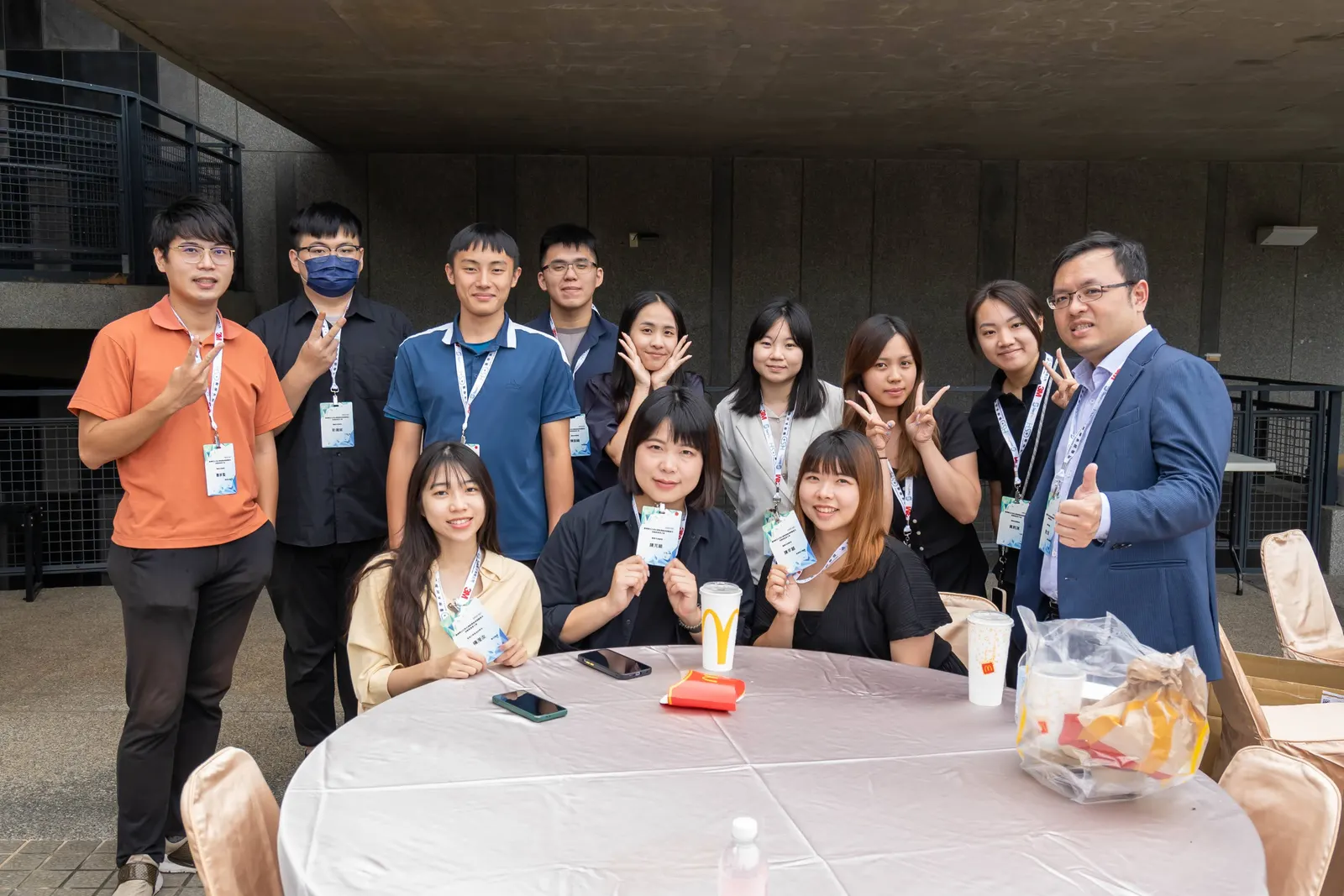
Thank you to the staff who worked from early morning until evening!!Original image 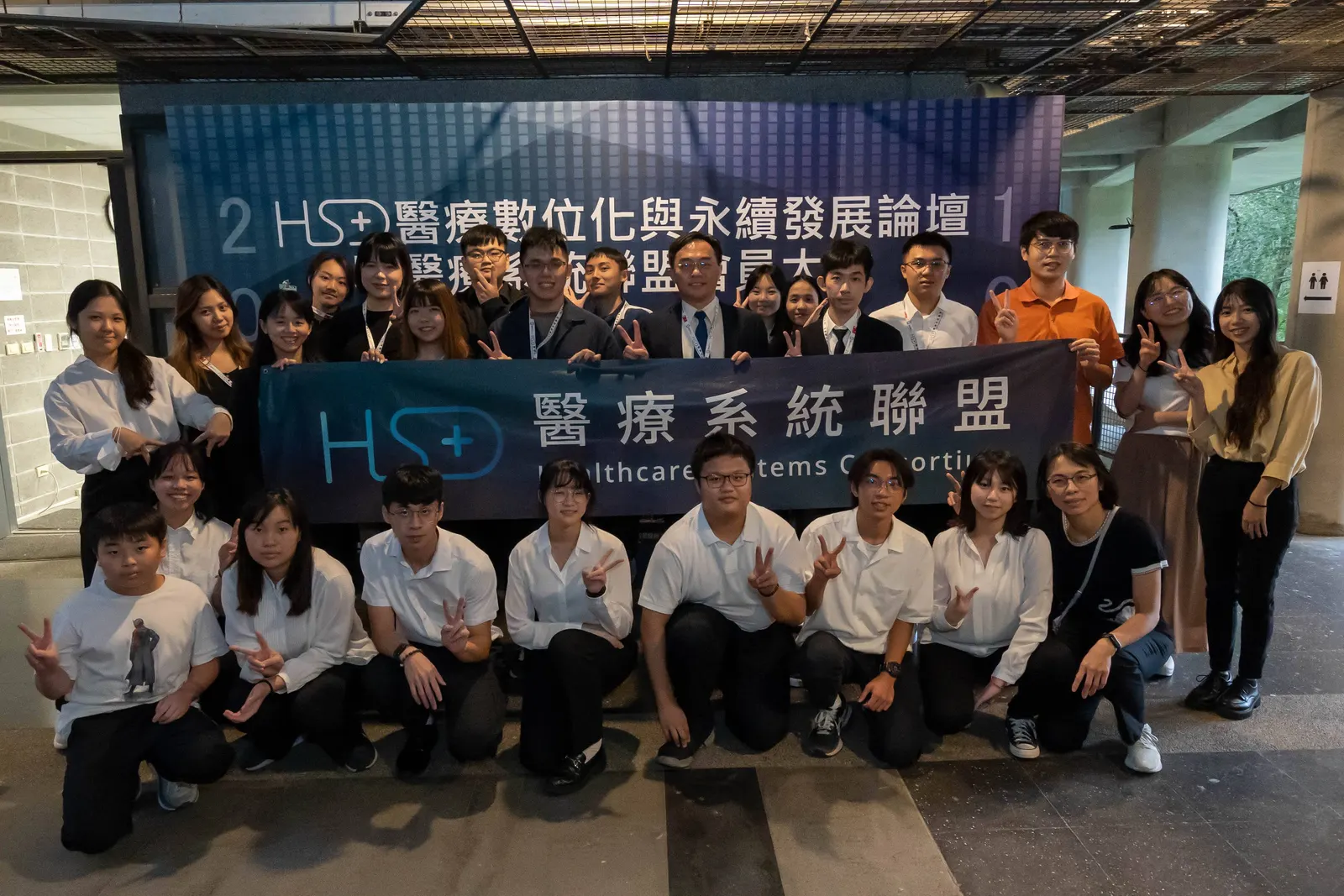
Special thanks to the students and teachers of Washington High School who came to help!!Original image
Eighth Annual General Meeting
On September 14, 2024, the Healthcare Systems Consortium (HSC) held the "Forum on Digital Medical Technology and Sustainable Development and General Assembly" at Tunghai University in Taichung. The highlight of the meeting was the first-ever "Medical Technology Award Series" selection, recognizing individuals and groups that have made outstanding contributions in the field of medical technology. The Consortium received several sustainability action awards in 2023 and 2024, demonstrating its efforts and achievements in promoting medical technology and sustainable development. Director-General 劉越萍 of the Department of Medical Affairs, Ministry of Health and Welfare, also shared the new face of the future healthcare system at the meeting, emphasizing that smart technology will improve access to services. Over the next ten years, the Consortium's vision is to build Taiwan's international platform for sustainable smart healthcare, further advancing the development of the healthcare industry. The Consortium also plans to work with multiple institutions to share medical technology innovation resources, raise its international influence, and promote broader healthcare cooperation and exchange.
Award ceremony
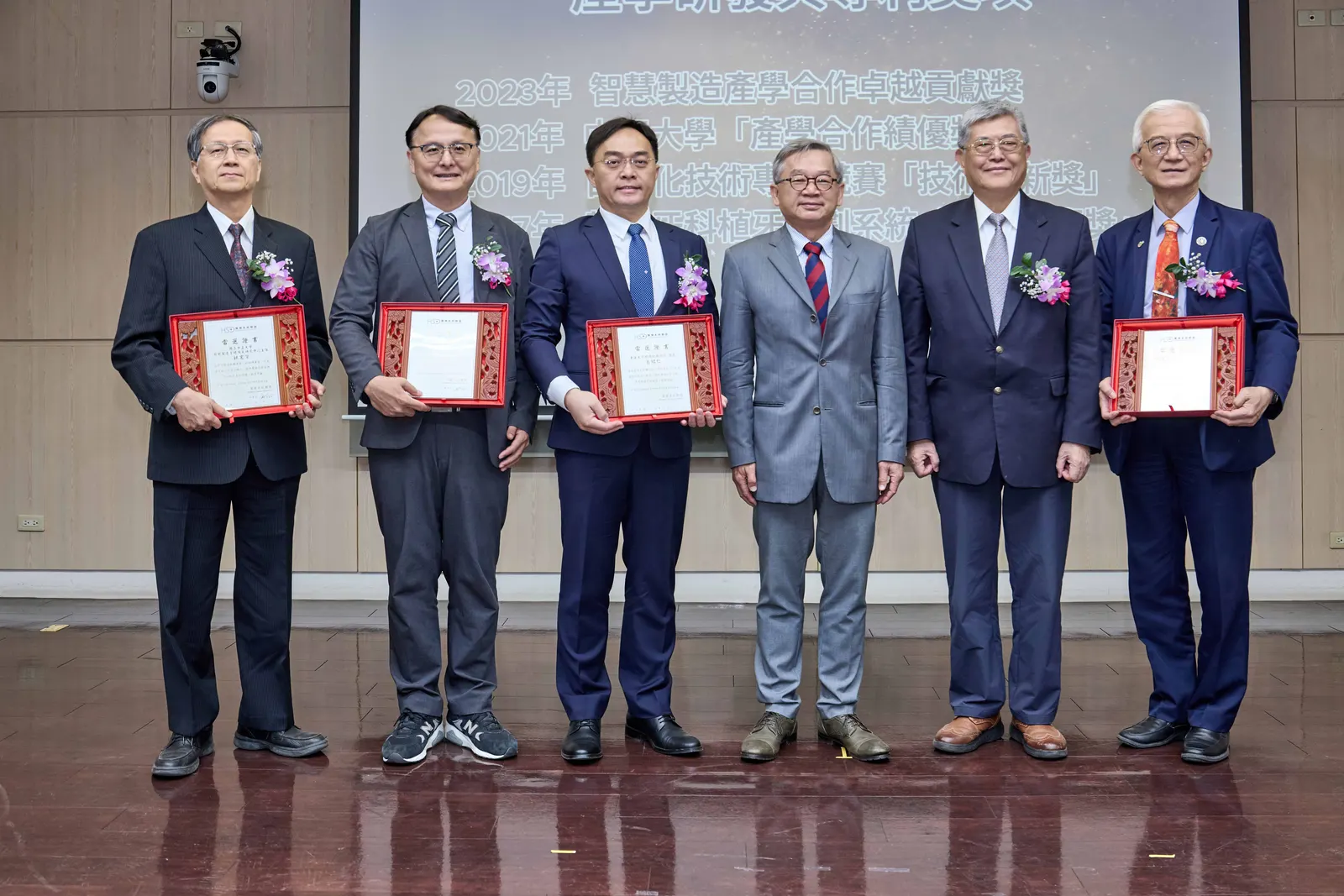
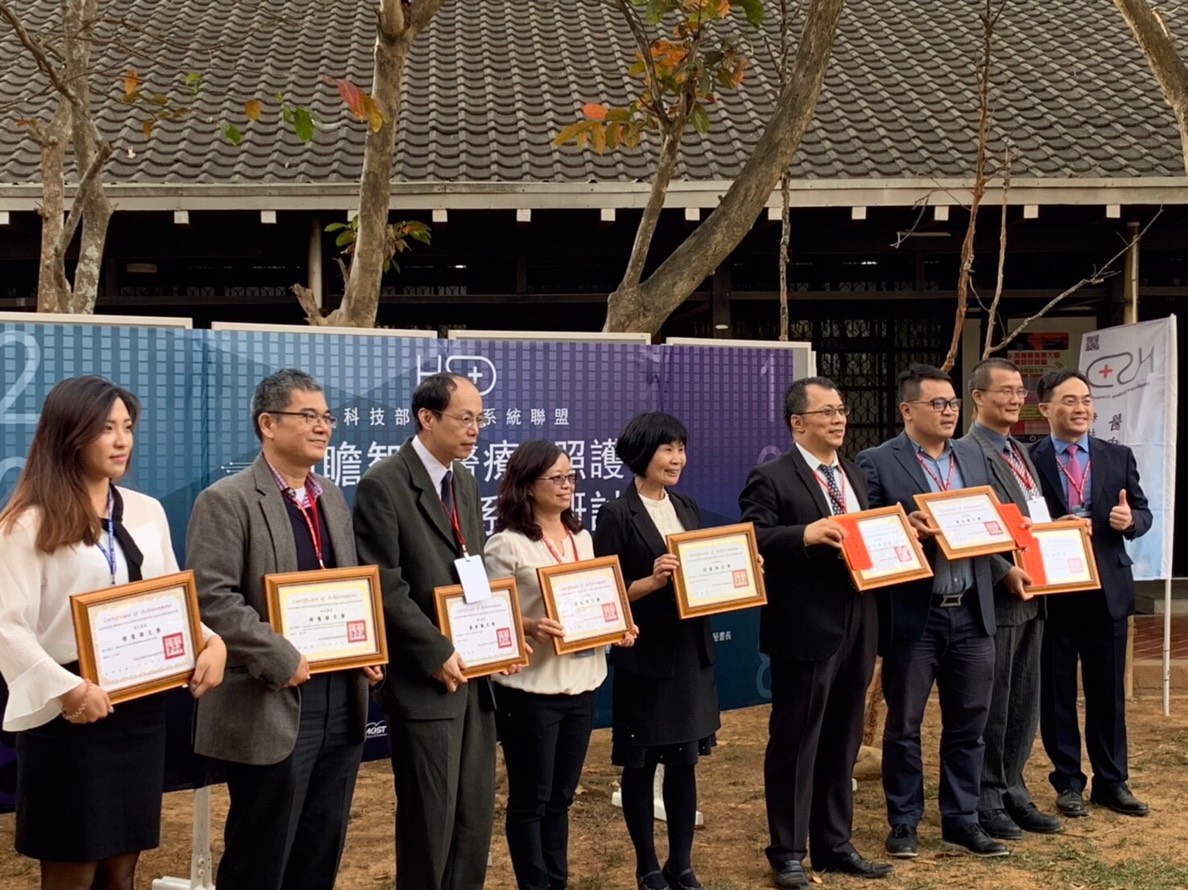
In the Medical Technology Award Series, 黃建寧, President of Chung Shan Medical University, received the Medical Technology Outstanding Contribution Award for his outstanding contributions to smart healthcare innovation; 陳道杰, founder of the National Animal Group (全國動物事業群), received the Medical Technology Achievement Award for his forward-looking vision in applying medical big data to the pet industry. In addition, teams including Delta Electronics and Linkou Chang Gung Memorial Hospital received the Medical Technology Group Award.
Ninth Annual General Meeting
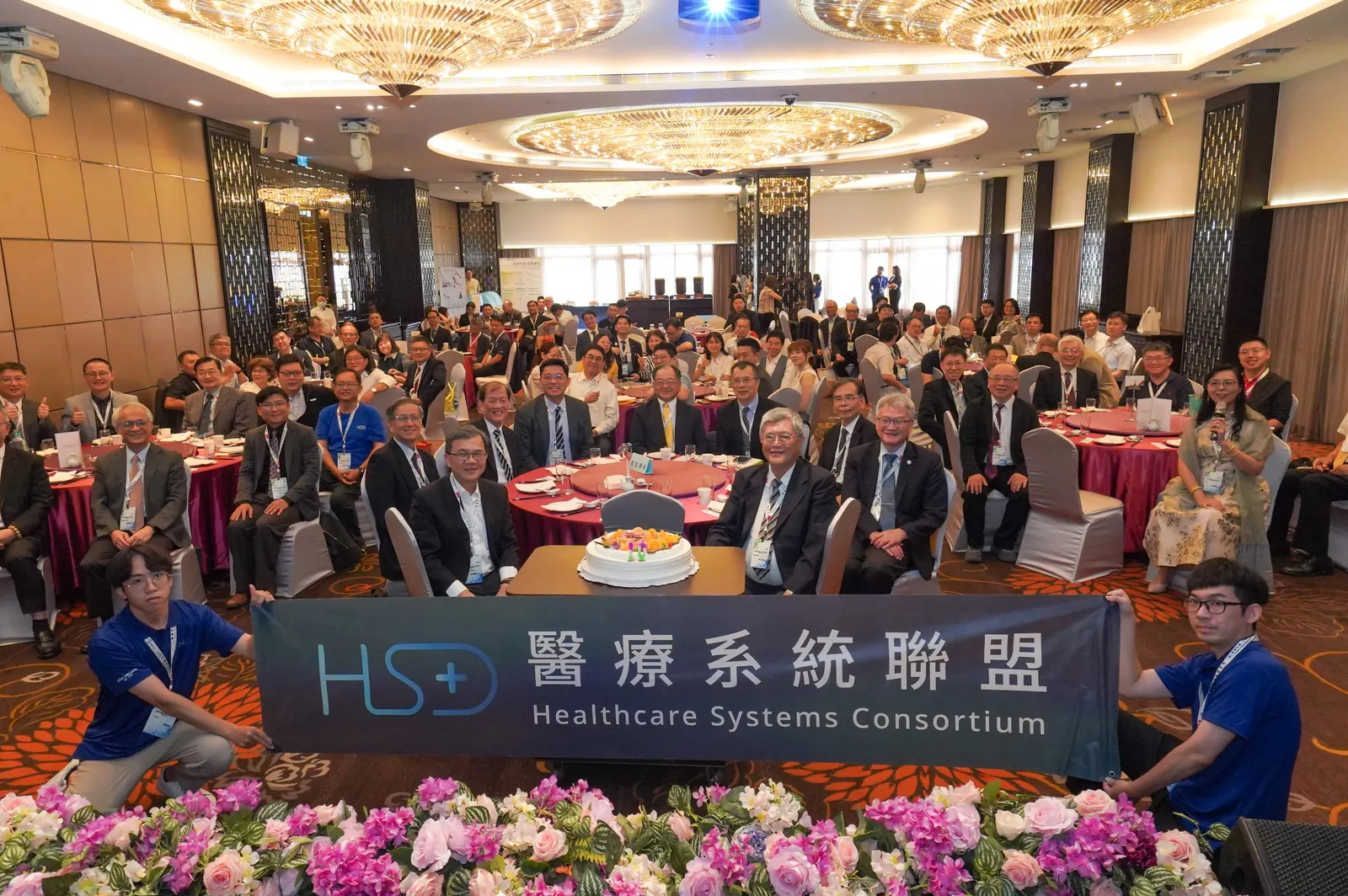
On July 19, the Healthcare Systems Consortium held the "Forum on the Consortium's Next Ten Years of Development and General Assembly" in Taichung. Professor Shao-Jen Weng, Dean of the College of Interdisciplinary Innovation at Tunghai University, was elected as the new Chairman for the third term and appointed several Vice Chairmen, including Chairman Simon Chen of ADATA Technology, President 黃建寧 of Chung Shan Medical University, Superintendent 周德陽 of China Medical University Hospital, President 張傳育 of National Yunlin University of Science and Technology, Distinguished Professor 姚宏宗, Director of the Advanced Institute of Manufacturing with High-tech Innovations at National Chung Cheng University, and Chair Professor 謝邦昌, Director of the Artificial Intelligence Development Center at Fu Jen Catholic University.
Fruitful industry-academia cooperation: a cumulative 100 research projects
The Healthcare Systems Consortium was founded in 2017 with funding from the National Science and Technology Council's Production and Technology Alliance Cooperation Program. Ten years have passed since preparations began in 2016. The Consortium focuses on examining hospital systems and the needs of medical staff and patients, and is committed to developing service products that meet the needs of physicians, nurses and patients alike, so as to improve healthcare quality.
In 2021 the Consortium received official approval from the Ministry of the Interior to become a civil organization. Over the years, under the leadership of former Chairman Professor San-Kan Lee, the Consortium has promoted industry-academia cooperation, held more than 3,000 promotional events and more than 50 seminars and workshops, served more than 10,000 participants, and built a community of more than 2,500 members spanning industry, government, academia, research and medicine, with rich talent resources. Its industry-academia research cooperation projects have reached 100, it has achieved more than 10 accomplishments in medical technology management services, and it has established solid cooperative relationships with many hospitals, with remarkable results.
Healthcare elites gather: hospitals, academia and companies join forces across fields
This year's participants came from medical institutions including Taichung Veterans General Hospital, China Medical University Hospital, Chung Shan Medical University Hospital, Changhua Show Chwan Memorial Hospital, Kuang Tien General Hospital, Tungs' Taichung MetroHarbor Hospital, Cheng Ching Hospital, Dali Jen-Ai Hospital (Chang Gung Medical Foundation cooperative alliance), New Taipei Municipal Tucheng Hospital (operated by Chang Gung under contract), Kaohsiung Medical University Chung-Ho Memorial Hospital, the Taichung Armed Forces General Hospital, and the National Sports Science Center; participants included superintendents, deputy superintendents and physicians. Academic representatives included presidents, deans, department heads and professors from National Tsing Hua University, Chung Shan Medical University, China Medical University, Tunghai University, National Chung Cheng University, National Kaohsiung University of Science and Technology, Fu Jen Catholic University, National Changhua University of Education, National University of Kaohsiung and National Chung Hsing University. On the industry side, executives attended from companies including Delta Electronics, ADATA Technology, Marketech International, the medical group 美德醫療集團, Sunnic group, EverFortune.AI Co., Ltd., Taiwan Turing Chain (台灣圖靈鏈), Zuellig Pharma, Yung Sheng Optical, the precision machinery company 易發精機, the information company 博斯資訊 and the biotechnology company 大心生物科技.
Diverse awards recognizing both individuals and groups
This year the Consortium held the "2nd Medical Technology Award Series" to recognize individuals and groups that have made outstanding contributions in the field of medical technology, including Medical Technology Outstanding Contribution Award recipients Superintendent 周德陽 and Superintendent 王乃弘 of Kuang Tien General Hospital. Other awards included the Medical Technology Achievement Award, the Medical Technology Group Award, the Medical Technology Excellent Physician Award, and the Medical Technology Outstanding Young Professional Award.
In the future, the Consortium will continue to promote innovative cooperation in the healthcare industry and advance smart healthcare and sustainable development, working together with institutions such as the Advanced Institute of Manufacturing with High-tech Innovations at National Chung Cheng University, the Industry Accelerator of National Yang Ming Chiao Tung University, the Plastics Industry Development Center, the Institute for Information Industry and the TaiChung Computer Association, to raise the international competitiveness of Taiwan's medical technology.
Tenth Annual General Meeting
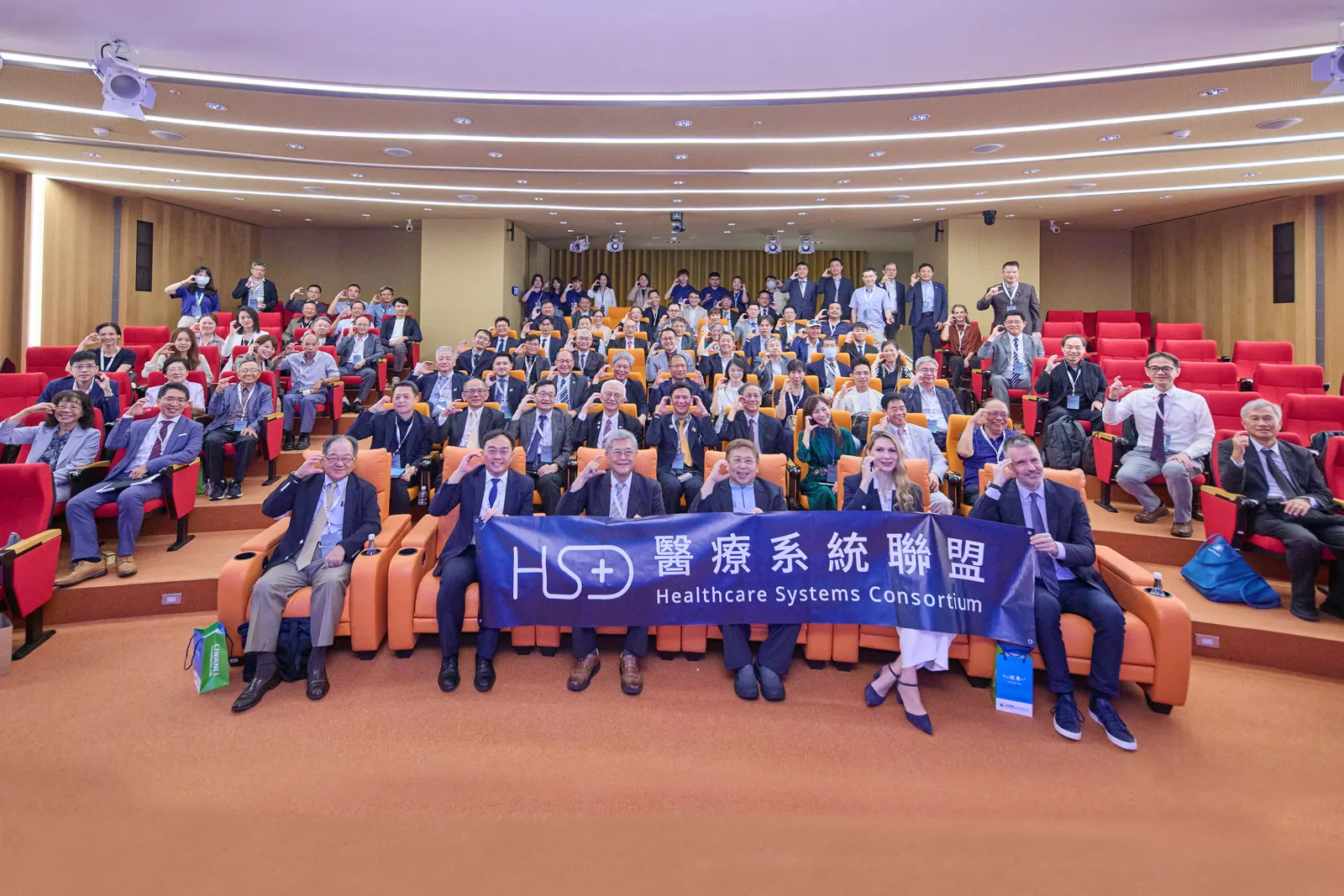
With the rapid development of artificial intelligence and information and communications technology, smart healthcare has become a key force in improving the quality of clinical care, relieving pressure on medical staff capacity and improving patient outcomes. Hosted by the Healthcare Systems Consortium (HSC), "Lighting Up Global Health: HSC Smart Healthcare Overseas Expansion and Cross-Border Export, and General Assembly" took place on October 3, 2026. Coinciding with HSC's 10th anniversary, the meeting brought together 150 expert representatives from 90 domestic and international organizations in industry, government, academia, research and medicine for in-depth discussion of three major topics—"Physical AI applications in healthcare settings", "global deployment of smart healthcare" and "the blue ocean of European smart healthcare cooperation"—showcasing the strong capacity of Taiwan's medical technology to combine with clinical practice, safeguard public health and go international.
Physical AI and AMRs enter clinical settings; smart critical care effectively reduces ICU mortality
In clinical care and hospital management, how to use smart tools to reduce the burden on medical staff and improve patient safety is a focus of attention across sectors. The meeting opened with introductory remarks by ADATA Group Chairman Simon Chen, HSC Honorary Chairman San-Kan Lee, and Tunghai University professor and HSC Chairman Shao-Jen Weng. Next, 林昭陽, Executive Vice President of ADATA Technology and head of ADATA Smart IoT (威剛智聯), gave a keynote speech exploring in depth how Physical AI technologies such as autonomous mobile robots (AMRs) can be put into practice in healthcare settings.
Chairman Shao-Jen Weng, when previously invited to the Nordic countries to share Taiwan's smart healthcare achievements, also noted that Taiwan's healthcare system is actively adopting smart technologies—for example, successfully reducing ICU (intensive care unit) mortality through smart critical care, and using smart instrument recognition to improve healthcare efficiency—demonstrating the tangible benefits of technology empowering clinical medicine. In addition, Professor Weng led representatives of Forum Virium Helsinki (FVH), the innovation company wholly owned by the City of Helsinki, Finland, on a visit to the medical drone center of Changhua Show Chwan Memorial Hospital, with the hope of deepening clinical validation in the future in fields such as AI for healthcare and social welfare, gerontechnology, digital rehabilitation and women's health.
The golden triangle of "manufacturing + computing power + medical AI": linking medical networks in 117 countries worldwide to address resource inequality
Facing the challenges of global ageing and the uneven distribution of medical resources, Taiwan's smart healthcare shows strong export potential. At the "Global Deployment of Smart Healthcare" forum, Chair Professor 謝邦昌 of Fu Jen Catholic University pointed out that the core competitiveness of Taiwan's smart healthcare stems from the trinity of a golden triangle: "manufacturing + computing power + medical AI".
Professor 謝邦昌 proposed concrete strategies, emphasizing that Taiwan's ICT and AI strengths could be promoted worldwide by working with the Catholic healthcare network in 117 countries. This is expected to unlock 26% of the world's healthcare facilities—a vast channel including more than 5,500 hospitals, more than 18,000 clinics and more than 16,000 elderly care facilities. By linking medical data and cross-border cooperation, the aim is to effectively address the uneven distribution of medical resources worldwide and improve the health and well-being of people around the globe.
Linking Central and Eastern Europe with Nordic validation mechanisms: cross-border cooperation opens the EU's blue ocean in health
The meeting also showcased the close links between Taiwan and European countries in digital health. Representatives present included Lucia Langer, Representative of the Slovak Economic and Cultural Office; Janusz Bilski, Director of the Polish Office in Taipei; Dominika Urhová, Head of the Science and Technology Section of the Czech Economic and Cultural Office; and Aleksis Pillai, Manager at Forum Virium Helsinki (FVH), the City of Helsinki's innovation company, who joined online.
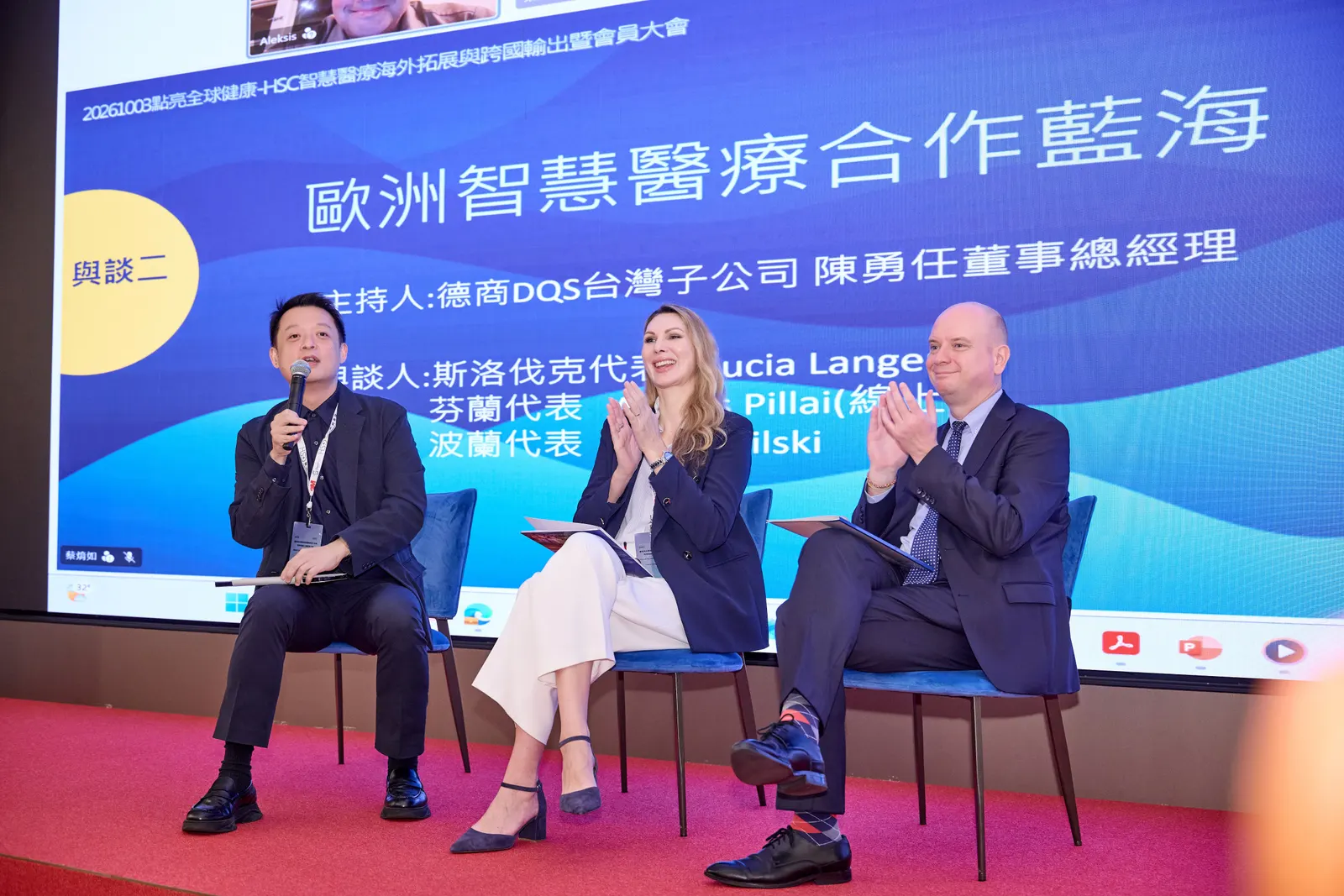
Tomi Laitinen, Senior Adviser at the Ministry of Social Affairs and Health of Finland, also gave an online keynote speech introducing "The Gateway to the Validated Finnish Digital Health Solutions", providing important policy reference for Taiwan's smart healthcare products entering the European market and connecting internationally.
Honoring outstanding clinicians and R&D teams: industry, government, academia and medicine join hands to build a healthy future
To honor outstanding contributors who have long been dedicated to medical technology R&D, clinical application and quality improvement, the meeting also presented the "3rd Medical Technology Award Series":
- Medical Technology Outstanding Contribution Award: presented to San-Kan Lee, Honorary Chairman of the Healthcare Systems Consortium and Chairman of 康盟聯.
- Medical Technology Achievement Award (Individual): presented to attending physician 陳韋成, Chief Secretary of China Medical University Hospital, and Dr. 何子平 of the National Sports Science Center.
- Medical Technology Outstanding Young Professional Award: won by Dr. 胡翔崴 of an industrial technology R&D organization.
- Medical Technology Excellent Physician Award: honoring frontline physicians dedicated to the clinical application of medical technology. Recipients included Director 張詩聖 of China Medical University Hospital, Deputy Superintendent for Medical Affairs 嚴寶勝 of Kuang Tien General Hospital, Deputy Director 黃維德 of the Chinese medicine clinic 和洲中醫診所, Director 郭和昌 of Kaohsiung Chang Gung Memorial Hospital, and Deputy Superintendent 李文欽 of Show Chwan Memorial Hospital.
- Medical Technology Award (Group): won by ADATA Smart IoT Co., Ltd. (威剛智聯股份有限公司) (Business Promotion Department).
In summary, the meeting noted that this year's assembly brought together 13 domestic healthcare systems, more than 40 ICT and biomedical technology companies, and 20 research institutes and academic institutions. Healthcare Systems Consortium Chairman Shao-Jen Weng said he hoped that by building a platform for cross-border exchange through the meeting, the Consortium could promote the combination of clinical experience, forward-looking technology and international channels, help Taiwan's smart healthcare solutions succeed in export markets, and jointly create global health and well-being.
Second-Term Chairman Inauguration Ceremony
On the 2nd, the Healthcare Systems Consortium held the inauguration ceremony for its 2nd-term Chairman and Vice Chairmen at Tunghai University. Dr. San-Kan Lee of Tungs' Taichung MetroHarbor Hospital was re-appointed as Chairman of the Consortium, and Superintendent Ming-Che Tsai of Chung Shan Medical University Hospital, Chairman Simon Chen of ADATA Technology Co., Ltd., Superintendent Shih-Wei Huang of the Central Taiwan campuses of the Show Chwan Health Care System, and Chairman 蔡國洲 of Yung Sheng Optical Co., Ltd. were re-appointed as Vice Chairmen. Representatives from the medical, industrial and academic sectors gathered for the occasion. Deputy Director-General 邱惠慈 of the Taichung City Government Public Health Bureau was invited to present the certificates of election and congratulated the Chairman and Vice Chairmen on their re-appointment.
Deputy Director-General 邱惠慈 said that since its founding, the Consortium has carried out many industry-academia research cooperation projects and organized seminars and visits to academic and research institutions, broadening the international vision and visibility of domestic healthcare institutions and companies. The Consortium once represented the Ministry of Science and Technology in Prague, Czech Republic, to introduce Taiwan's medical technology and the Consortium's platform, and, through MOST's international cooperation program and bilateral agreement with the Czech Republic, has enabled hospitals in the greater Taichung area to exchange with industry via the Consortium platform, promoting cross-professional, cross-regional and cross-channel integration of resources in the healthcare industry.
The Public Health Bureau noted that as Taiwan becomes an aged society, there is an urgent need for technology in long-term care and remote healthcare systems. Through cooperation between the medical community and industry and academia, technologies and services are being developed in areas such as minimally invasive surgical instruments, long-term care, wearable devices and remote systems, food safety and food testing, and medical waste treatment, driving the transformation and upgrading of healthcare-related industries.
The Public Health Bureau also thanked the Consortium for continuing to promote cooperation between the medical community and industry, combining medical expertise with industry-academia R&D technology to develop medical information technology, enabling frontline medical staff to apply smart healthcare, raising the level of medical technology and service quality for the benefit of the public.
Attending to offer congratulations at the inauguration ceremony were Deputy Director-General 邱惠慈 of the Taichung City Government Public Health Bureau, Executive Secretary 黃于珊 of the Taichung City Government Industrial and Commercial Development and Investment Promotion Committee, Healthcare Systems Consortium CEO Shao-Jen Weng, and Healthcare Systems Consortium Chief Industry-Academia Officer Chien-Yuan Huang, among others.
Third-Term Chairman Inauguration Ceremony
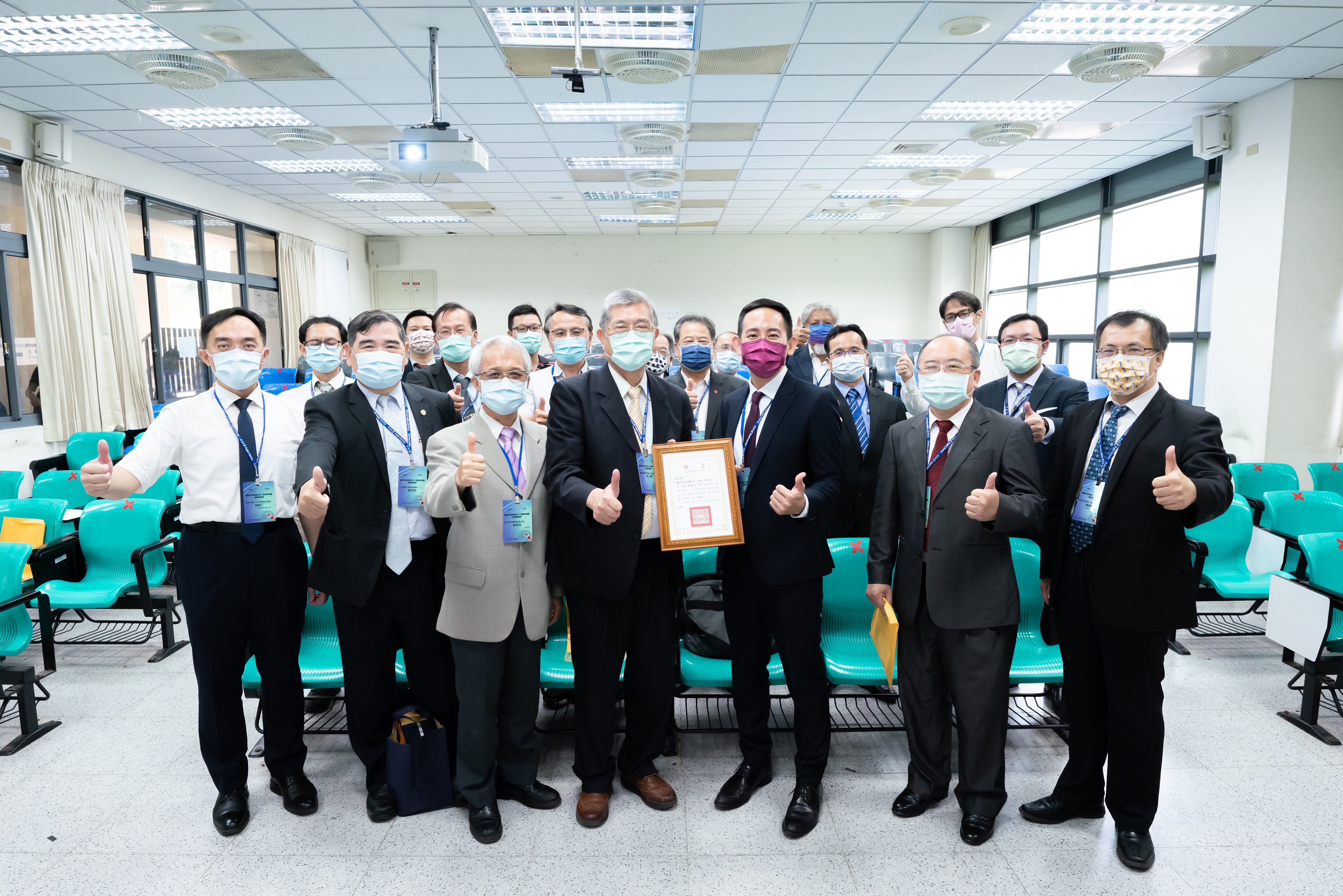
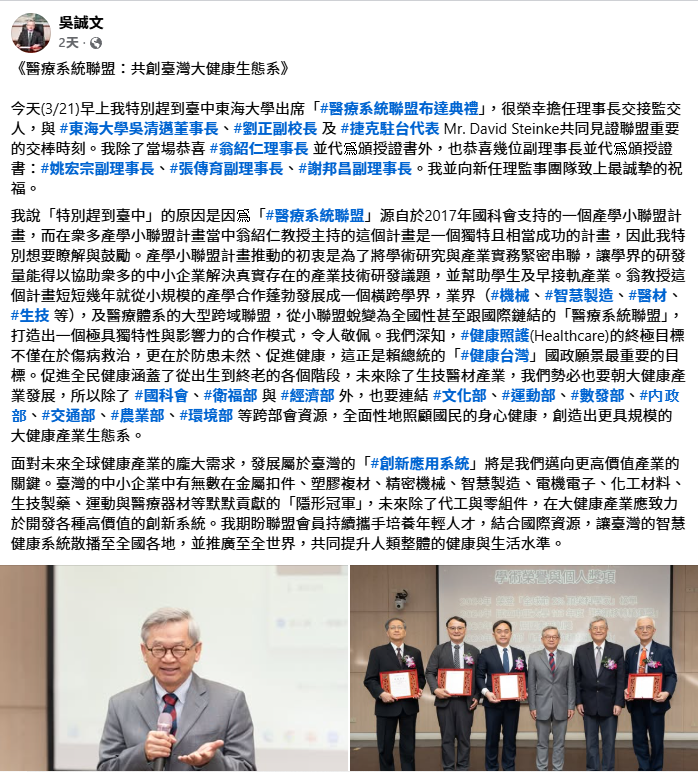
The Healthcare Systems Consortium recently held the inauguration ceremony for its third-term Chairman at Tunghai University. With National Science and Technology Council Minister 吳誠文 overseeing the handover, Shao-Jen Weng, Professor of Industrial Engineering at Tunghai University and Dean of the College of Interdisciplinary Innovation, formally took office as third-term Chairman. The event drew representatives of several countries, including David Steinke, Czech Representative to Taiwan, and Lucia Langer, Slovak Representative to Taiwan. The Czech Representative noted that Taiwan has comprehensive capacity in integrating healthcare and technology, and expressed the hope that the HSC platform can reduce the risk of innovative products entering the European market.
Award ceremony
NSTC Minister 吳誠文 said that he "made a special trip to Taichung" because the Healthcare Systems Consortium originated in 2017 as an Industry-University Cooperation Alliance project at Tunghai University supported by the NSTC. In just a few years, Tunghai University's Healthcare Systems Consortium has grown from small-scale industry-academia cooperation into a large cross-disciplinary alliance spanning academia, industry (machinery, smart manufacturing, medical devices, biotechnology, etc.) and the healthcare system, transforming into a national—and even internationally linked—Healthcare Systems Consortium, which is truly admirable.
2021 Taiwan Healthcare+ Expo
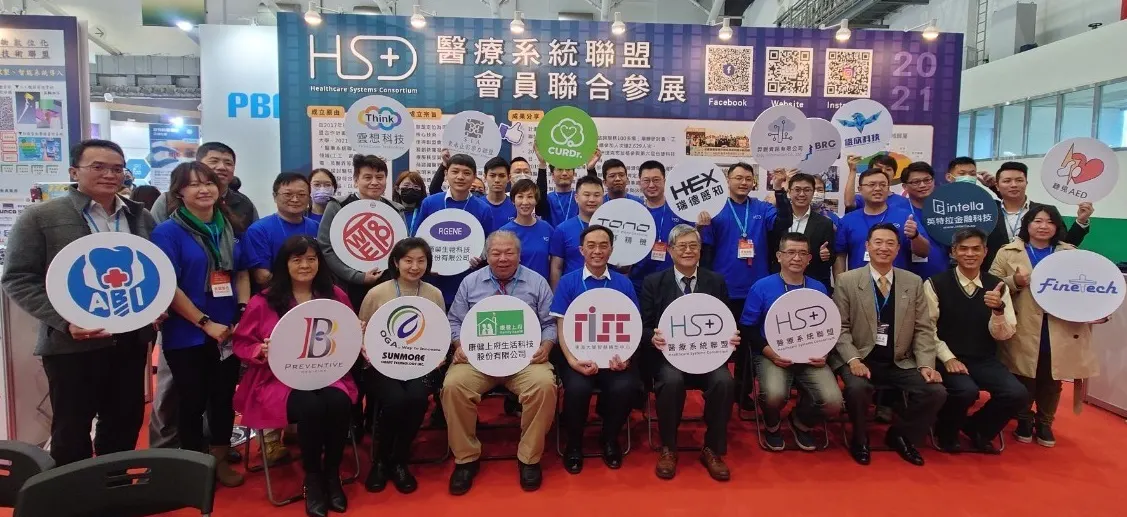
Jointly presented with the Healthcare Systems Consortium
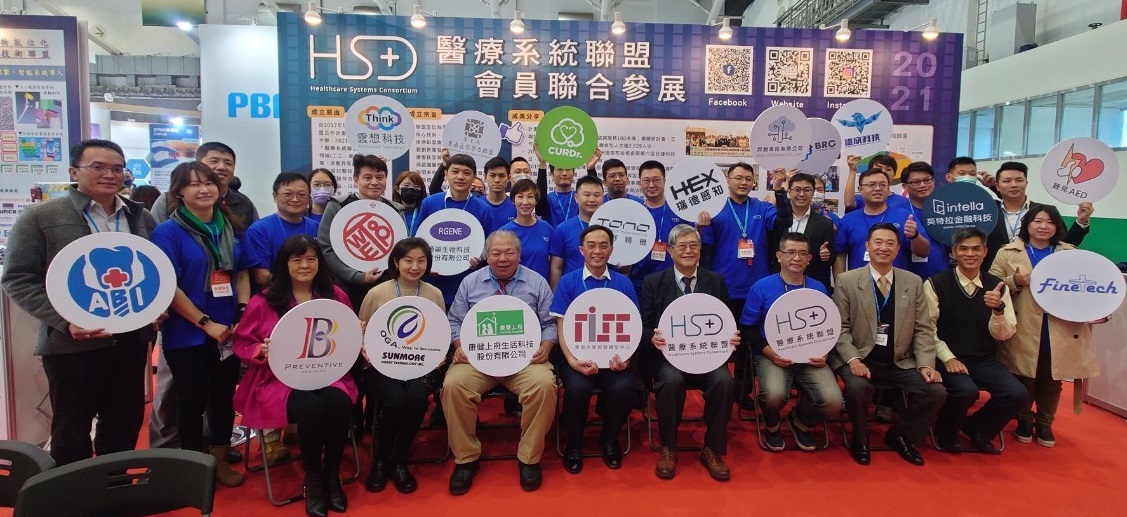
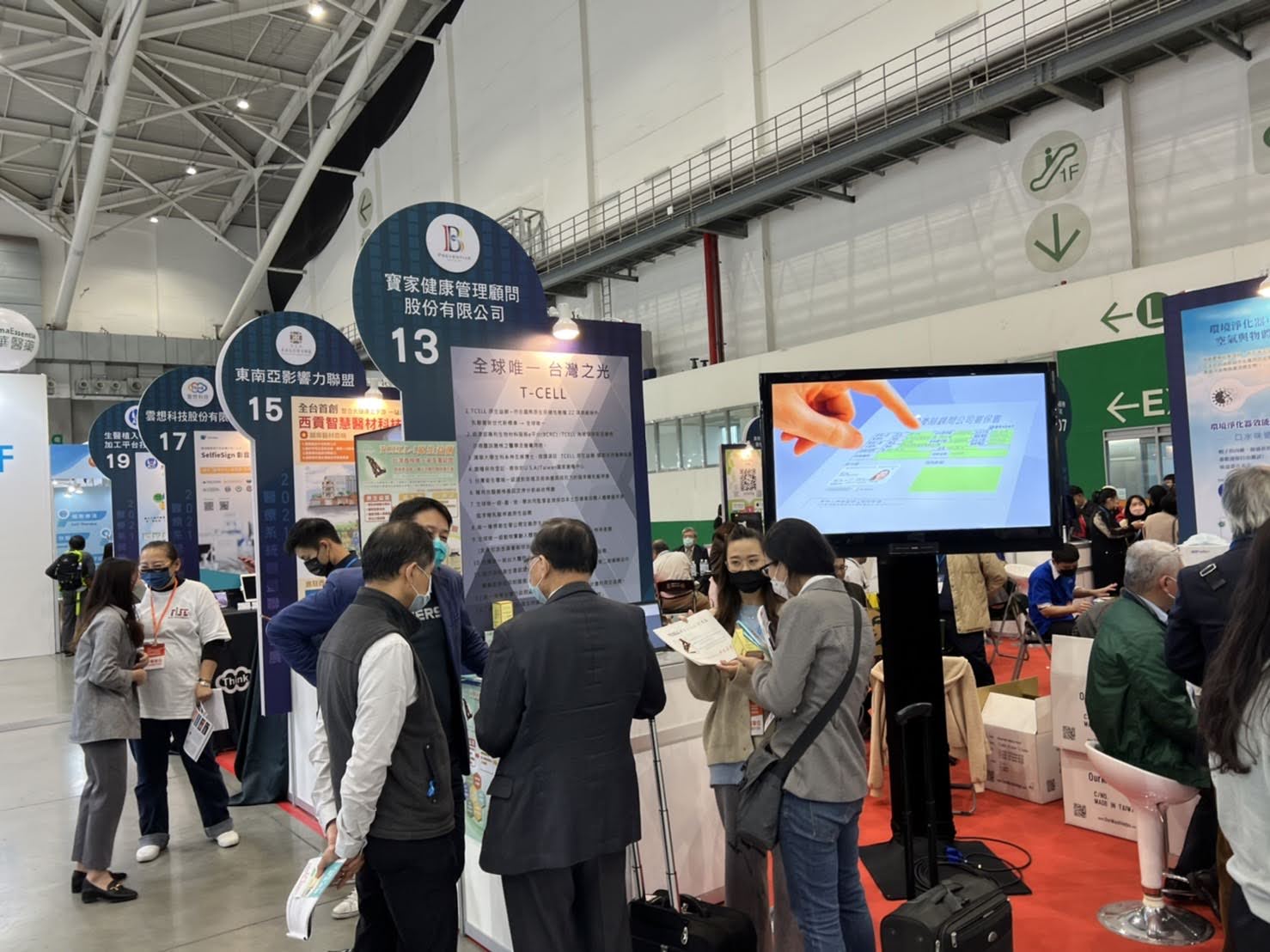
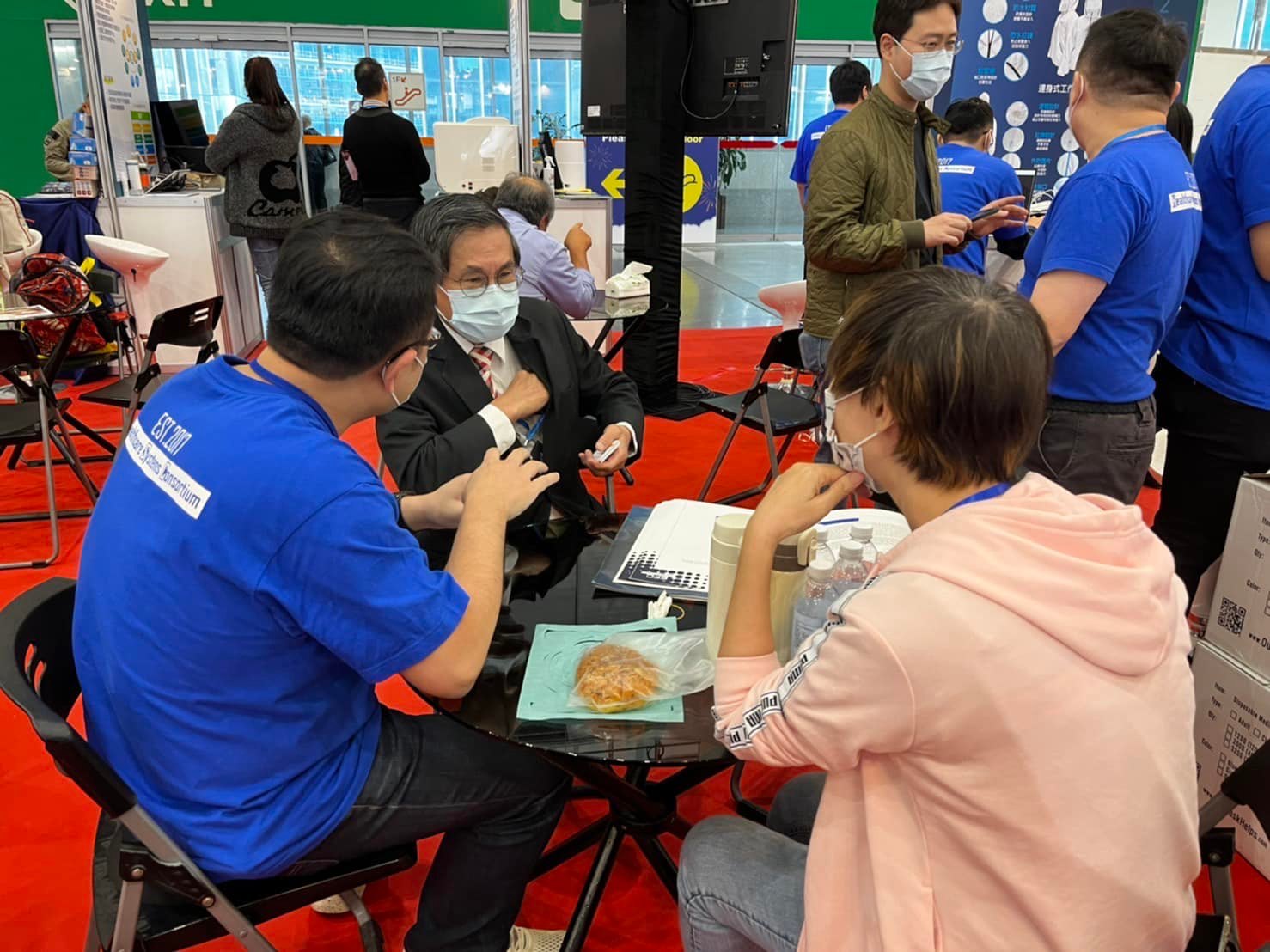
From December 2 to 5, the Healthcare Systems Consortium (HSC) took part for the first time in the Taiwan Healthcare+ Expo in Nangang, exhibiting jointly with 19 other exhibitors: 泉康科技股份有限公司, 東野精機股份有限公司, Eray Information Co., Ltd., 康健上府生活科技股份有限公司, 尚茂智能科技股份有限公司, Health Network Information Services Co., Ltd. (健康聯網資訊服務股份有限公司), 訊泰研究創新股份有限公司, 愛陌生股份有限公司, 英特拉金融科技股份有限公司, the BRC Brain Function Recovery Center (BRC腦功能恢復中心), 寶家健康管理顧問股份有限公司, the Smart Transformation Center of the College of Management, Tunghai University, the Southeast Asia Impact Alliance (東南亞影響力聯盟), 雲想科技股份有限公司, 雄欣科技股份有限公司, the Biomedical Implant Digital Processing Platform Technology Alliance, 瑞德感知科技股份有限公司, 艾柏生技抗體股份有限公司 and the dental clinic 明皓牙醫診所.
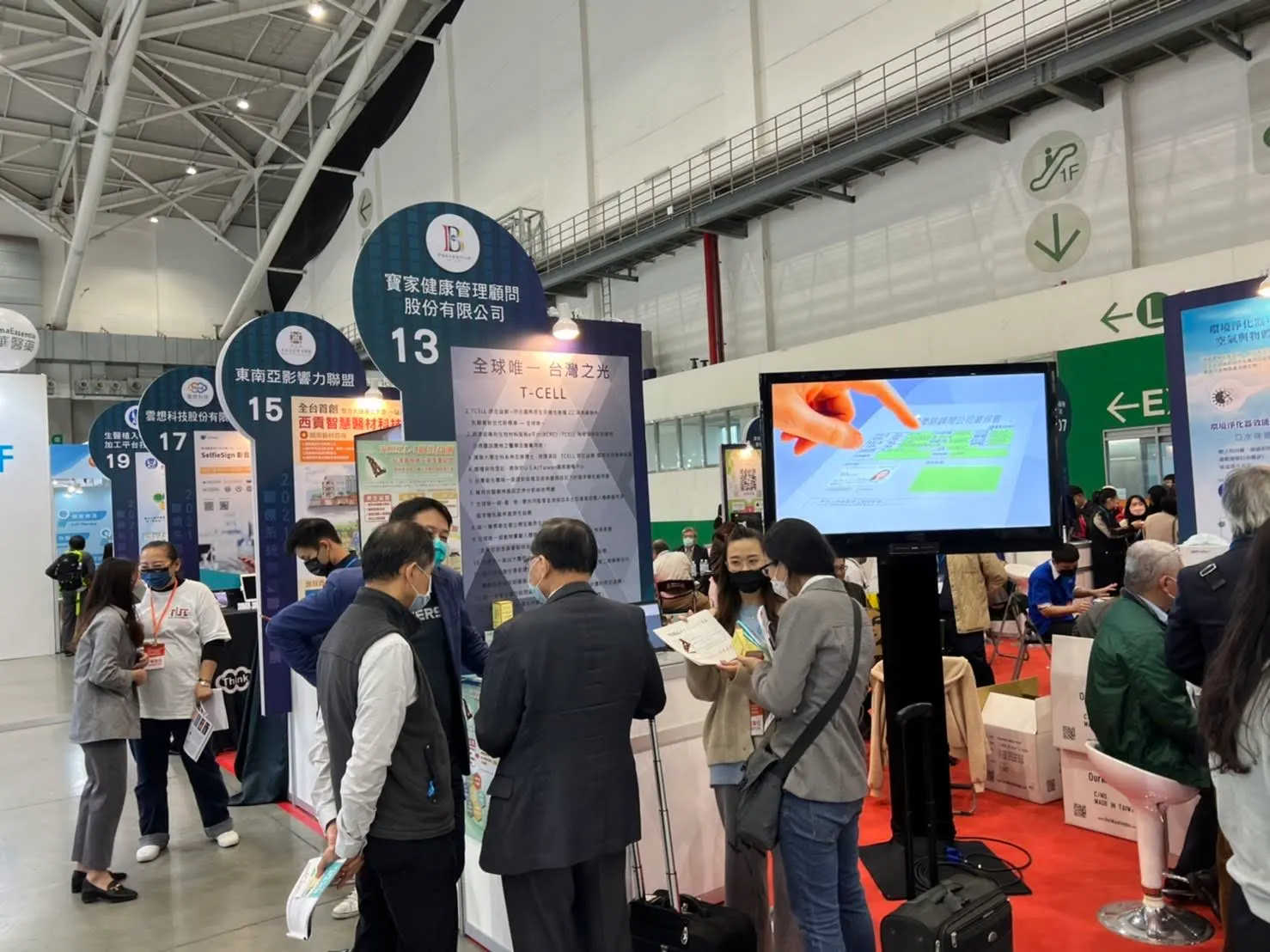
Many professionals visited the exhibition areaOriginal image
The Healthcare Systems Consortium fully promotes innovative development of Taiwan's medical technology
Healthcare Systems Consortium CEO Shao-Jen Weng said it was a great honor to take part in the world-class Taiwan Healthcare+ Expo. The Consortium is positioned to recruit Consortium members, promote the Consortium's core technologies, and interact and match with the medical sector, so that Consortium members can upgrade their technology and build capabilities for service innovation and development, creating excellent healthcare service quality. It provides a platform for industry to get to know the medical sector and actively invites local governments to explain future healthcare-related policies, so that through their participation Consortium members gain more interaction and business service opportunities with the medical sector, reducing communication barriers in both directions; and, in line with government regulations, it matches hospitals and companies to jointly develop healthcare products or services that meet real needs. The Consortium's industry-academia cooperation between Tunghai University and the large hospitals of central Taiwan has now reached a mature stage, and everyone is welcome to exchange and cooperate with us.
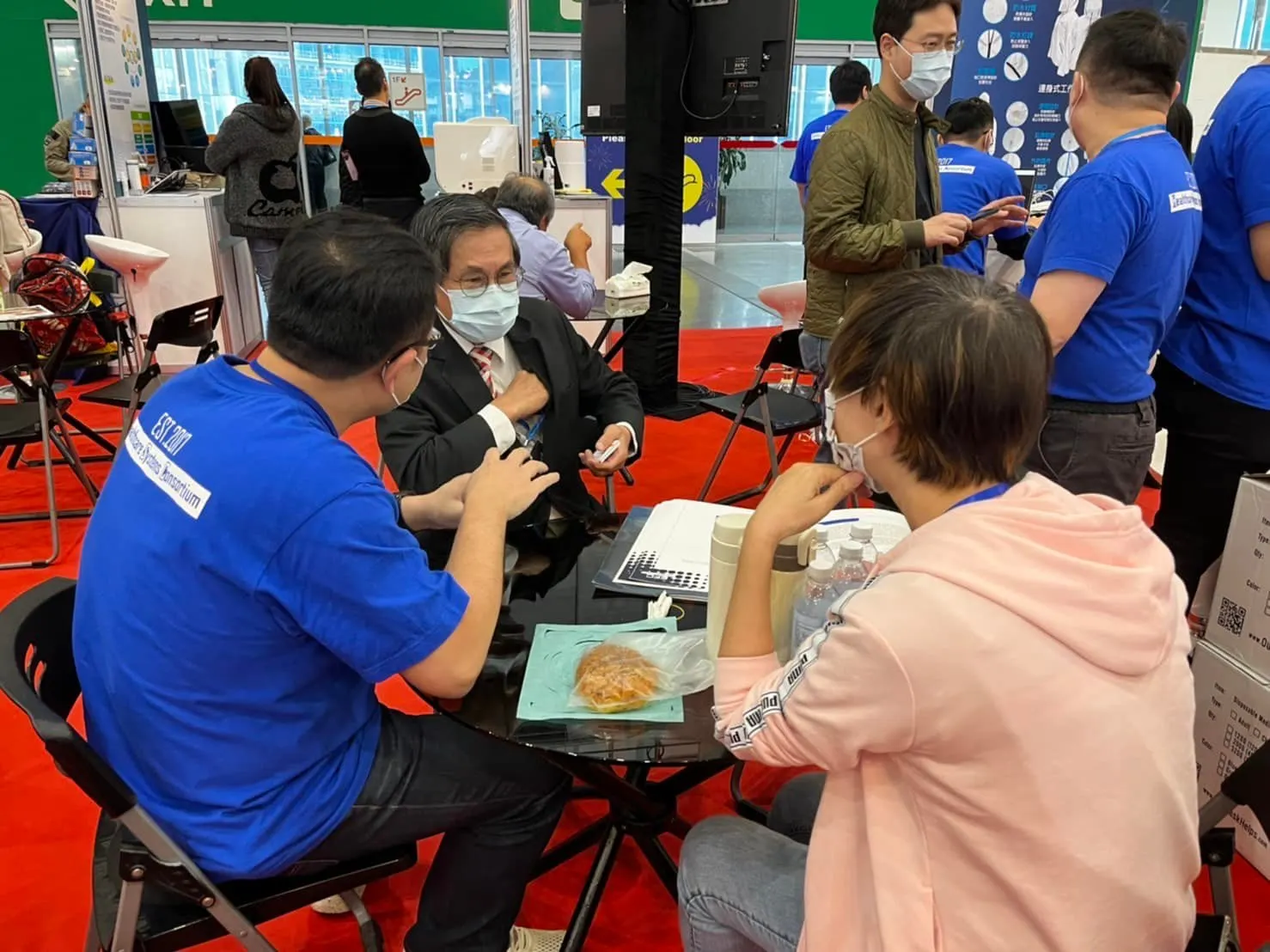
Former Minister of the Department of Health 楊志良 visits the Consortium to offer guidanceOriginal image
2022 Taiwan Healthcare+ Expo
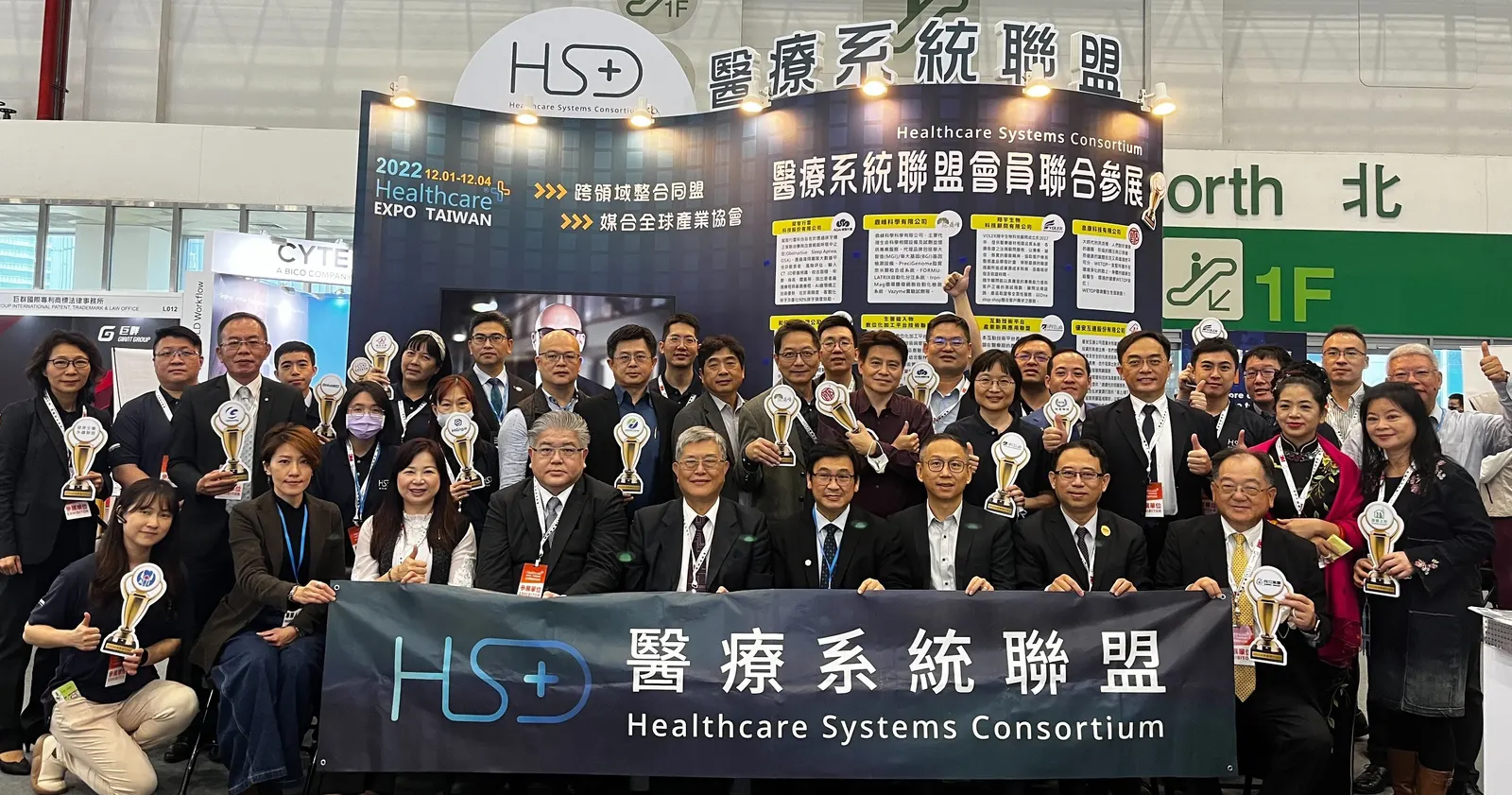
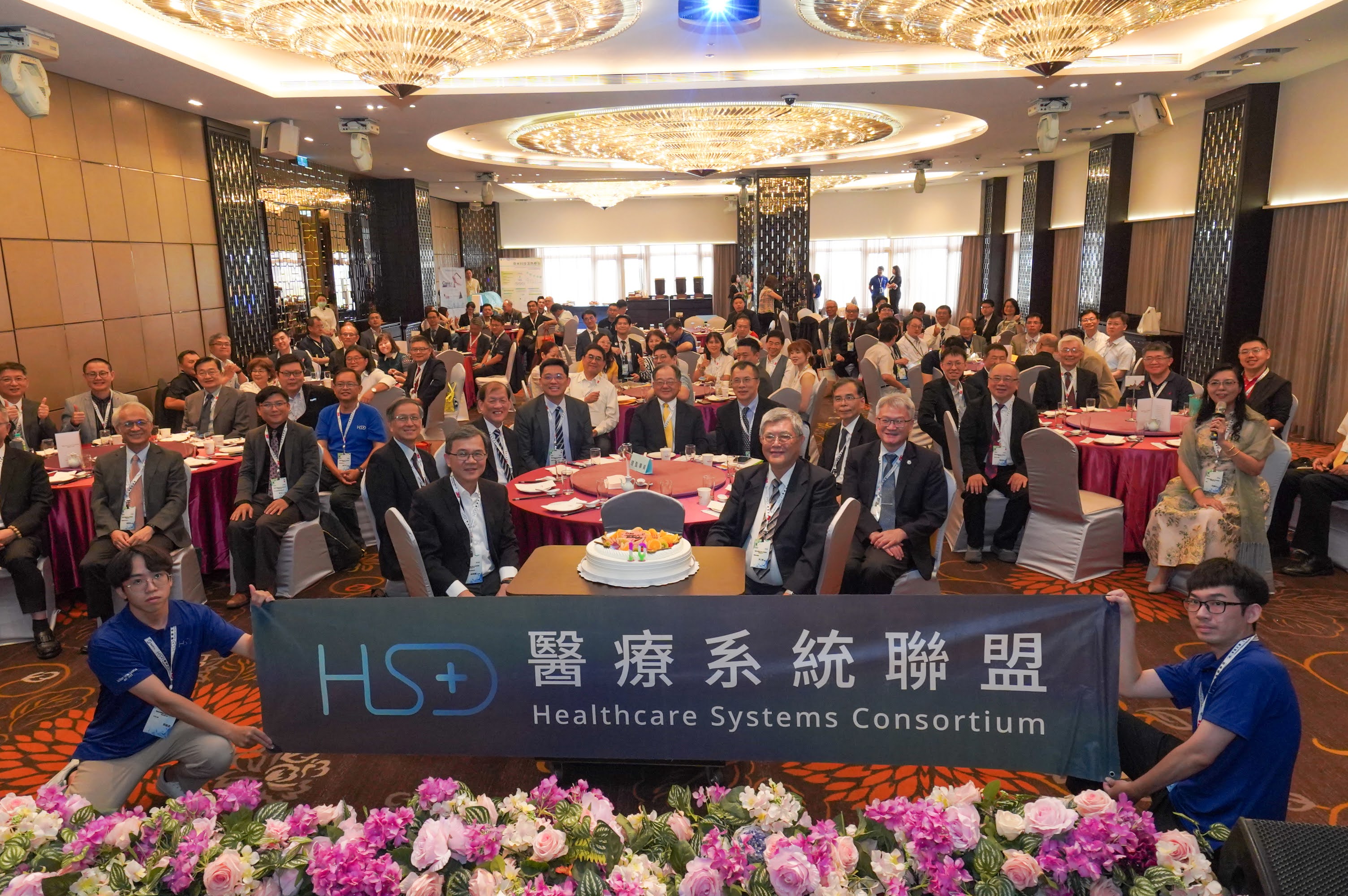
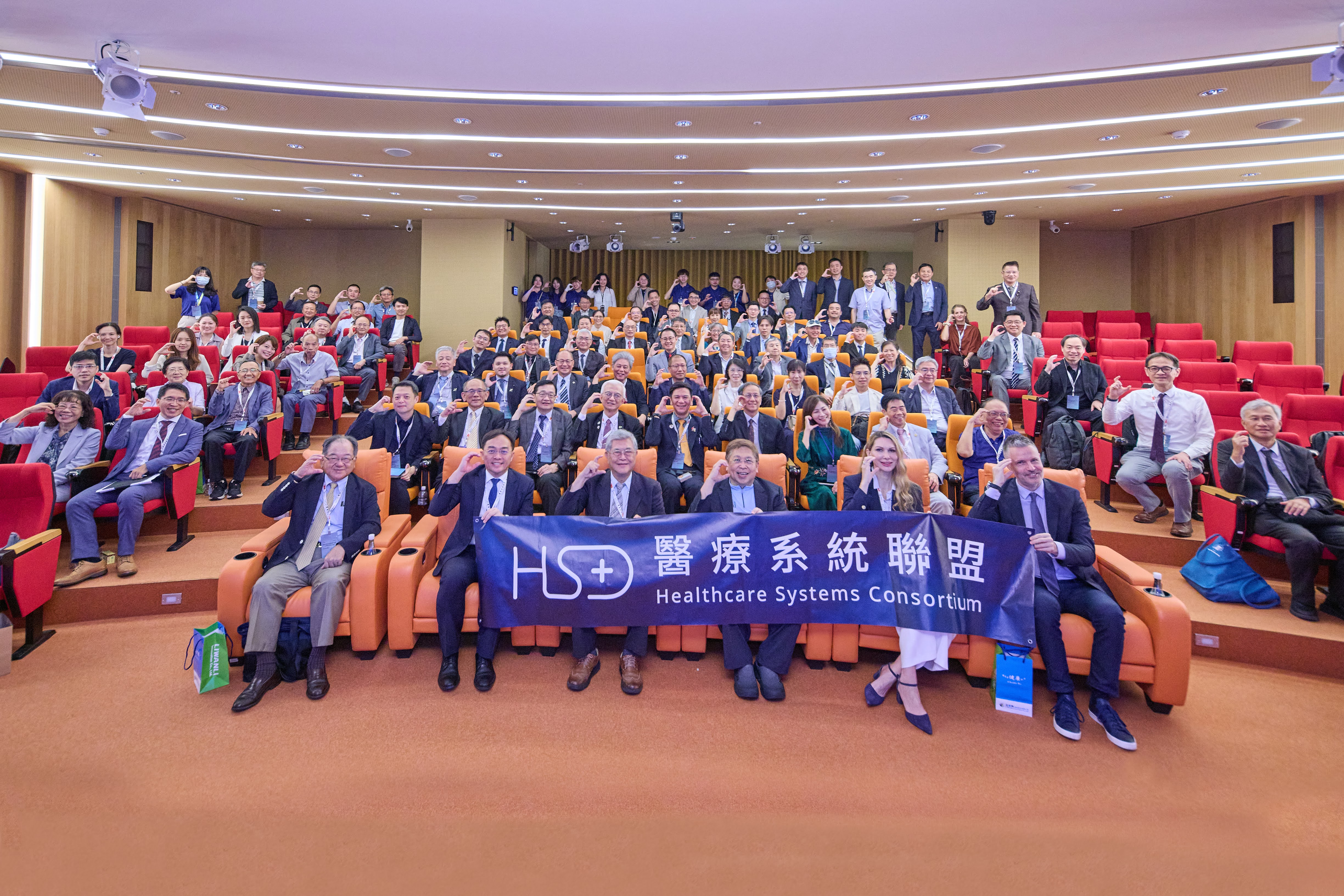
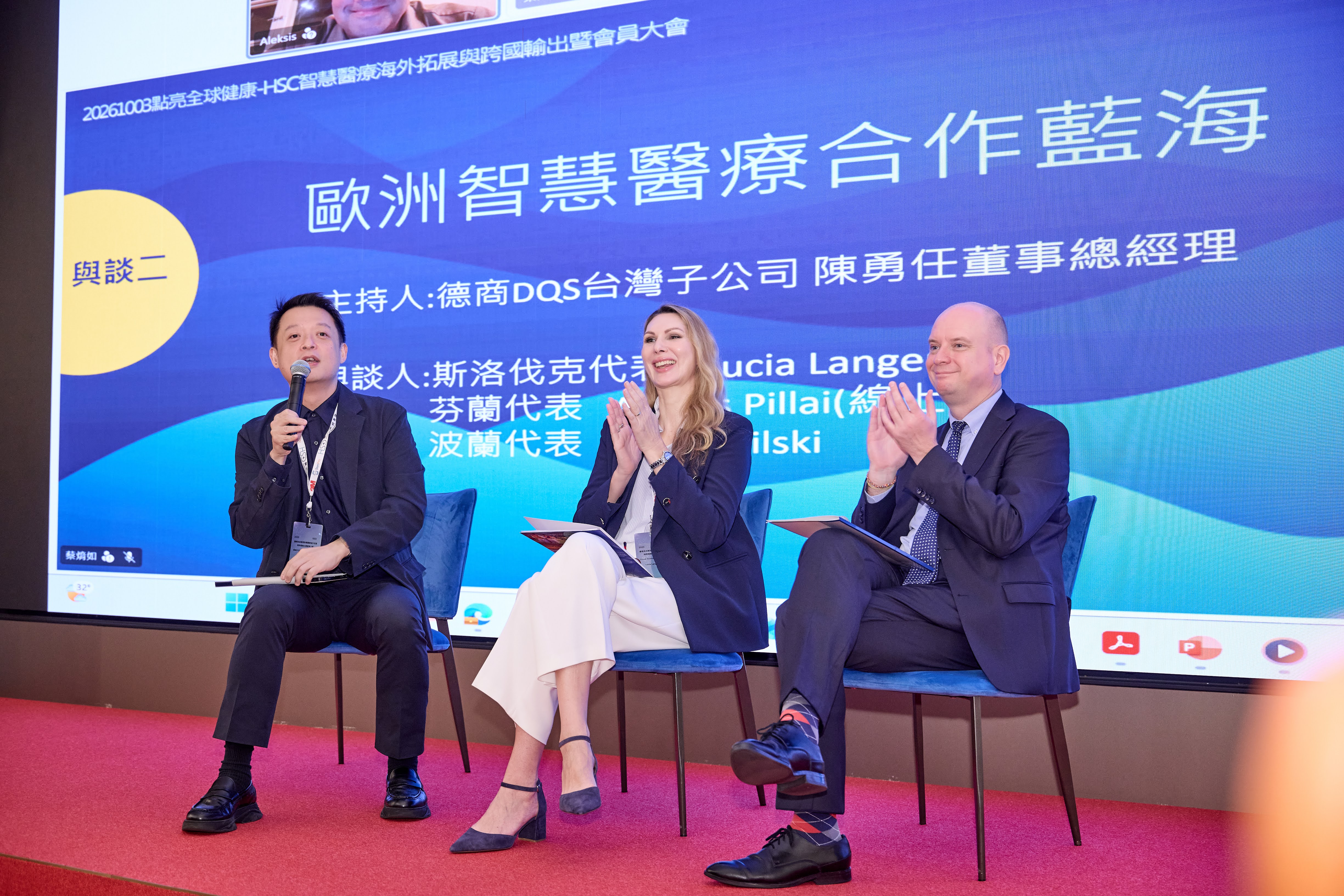
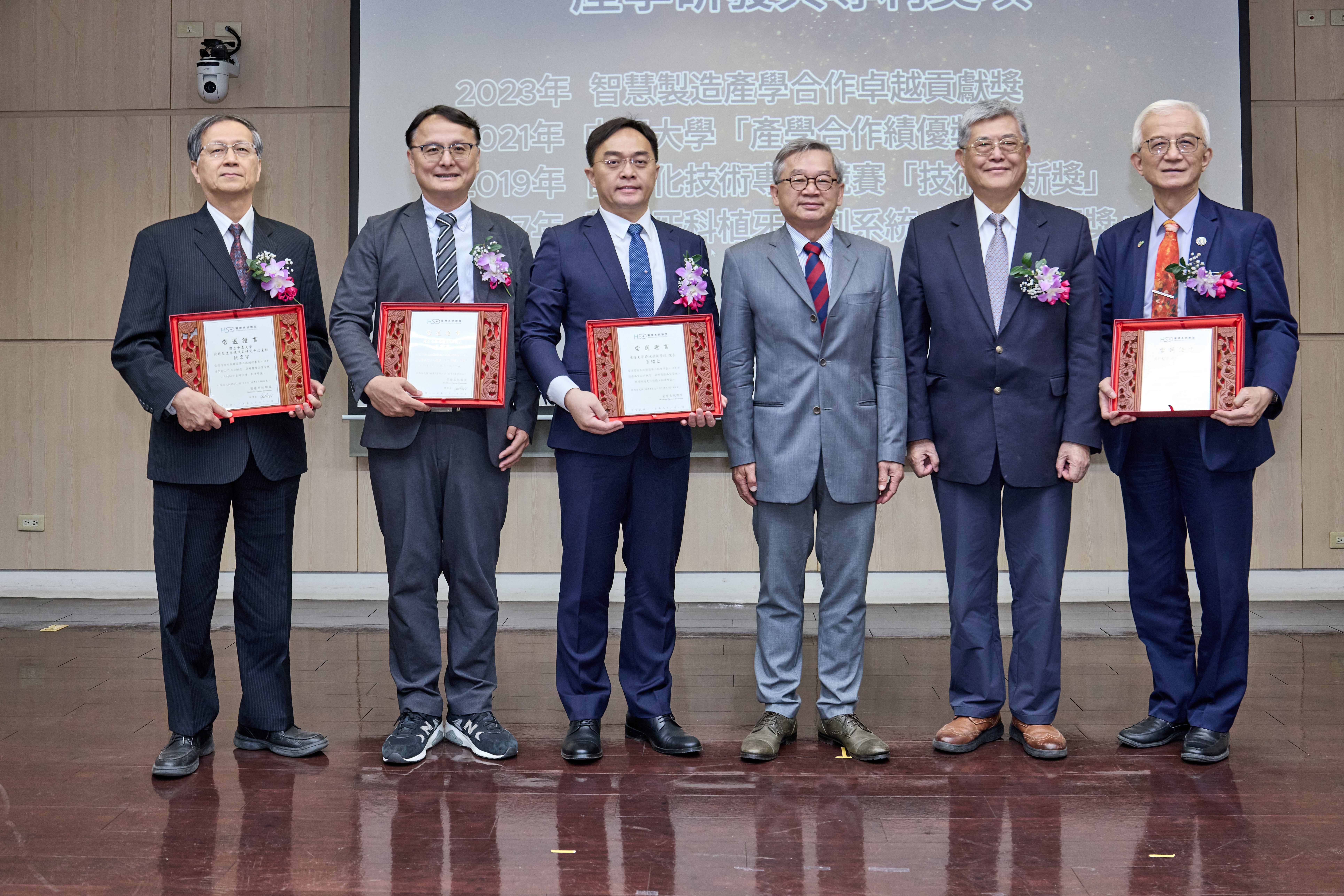
The Healthcare Systems Consortium joins hands with industry associations to create a healthcare industry ecosystem
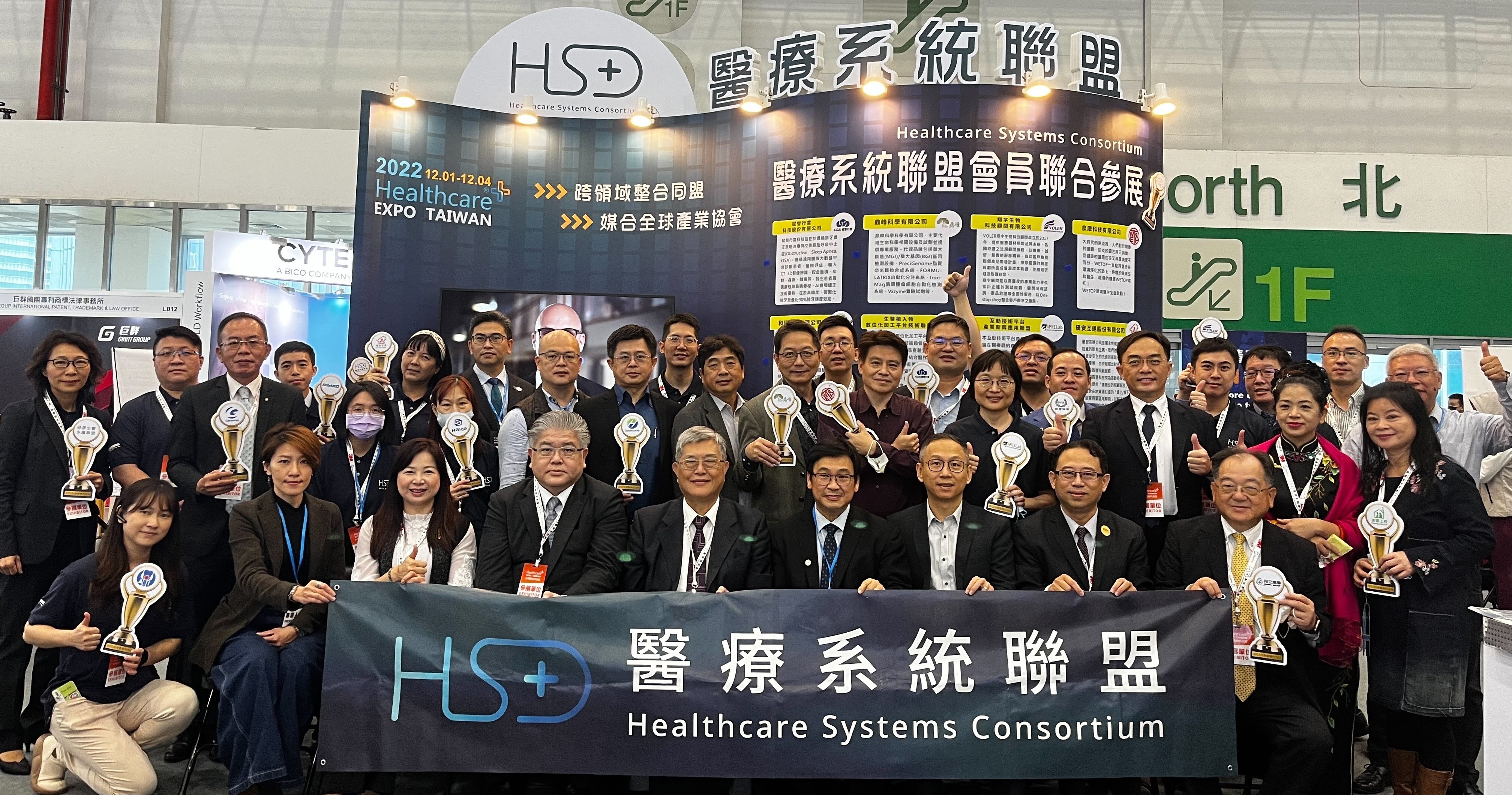
From December 1 to 4, the Healthcare Systems Consortium (HSC) took part in the Taiwan Healthcare+ Expo in Nangang. This time it specially invited guests from health and biomedical industry associations, including Healthcare Systems Consortium Chairman San-Kan Lee and CEO Shao-Jen Weng; Chairman 賈凱傑 and Secretary-General 林鳳蘭 of the Taiwan Global Trade and Logistics Development Association; Founding Chairman 郭守仁 and Chairman 簡碩賢 of the Global Chinese Smart Health Industry Development Association; Chairman 陳建州 and Secretary-General 張意良 of the Chinese Biotech and Pharmaceutical Industry Association; Chairwoman 陶靚儀 of the Taiwan Seedling Box Charity Association; Chairman 陳教文 of the Taiwan Society of Oral Laser and Holistic Medicine; Chairwoman 林佳憓 and Executive Supervisor 王柏勛 of the Asia-Pacific Rhein Precision Health Care Society; Professor 陳湘鳳 of the Interactive Technology Platform Emerging Industry Applications Alliance; and members of the Chinese International Sun Simiao Medical Association, the Taiwan AI Academy and the Biomedical Implant Digital Processing Platform Technology Alliance. Also joining were General Manager 李義輝 and Marketing Manager 劉政隆 of Health Medical Network (健康醫療網), attorney 張耕豪 of the law firm 宇順法律事務所, and Chairman 李昆錦 of the pharmaceutical company 杏福醫藥. Chairman San-Kan Lee said that the Healthcare Systems Consortium's alliance with health and biomedical industry associations aims to effectively link the associations' channels and professional capabilities, achieve effective complementarity of resources, develop the innovative R&D technologies the industry needs, jointly promote cross-professional, cross-regional and cross-channel integration of resources and innovative R&D resources in the healthcare industry, and establish long-term cooperative relationships.
The Healthcare Systems Consortium fully expands international cooperation
Healthcare Systems Consortium CEO Shao-Jen Weng said this was the second year of taking part in the world-class Taiwan Healthcare+ Expo. The Consortium is positioned to recruit Consortium members, promote the Consortium's core technologies, and interact and match with the medical sector, so that Consortium members can upgrade their technology and build capabilities for service innovation and development, creating excellent healthcare service quality. It provides a platform for industry to get to know the medical sector and actively invites local governments to explain future healthcare-related policies, so that through their participation Consortium members gain more interaction and business service opportunities with the medical sector, reducing communication barriers in both directions; and, in line with government regulations, it matches hospitals and companies to jointly develop healthcare products or services that meet real needs. The Consortium's industry-academia cooperation between Tunghai University and the large hospitals of central Taiwan has now reached a mature stage, and everyone is welcome to exchange and cooperate with us.
Healthcare Systems Consortium exhibitors showcase the latest medical technologies
Professor 陳湘鳳 of the Interactive Technology Platform Emerging Industry Applications Alliance said that the alliance's development focuses on sharing applications of virtual reality, augmented reality and haptic feedback in human-machine interfaces. Another eye-catching highlight at the exhibition was the ABI Biomedical Implant Digital Processing Platform Technology Alliance, a cross-disciplinary industry-academia service team for improving and innovating medical devices. It provides a platform for exchange and cooperation among industry, government, academia, research and the medical sector, trains medical device professionals in line with industry trends, and, through digital upgrading combining metal processing, polymer processing and surface treatment with software and hardware, promotes the industrial development of high-end biomedical implants, assistive devices and other medical devices in Taiwan.
In medical applications, 賦智行雲科技股份有限公司 showcased an AI orthodontic platform module for tooth arrangement prediction and sleep apnea treatment, offering high-quality integrated hardware and software solutions such as smart wearable devices and self-service equipment and systems. 兢威有限公司 showcased the PASESA, a new non-invasive arteriosclerosis tester. 百視美股份有限公司 showcased a portable electrocardiograph and a remote ECG care solution. In precision medicine, 鼎峰科學有限公司 offered MGI gene sequencing solutions and showcased a lipid nanoparticle (LNP) synthesis system. In medical product certification, the biotechnology consulting firm 翔宇生物科技顧問有限公司 focuses on quality systems, test planning and validation consulting services for medical devices.
In senior services, responding to the ageing trend, Sunnic Technology & Merchandise Inc. offered all-age services covering nutritional meals, health care, environmental hygiene and smart protection. In environmental control, 台灣康法股份有限公司 is dedicated to providing air filtration and air pollution control solutions for commercial and industrial use. 泉康科技有限公司 focuses on epidemic prevention, antibacterial and environmental purification solutions.
In cloud technology services, 優安互連 offered an AIoT big data cloud platform for "Uber for long-term care" and an online meal marketplace platform for seniors, and 桓基科技 offered a highly scalable, highly secure web-based cloud collaboration platform integrated with specimen label printing equipment. 康健上府生活科技股份有限公司 showcased a comprehensive smart healthcare solution for women: every woman deserves her own cloud health butler and health passbook.
殷富瑞得 presents the latest applications of far infrared
The medical device company 殷富瑞得醫療器材股份有限公司 focuses on medical research into and marketing of far infrared for the human body. Papers it has published with a medical university in Taipei include: a study of the effect of far infrared on lead toxicity, and the application of far infrared in skin cancer. It is now conducting, with a national medical center, a study of the effects of far infrared therapy on the cognitive function of dementia patients, which has received IRB approval.
The "Health and Biomedical Sustainability Alliance": coexistence, co-prosperity, sharing and win-win
Chairman 陳建州 of the Chinese Biotech and Pharmaceutical Industry Association said that the mature development of a pharmaceutical industry necessarily involves joint research; although there is competition, only through more cooperation, more sharing and more unity can a national team of the health and biomedical industry truly be built in pursuit of sustainable development. The recent pandemic in particular demonstrated the significance of this strength.
Chairwoman 陶靚儀 of the Taiwan Seedling Box Charity Association said that the "Health and Biomedical Sustainability Alliance", made up of various associations and led by the Healthcare Systems Consortium, can cover biotech and pharmaceuticals, agricultural technology, food, health and beauty, dental channels, traditional Chinese medicine channels, chain drugstore channels, medical information technology, artificial intelligence, biomedical implants, precision health care, smart senior care, high-efficiency buildings, green building materials, pharmaceutical warehousing, and logistics. In the future, through the professional division of labor among the associations, they hope to create an ecosystem of coexistence, co-prosperity, sharing and win-win.
Team Highlights
Prepared in 2016, ten years by 2026: the Healthcare Systems Consortium brings together industry, government, academia, research and medicine to explore the blueprint for smart healthcare
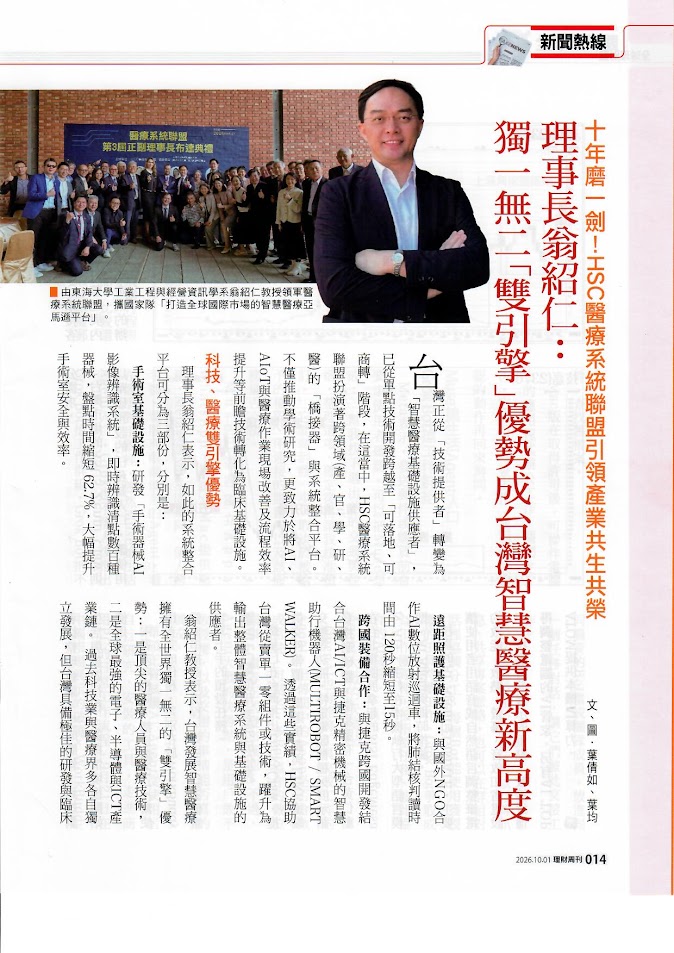
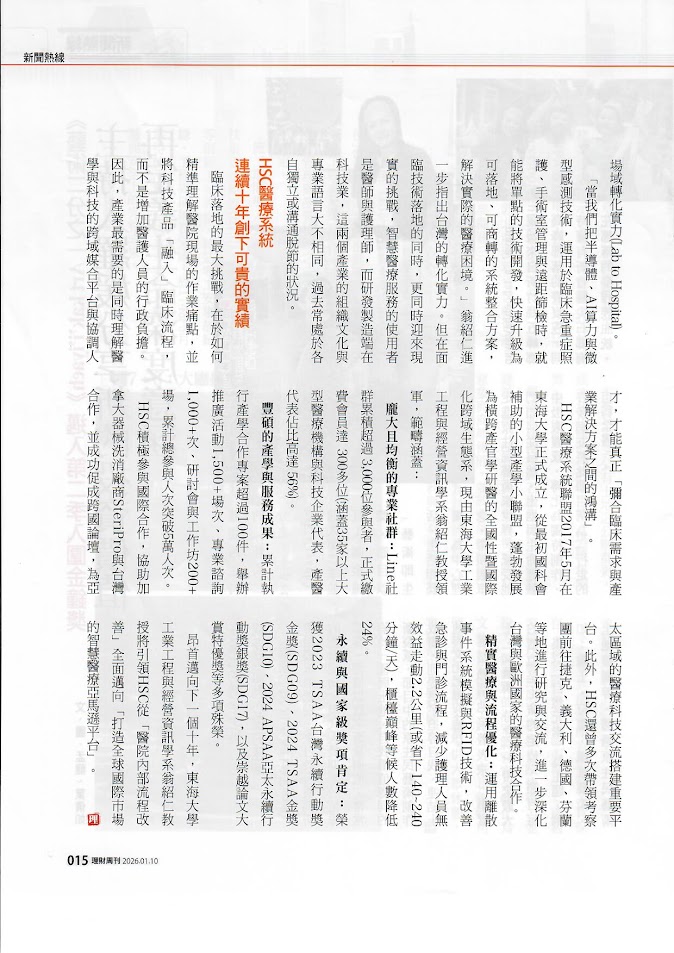
2026 Wealth Magazine (理財周刊) interview: Chairman Weng builds an "Amazon" smart healthcare platform for global international markets
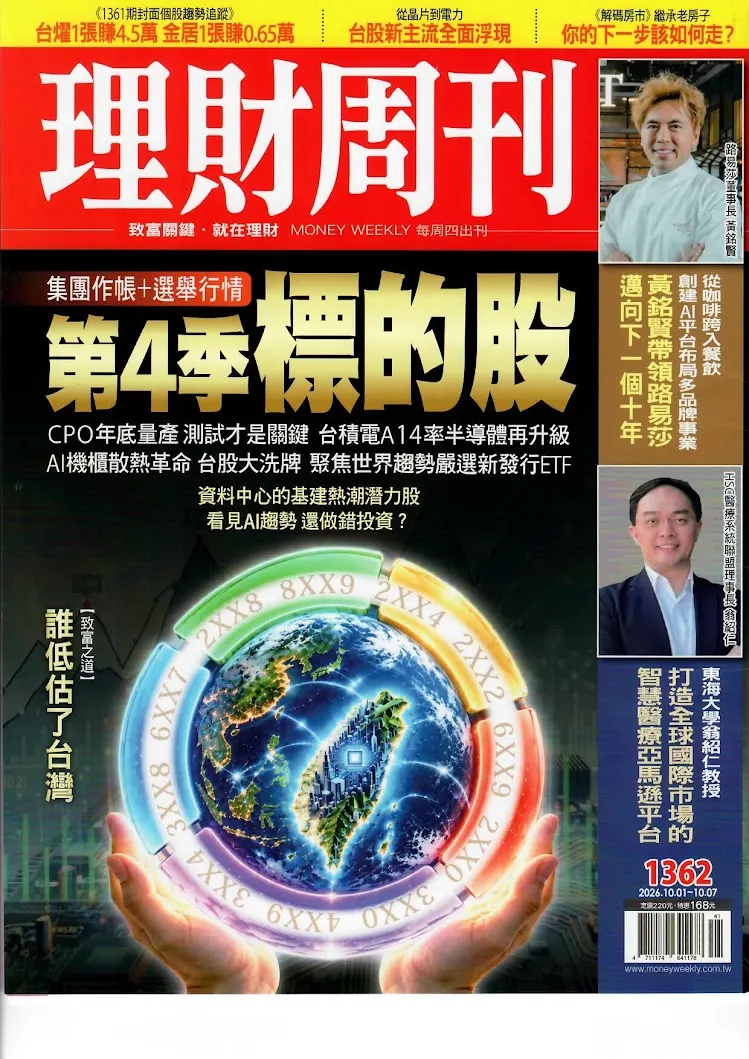
2026 Wealth Magazine (理財周刊) interviewOriginal image 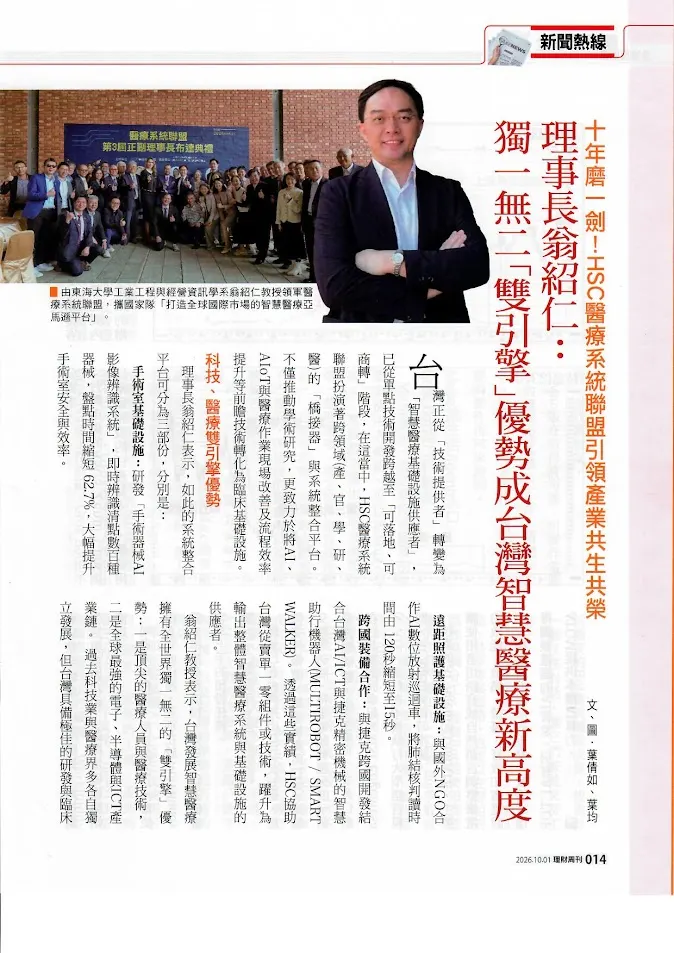
2026 Wealth Magazine (理財周刊) interviewOriginal image 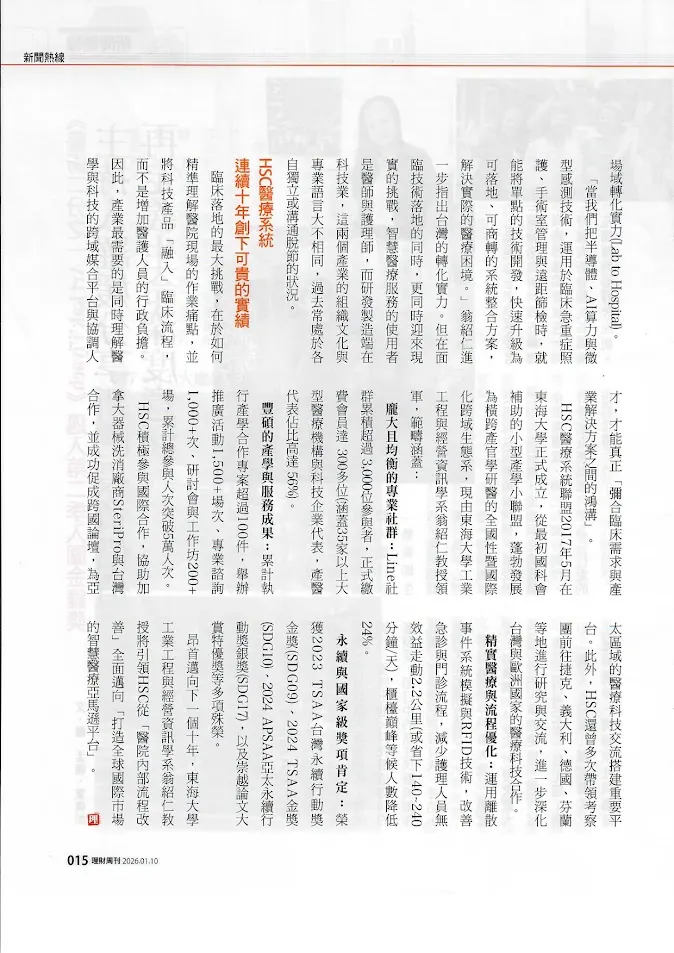
2026 Wealth Magazine (理財周刊) interviewOriginal image
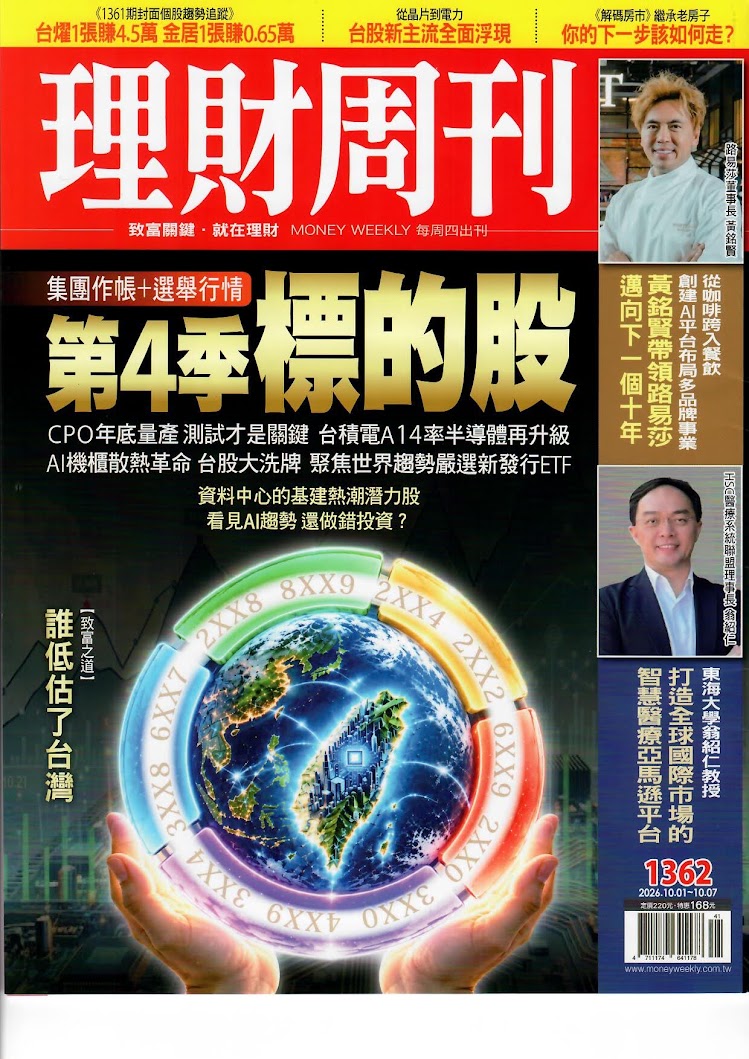
2026 Healthcare Systems Consortium Badminton Invitational – highlights video
2026 Healthcare Systems Consortium: Building Taiwan's Greater Health Ecosystem Together
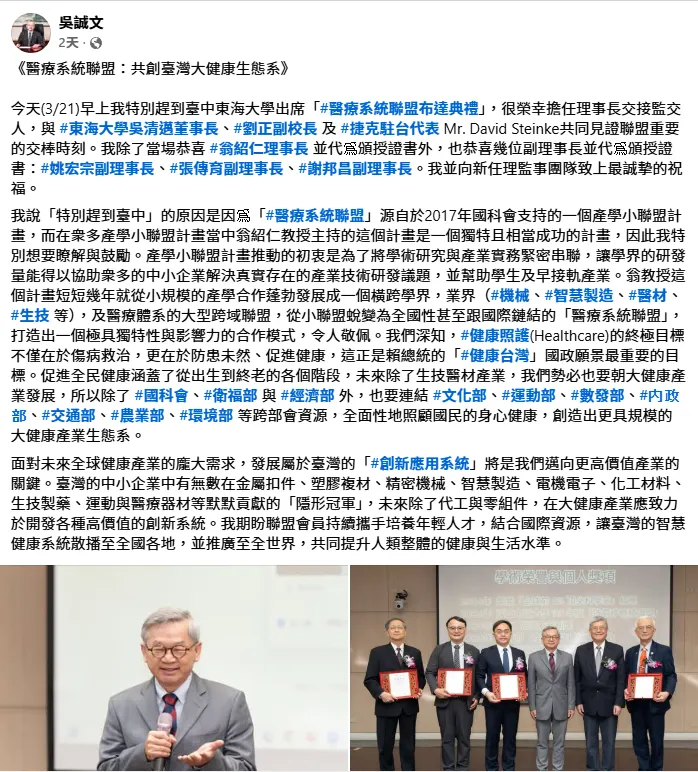
Original image 2026/03/21 NSTC Minister 吳誠文 encourages HSC on Facebook
2025 Healthcare Systems Consortium Annual General Meeting and Election of Directors and Supervisors
2024 Healthcare Systems Consortium – Activity Record
2024 Tunghai University's efforts in smart healthcare
2024 Healthcare Systems Consortium annual results and performance
2023 Healthcare Systems Consortium annual activity record special edition
2023 Tunghai University: cross-disciplinary support for the greater health industry
2023 Healthcare Systems Consortium General Assembly – exhibitor video
2023 Healthcare Systems Consortium General Assembly
2022 Healthcare Systems Consortium year-end video
2022 Healthcare Systems Consortium Sixth Annual General Meeting
2022 Smart Healthcare and Technology Creativity Camp
2021 congratulatory video on HSC's founding – President 林奇宏 of National Yang Ming Chiao Tung University
2021 congratulatory video on HSC's founding – former Premier and university president 張善政
2020 Healthcare Systems Consortium annual results
HSC Consortium one-day exchange trip
HSC 2017–2019 activity record album
Greater Taichung News: Tunghai Forward-Looking Forum on Global Healthcare Trends and Innovative Services 2018
Introduction to the MOST Systems Consortium, since 2017
Highlights of the MOST Systems Forward-Looking Forum 2017
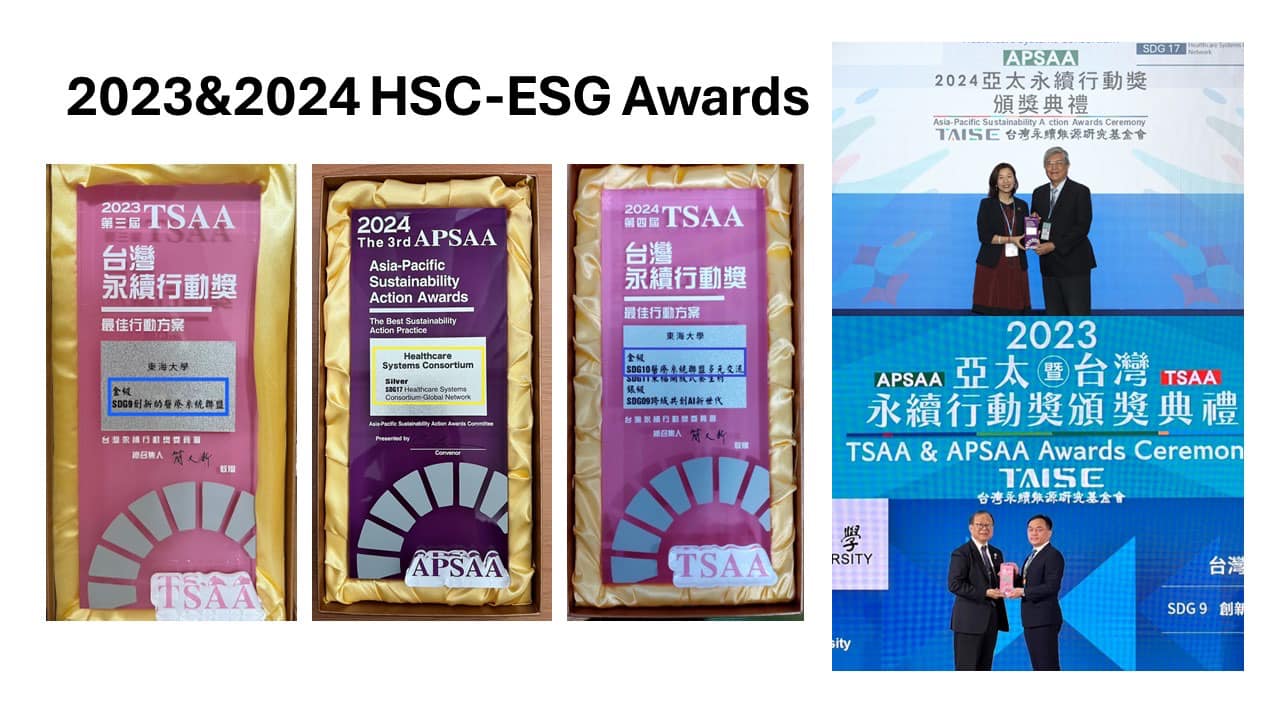
Original image Won the Gold Award in the SDG10 category of the "2024 4th Taiwan Sustainability Action Awards (TSAA)" for Healthcare Systems Consortium Diverse Exchange
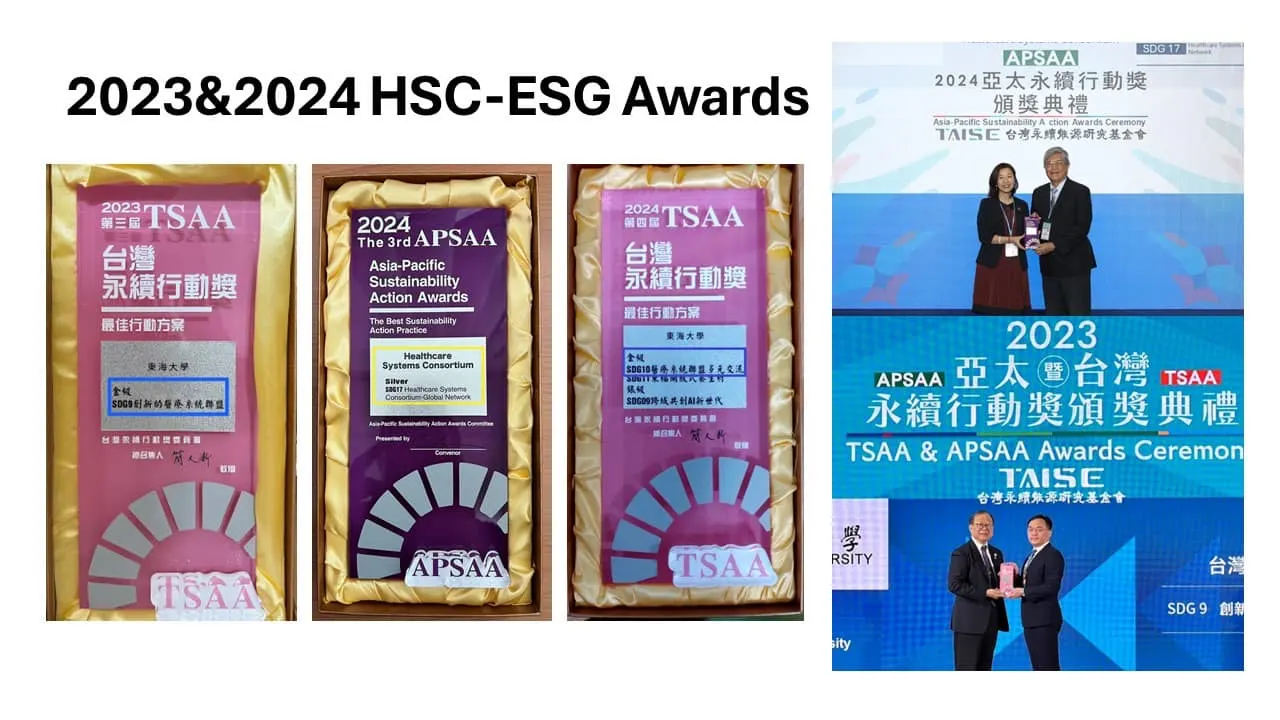
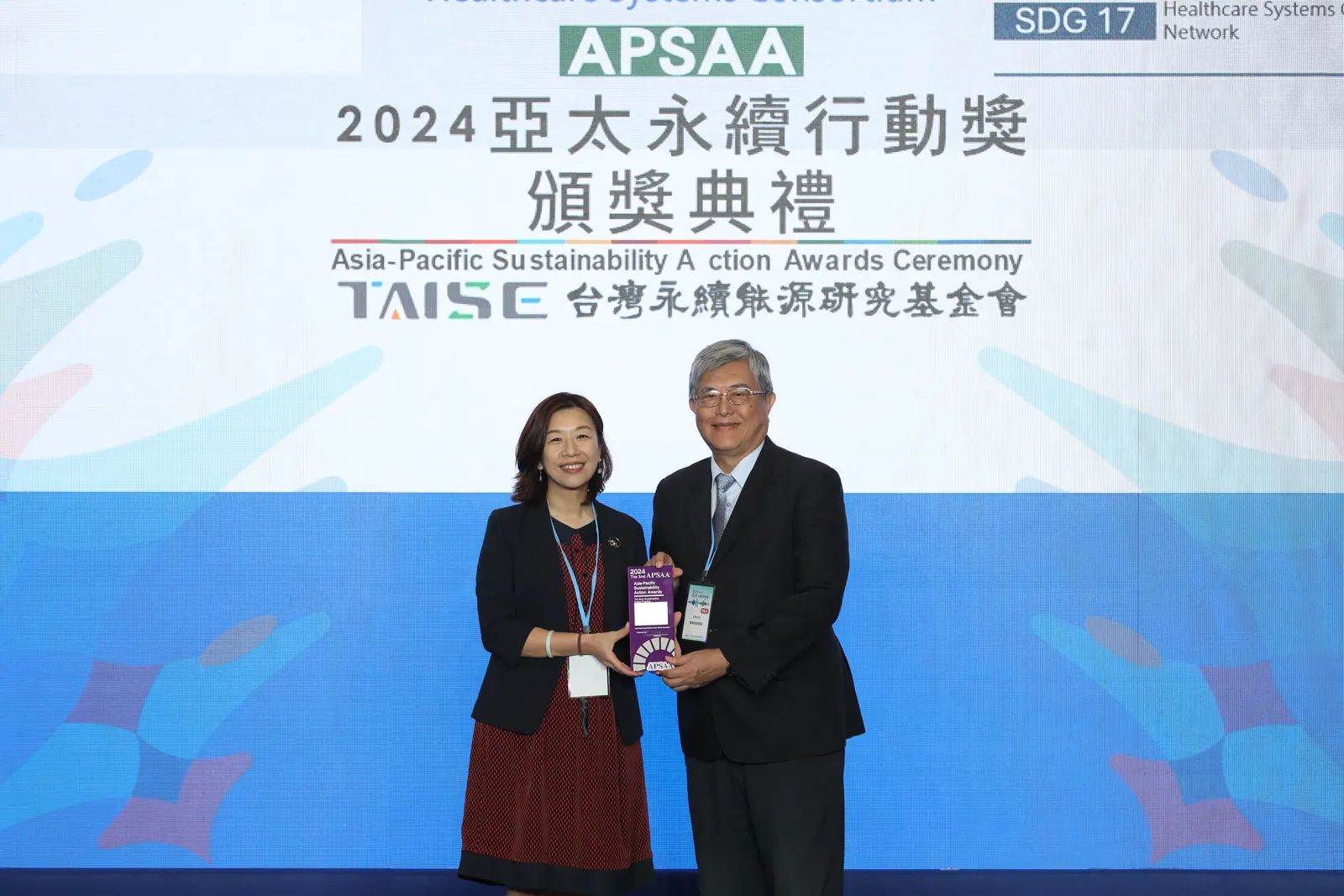
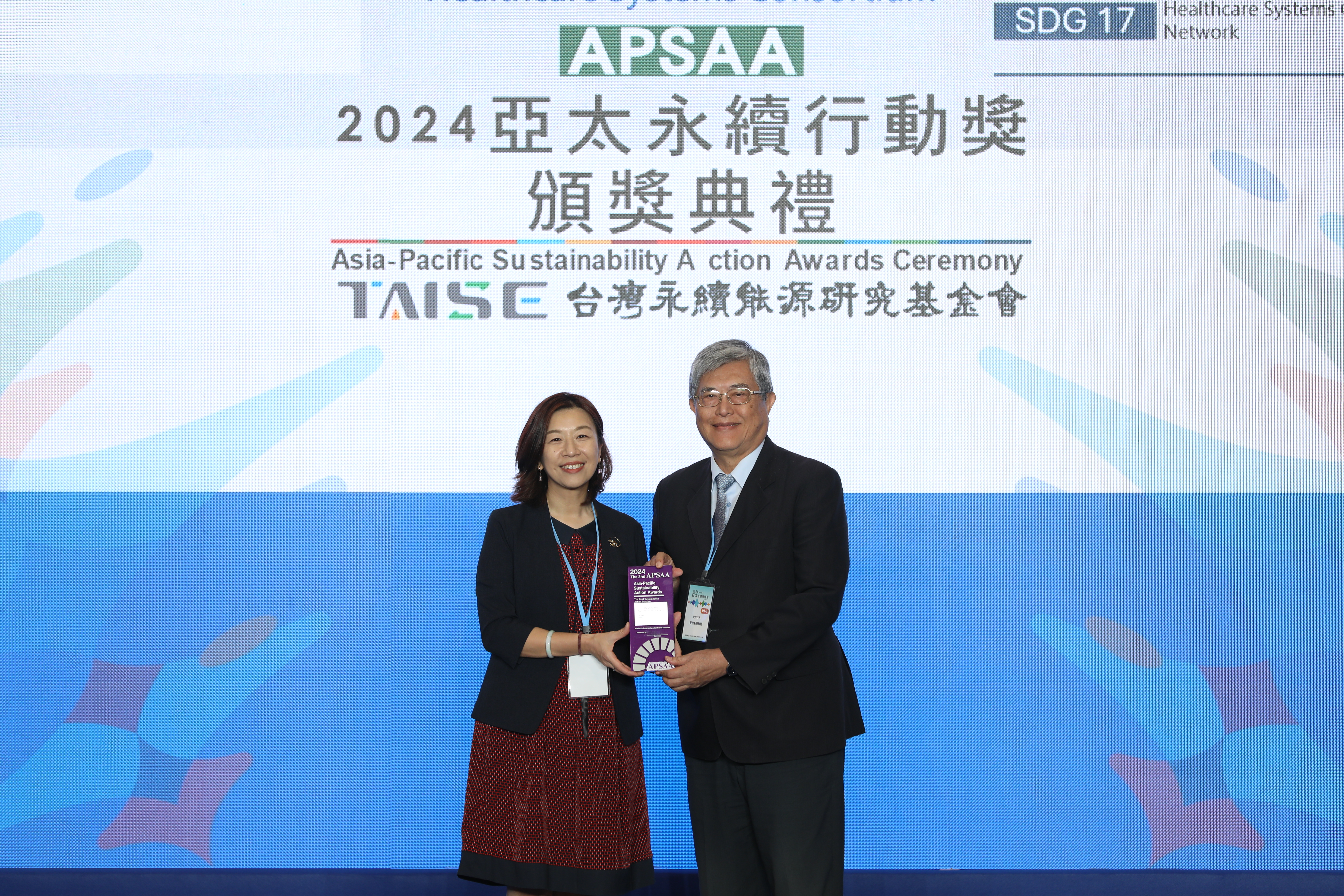
Original image Won the Silver Award in the SDG17 category of the "2024 3rd Asia-Pacific Sustainability Action Awards (APSAA)" for Healthcare Systems Consortium – Global Network
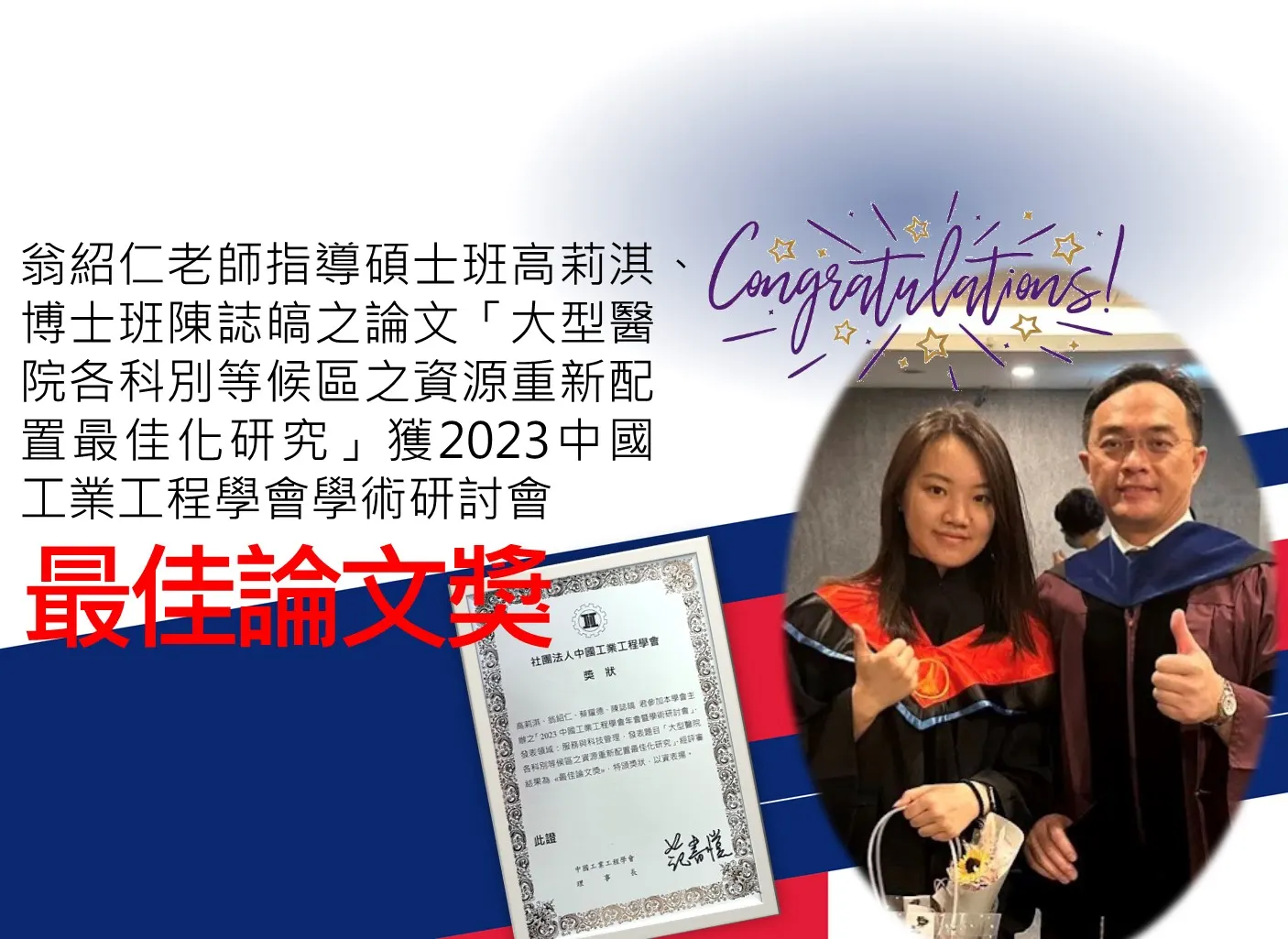
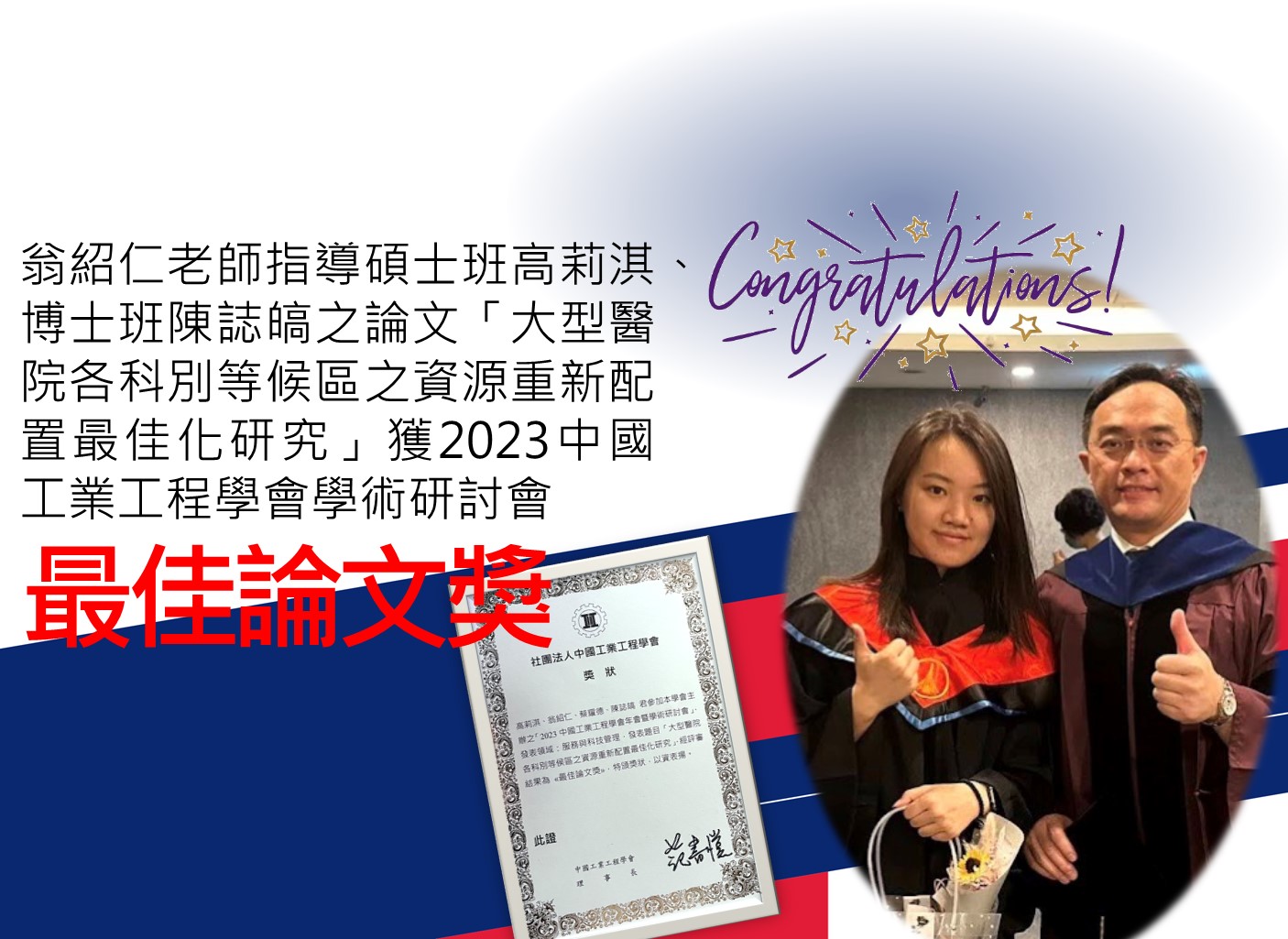
Original image 2023: The paper by master's student 高莉淇 and doctoral student 陳誌皜, supervised by Professor Shao-Jen Weng, won the Best Paper Award at the 2023 Chinese Institute of Industrial Engineers Conference
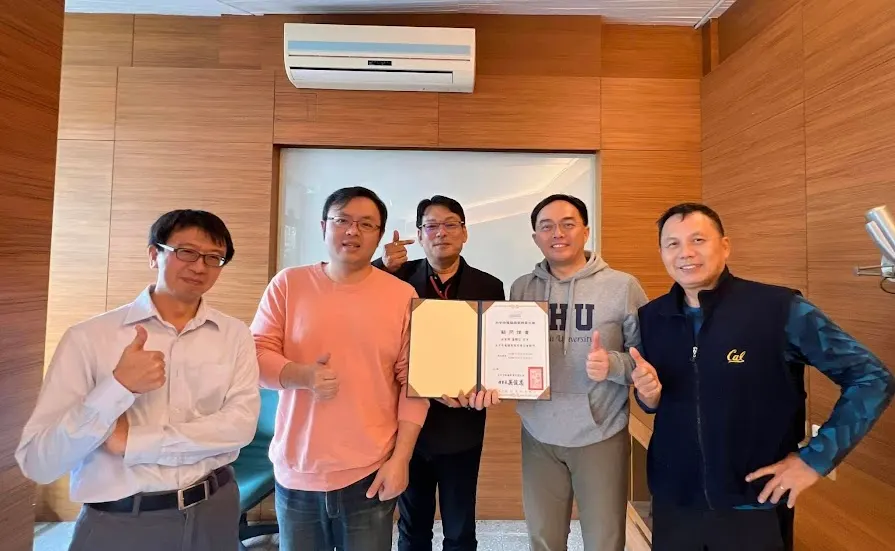
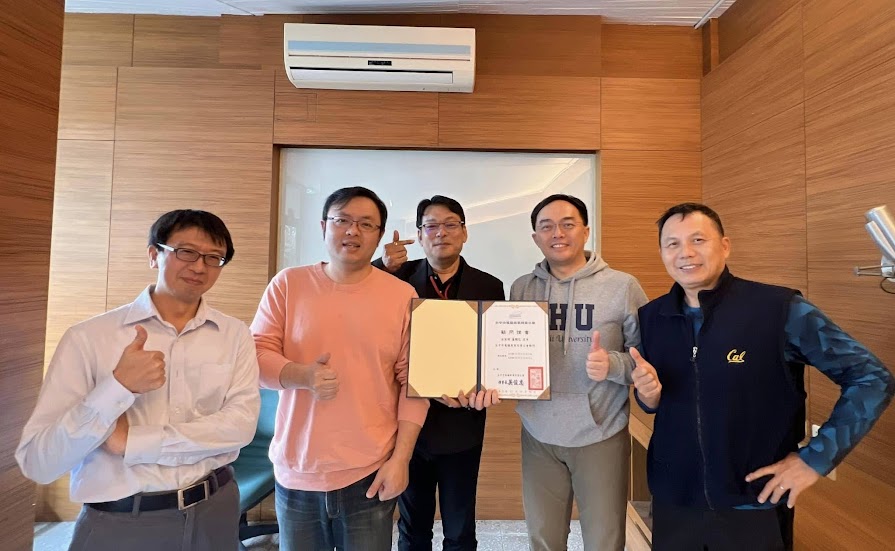
Original image 2023: Professor Shao-Jen Weng appointed as advisor to the TaiChung Computer Association
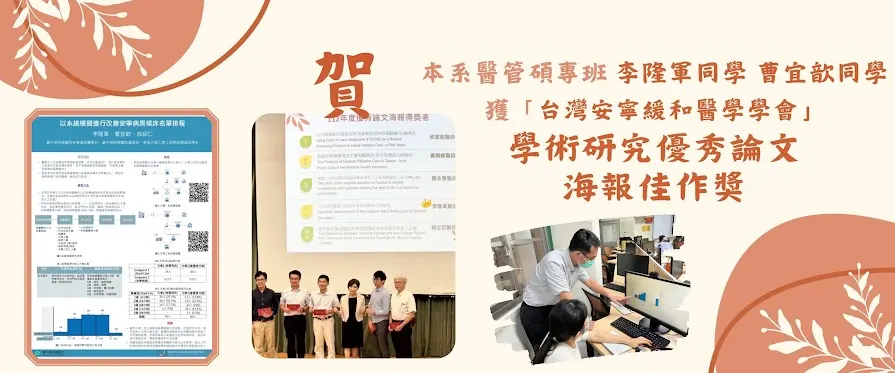
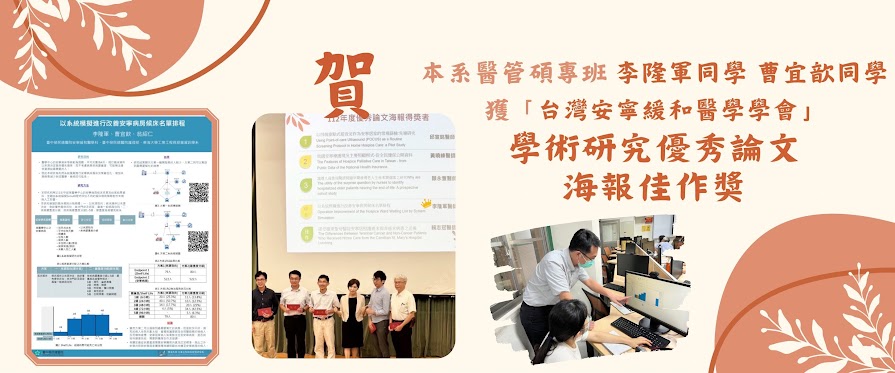
Original image 2023: Students 李隆軍 and 曹宜歆 won an Honorable Mention for Excellent Research Paper Poster from the Taiwan Academy of Hospice Palliative Medicine
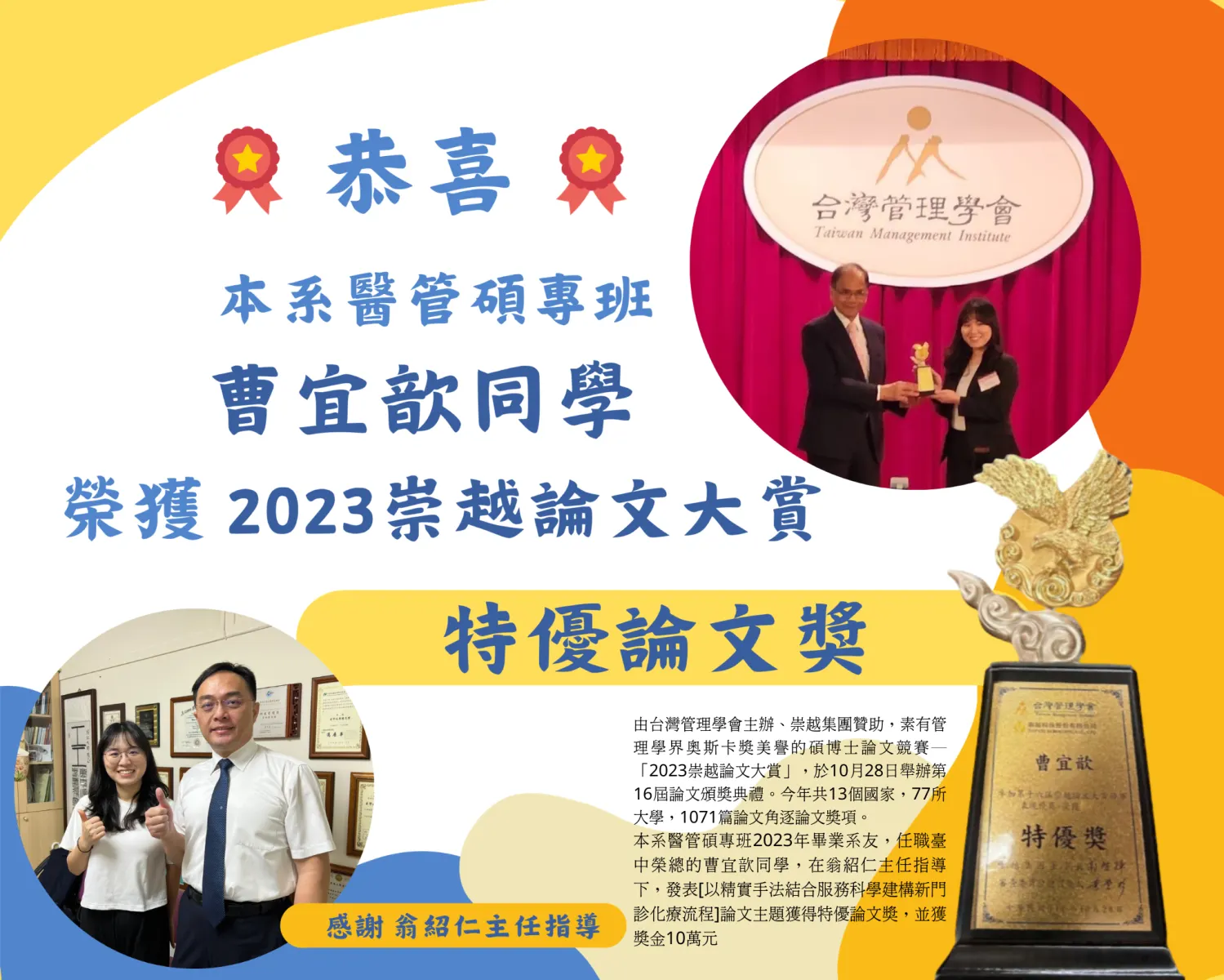
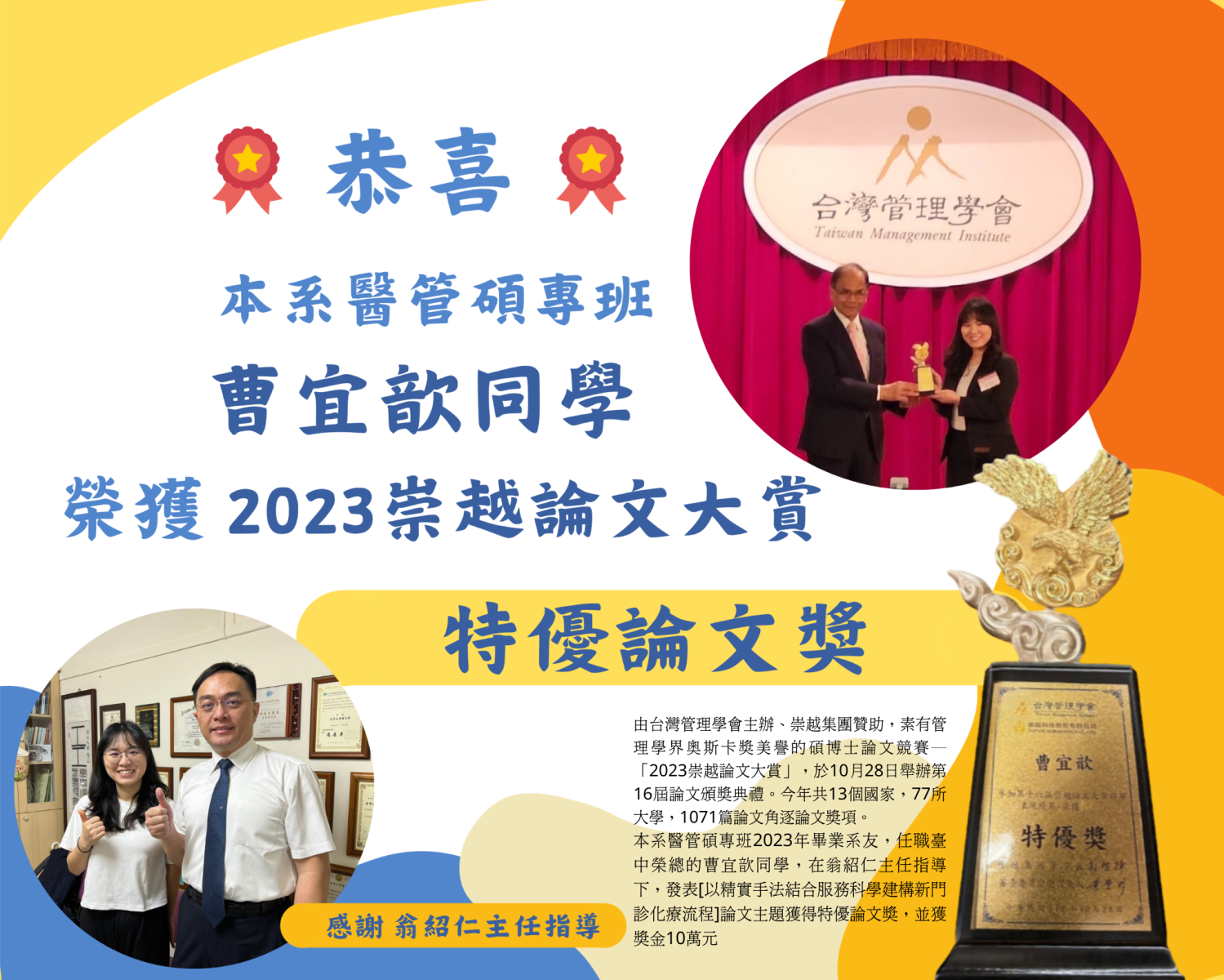
Original image 2023 TSC Thesis Award Ceremony: 曹宜歆, a student in the Executive Master's Program in Healthcare Management, was shortlisted for the TSC Thesis Award and won the Special Excellence Award (first place)
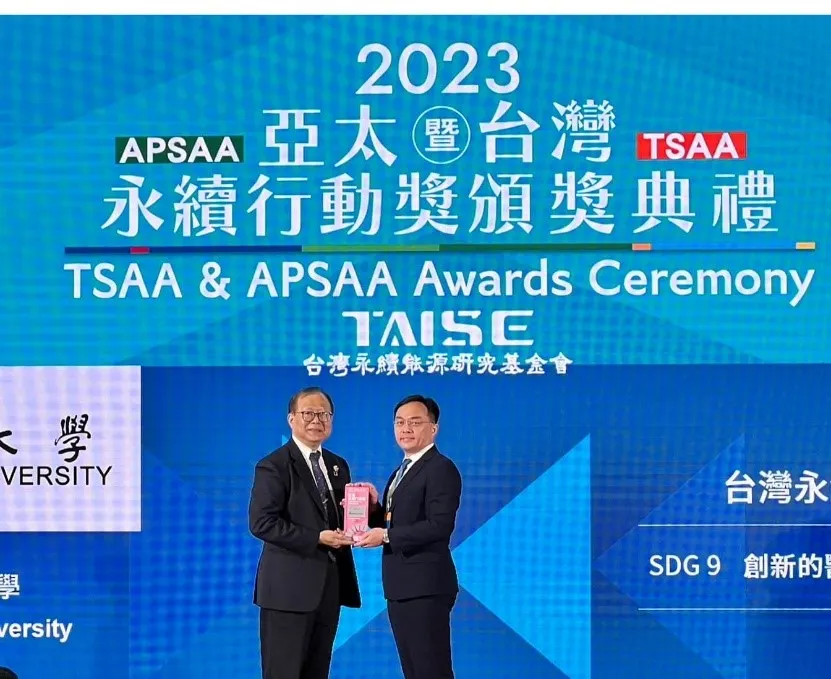
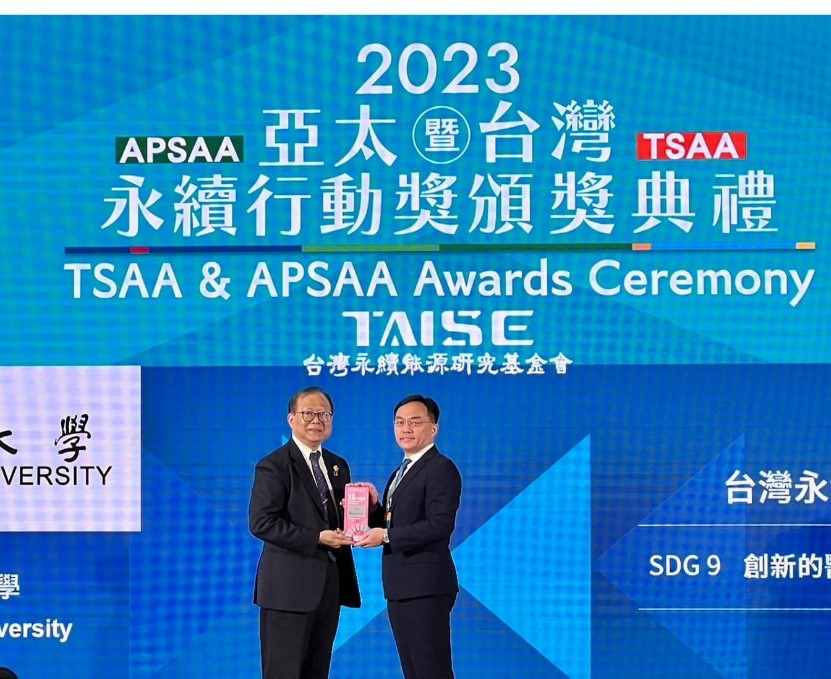
Original image 2023: Professor Shao-Jen Weng won the Gold Award in the SDG09 category of the "2023 3rd Taiwan Sustainability Action Awards (TSAA)" for the Innovative Healthcare Systems Consortium (Tunghai University's Innovative Healthcare Systems Consortium)
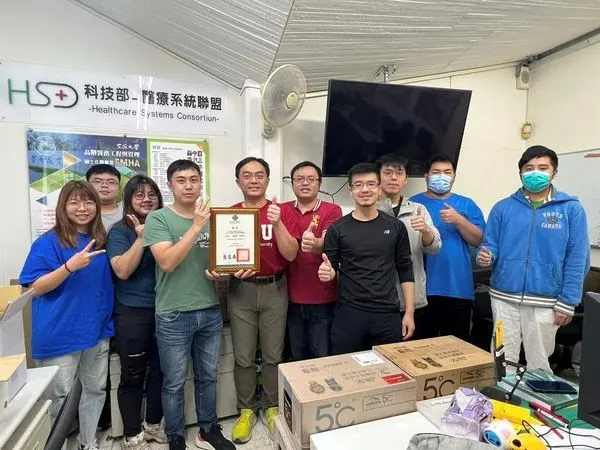
Original image 2022: Honorable Mention in the poster competition at the 2021 results presentation of collaborative research projects between Taichung Veterans General Hospital and universities in central Taiwan
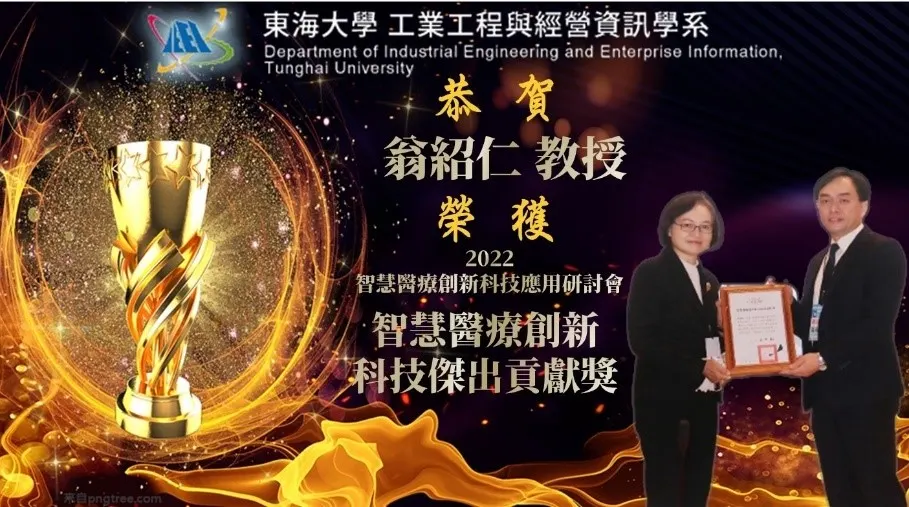
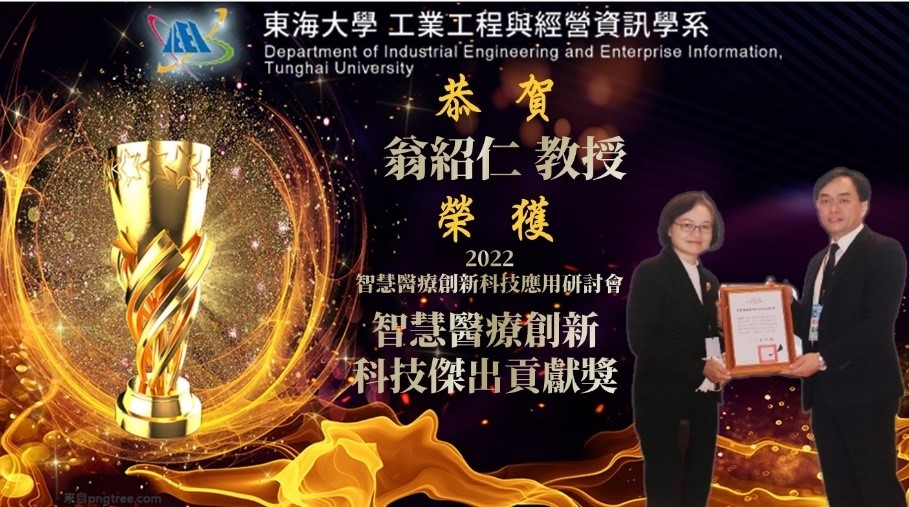
Original image 2022: Professor Shao-Jen Weng received the Smart Healthcare Innovation Technology Outstanding Contribution Award
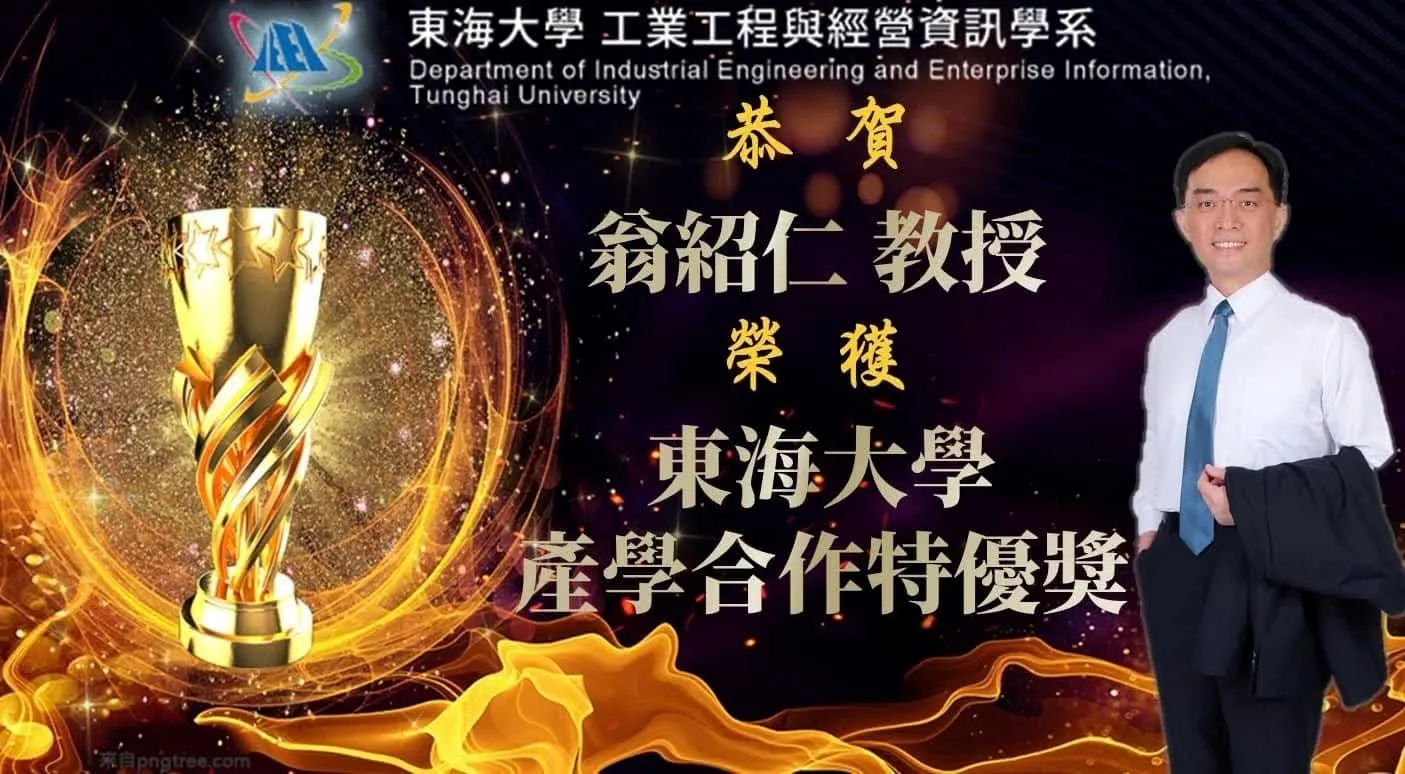
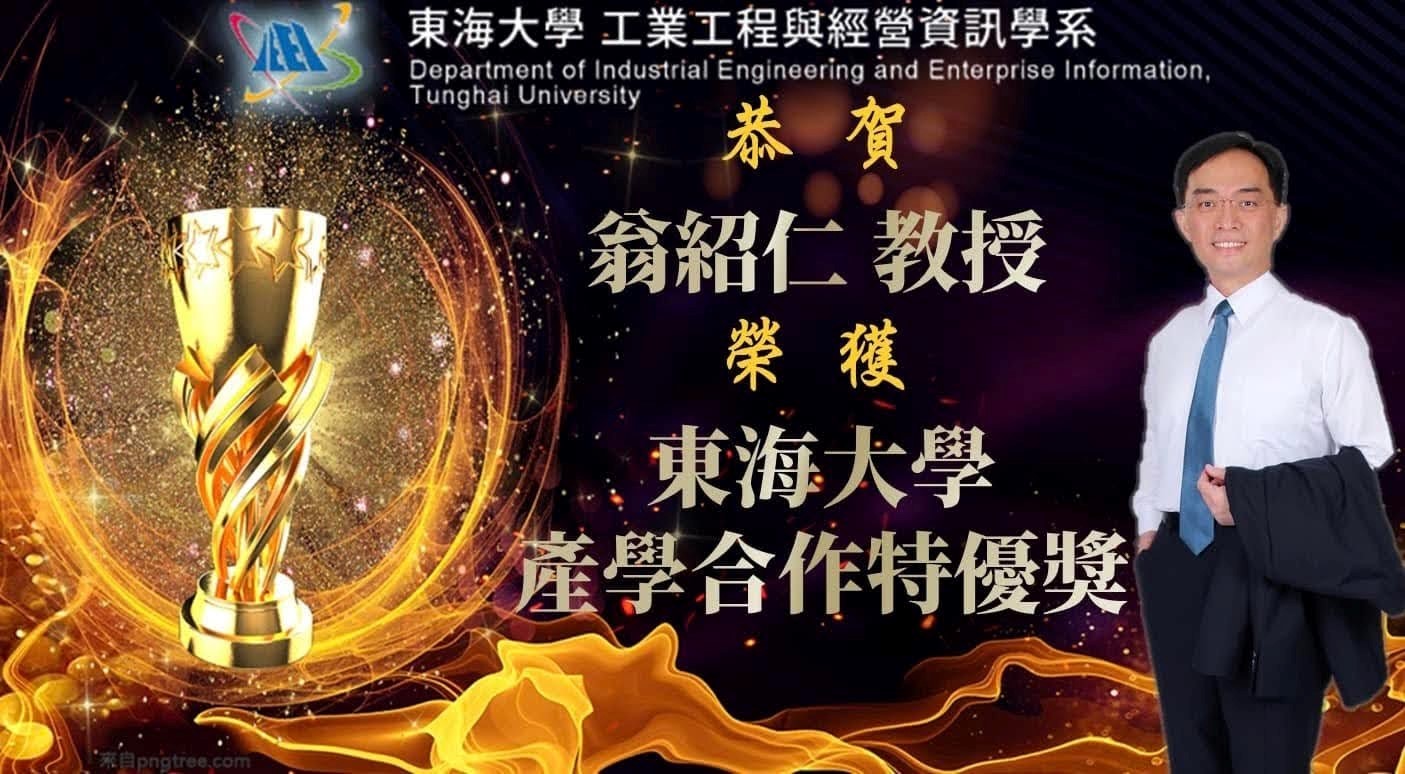
Original image 2022: Professor Shao-Jen Weng received Tunghai University's Excellence Award for Industry-Academia Cooperation
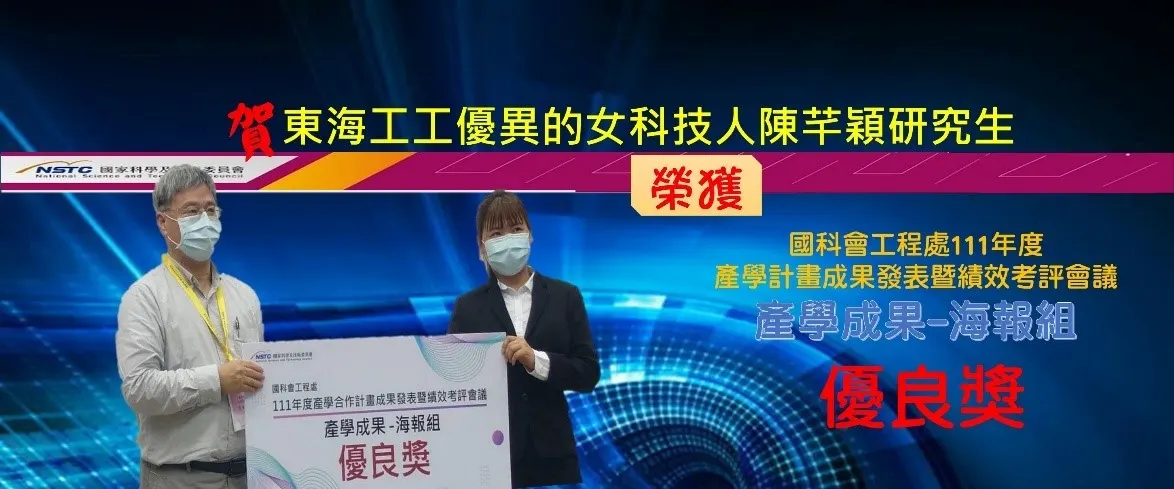
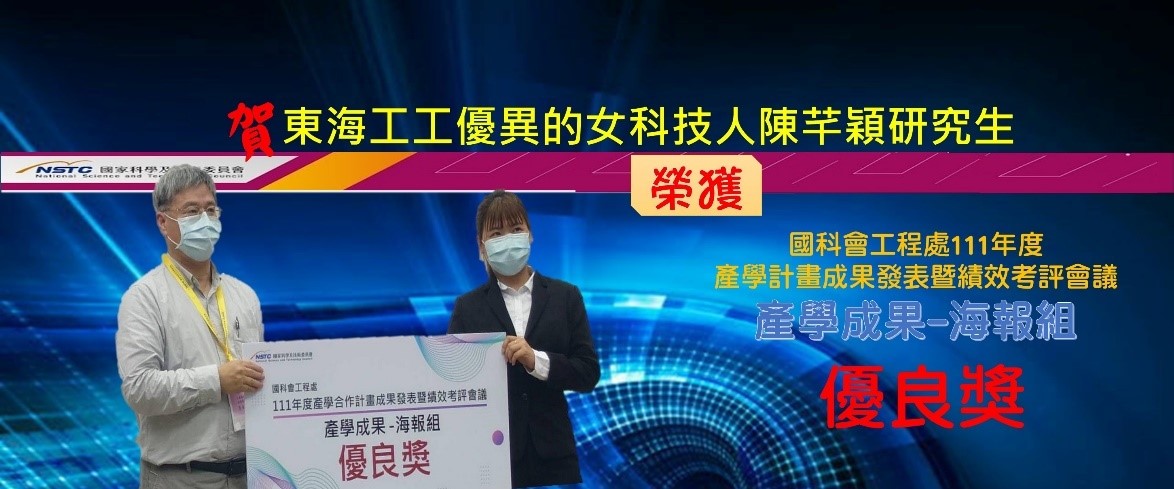
Original image Congratulations!! 2022: Student 陳芊穎 won the Excellent Poster Award at the NSTC Department of Engineering and Technologies' 2022 industry-academia project results presentation
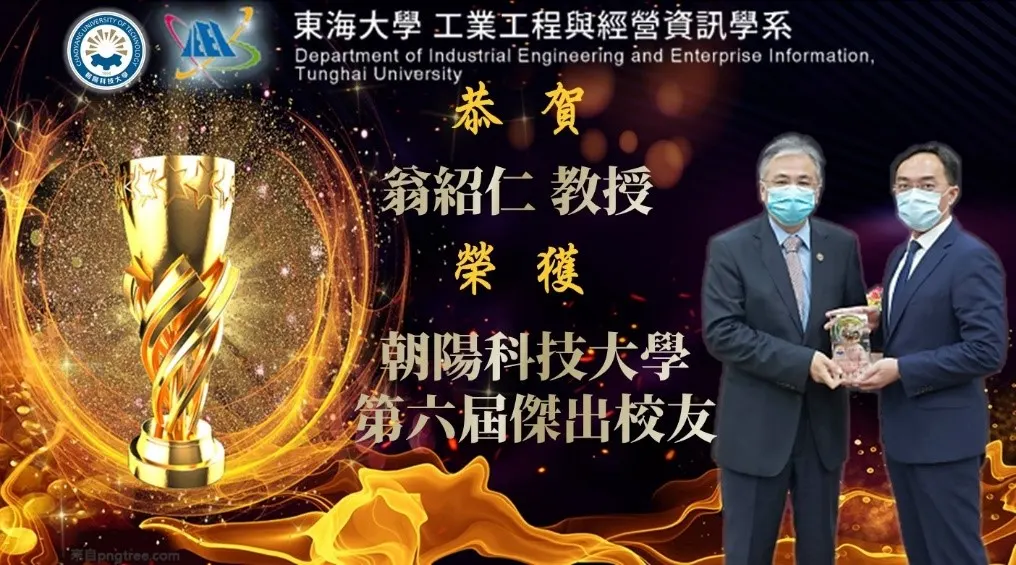
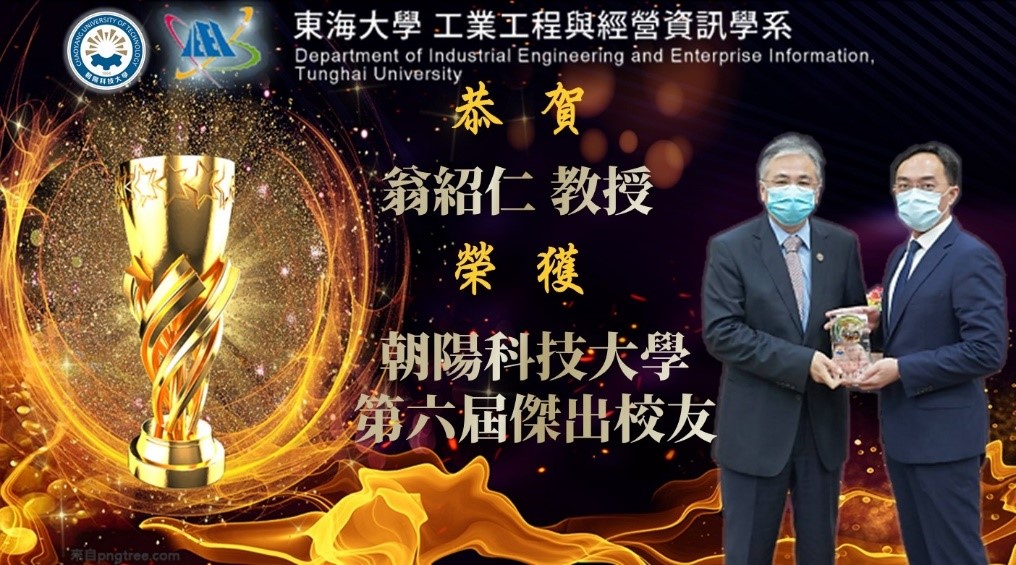
Original image 2022: Professor Shao-Jen Weng named a Distinguished Alumnus of Chaoyang University of Technology
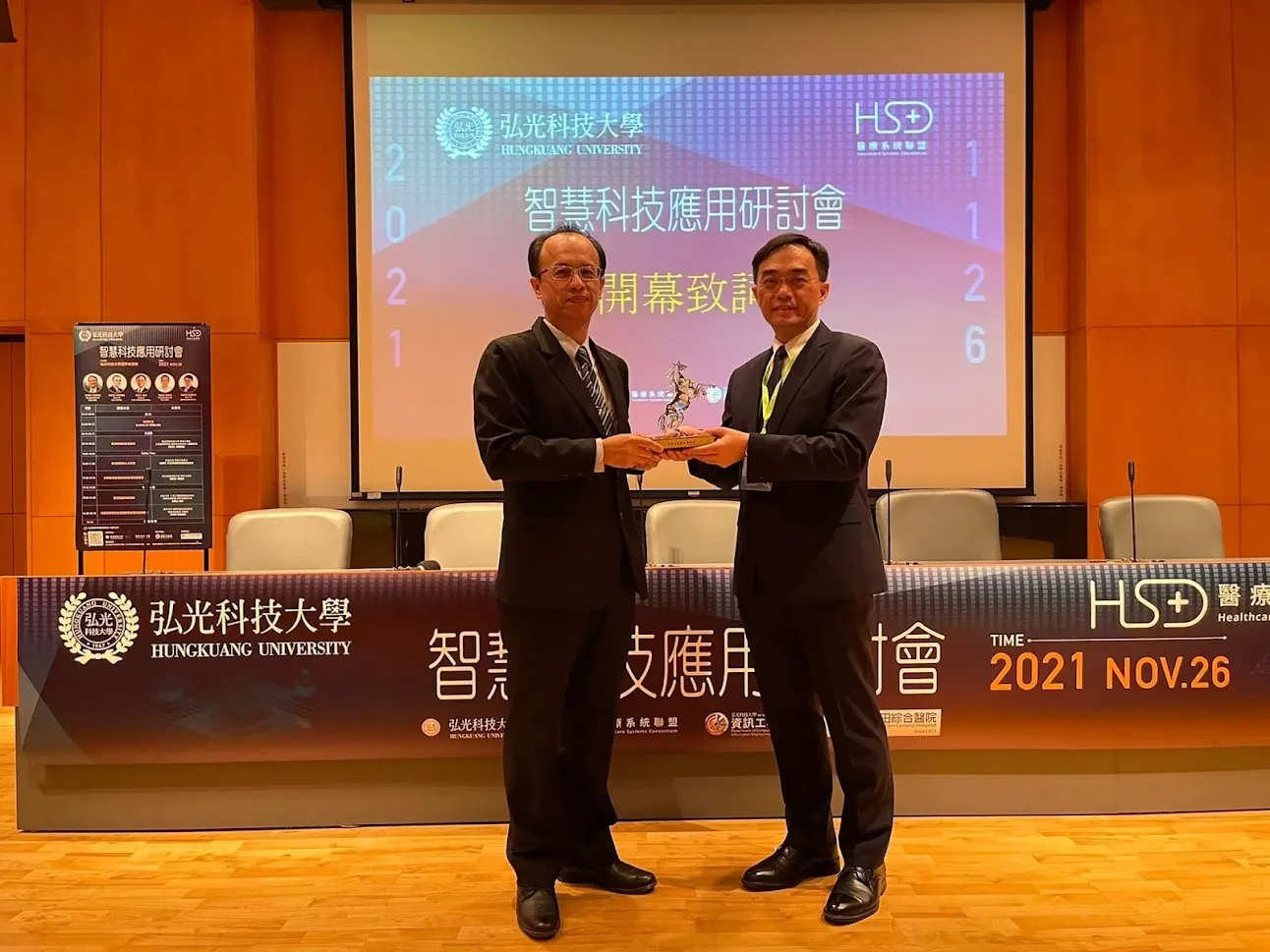
Original image 2021: Professor Shao-Jen Weng received the Healthcare System Integration Pioneer Award
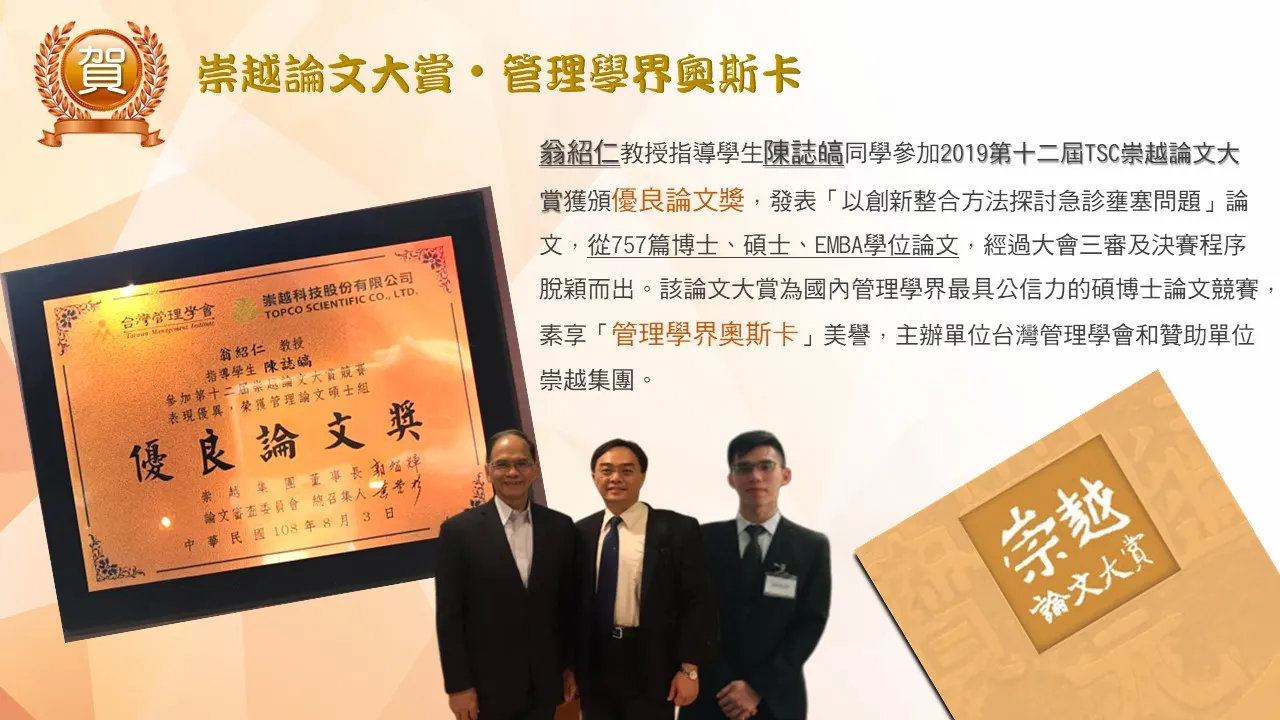
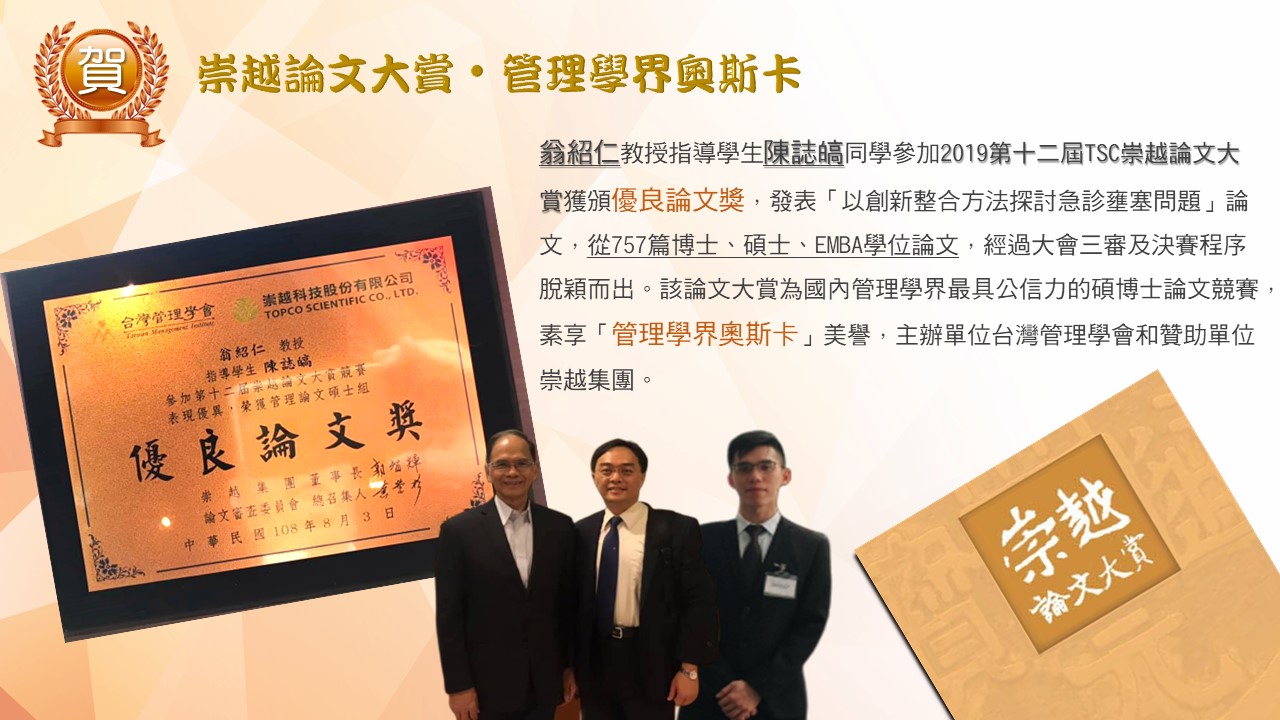
Original image Student 陳誌皜 received the Excellent Paper Award at the 12th TSC Thesis Award (2019)
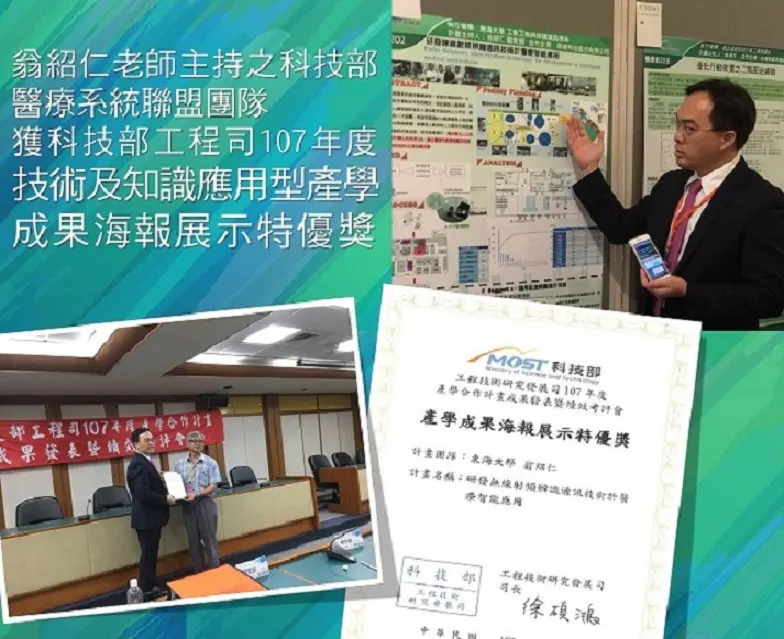
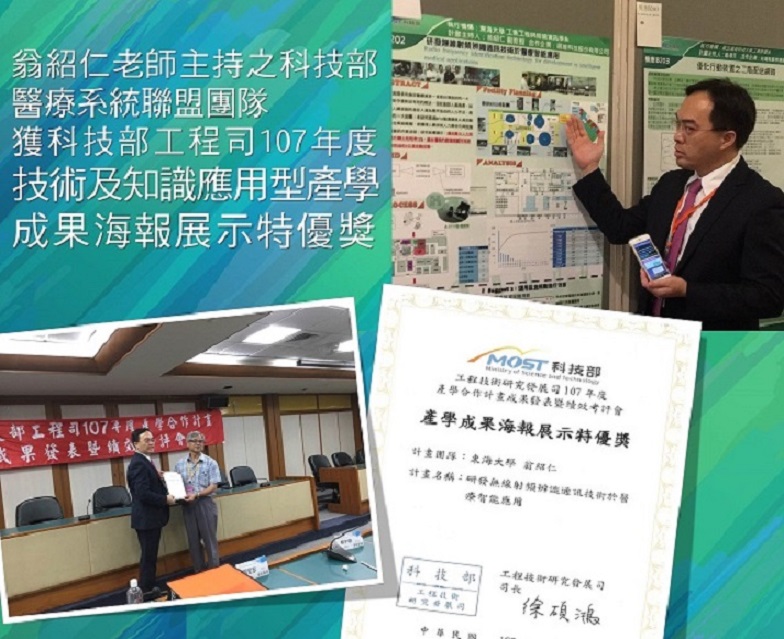
Original image Distinguished Honor Award in the 2018 industry-academia results poster exhibition of the NSTC Department of Engineering and Technologies
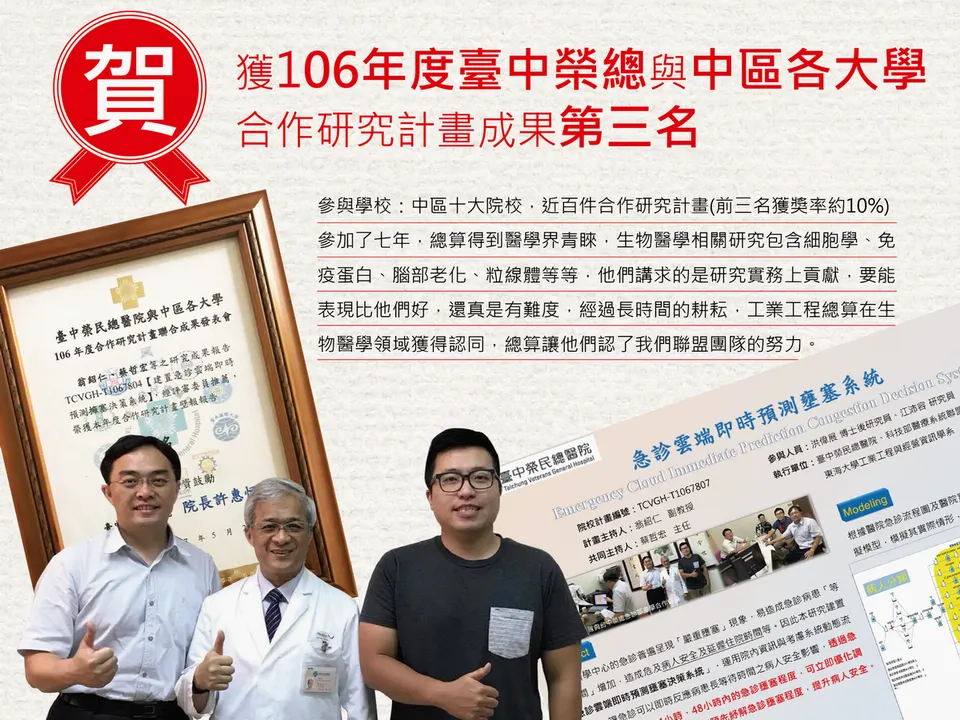
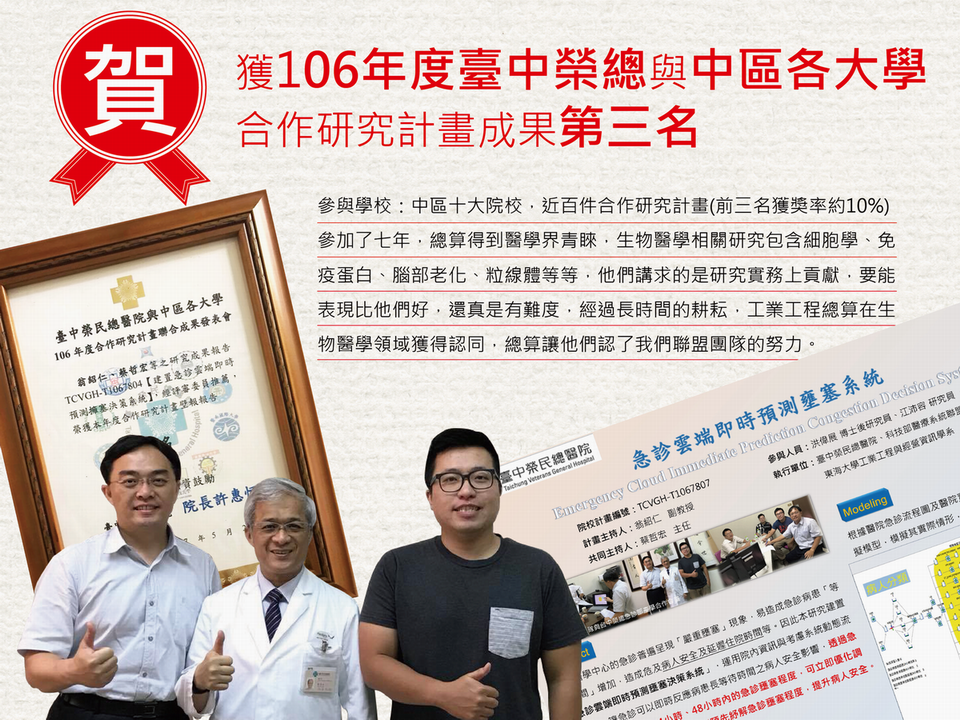
Original image 2018: Third place in the 2017 results of collaborative research projects between Taichung Veterans General Hospital and universities in central Taiwan
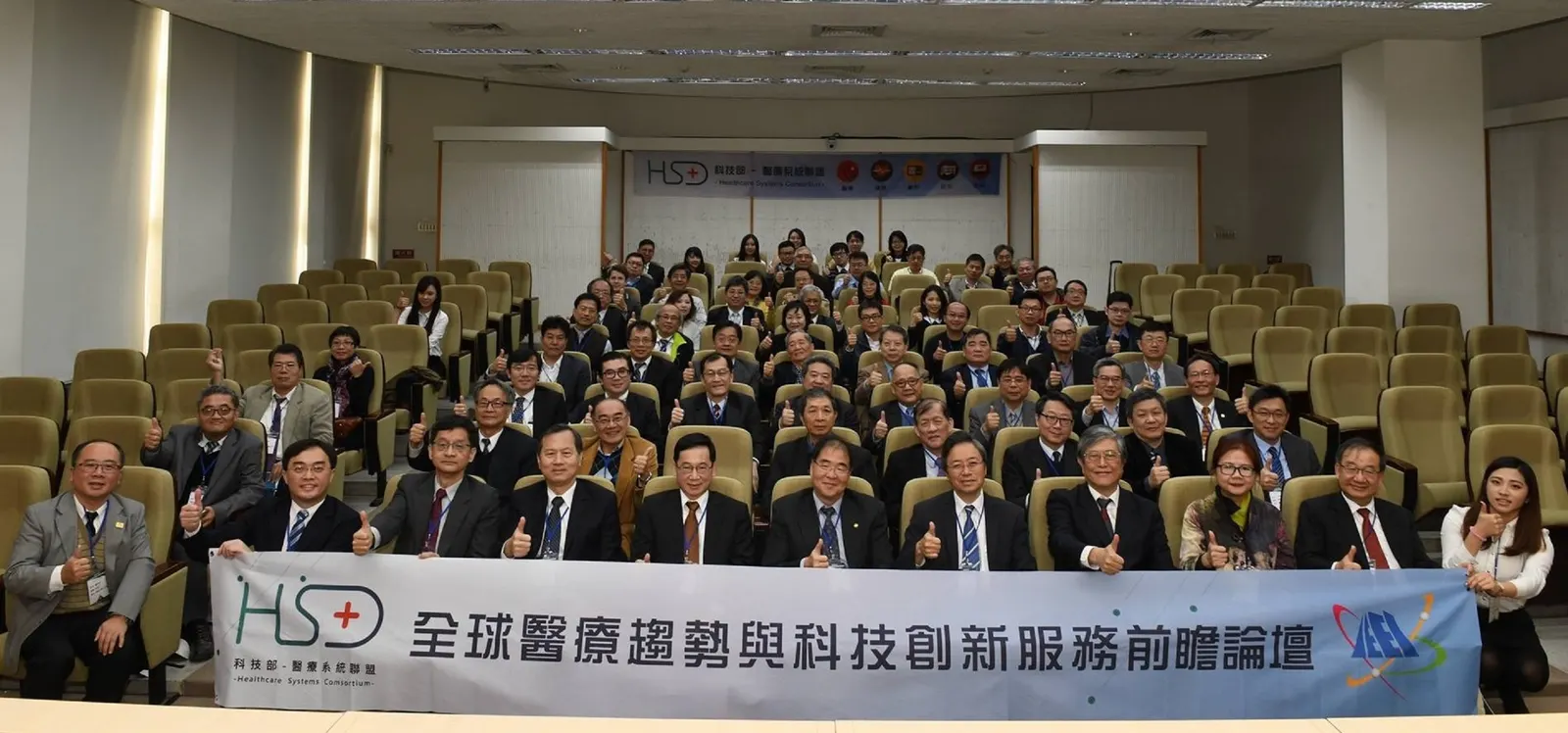
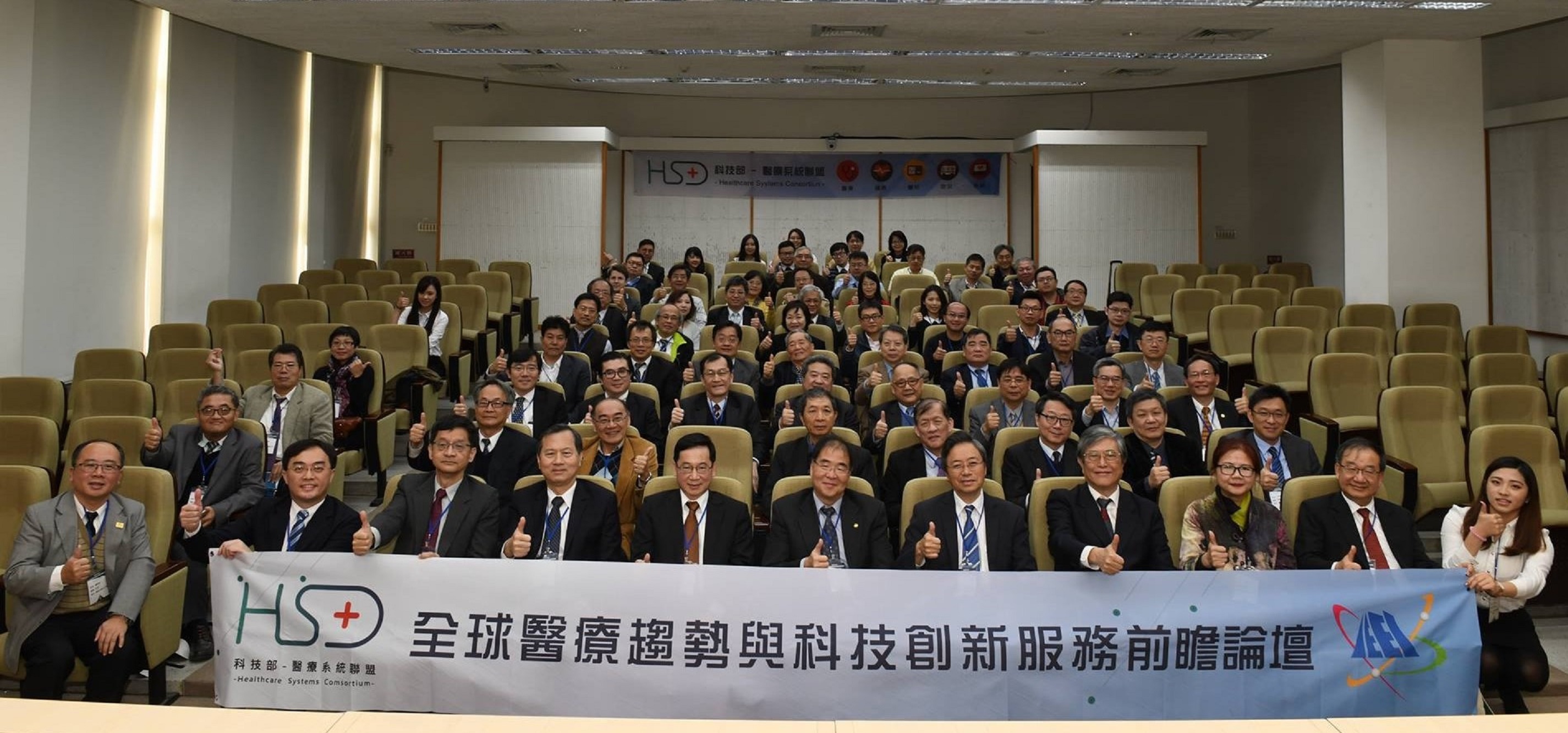
Original image 2017: The Healthcare Systems Consortium held the "Forward-Looking Forum on Global Healthcare Trends and Innovative Technology Services"
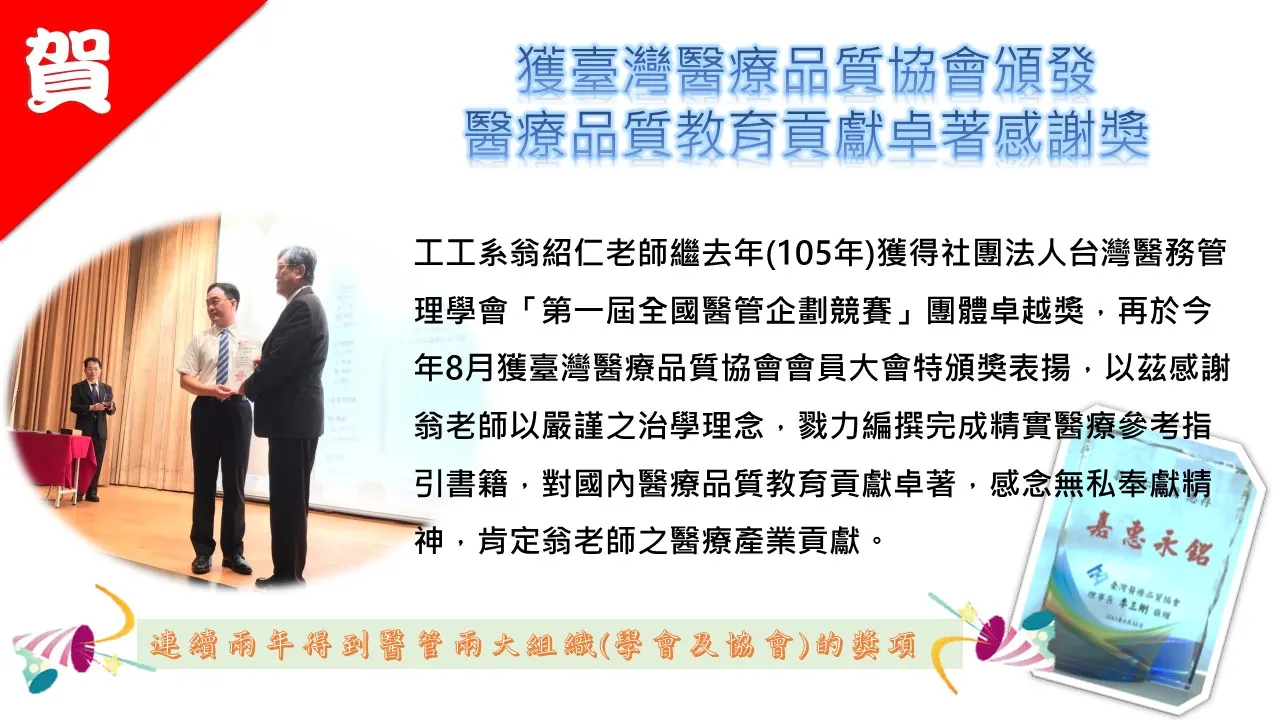
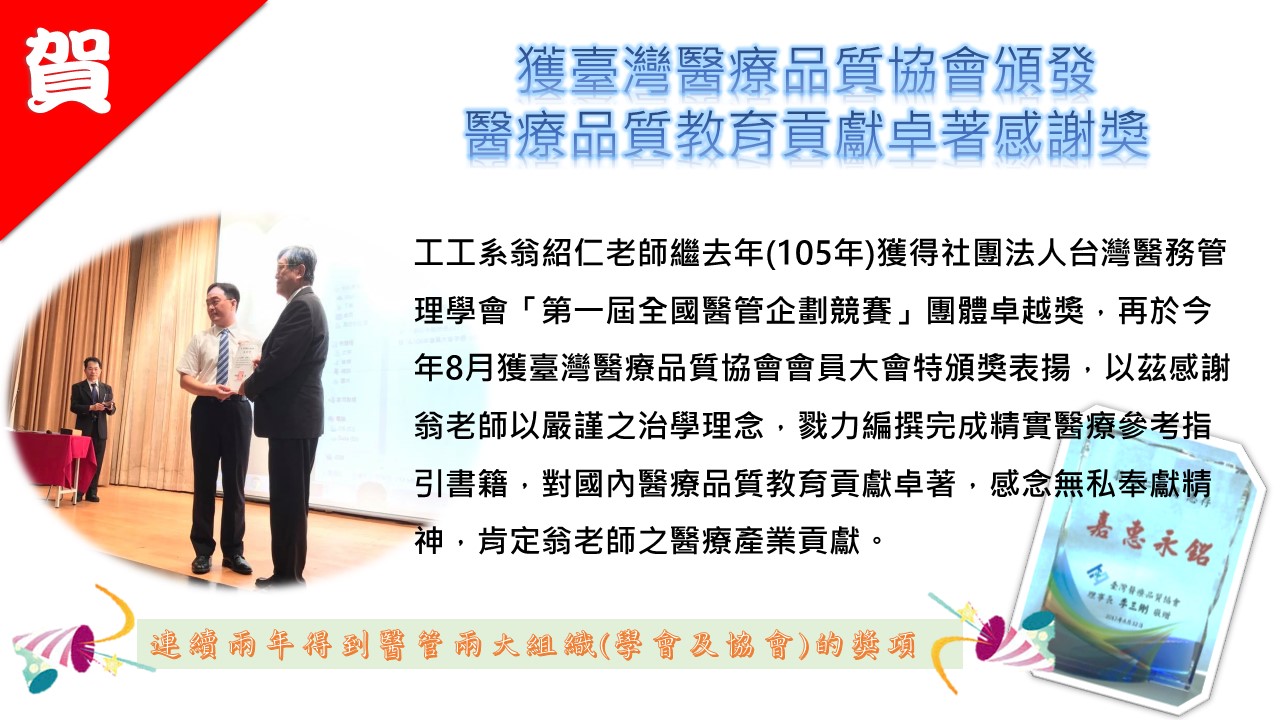
Original image 2017: Received a Certificate of Appreciation for Outstanding Contribution to Healthcare Quality Education from the Taiwan Healthcare Quality Association
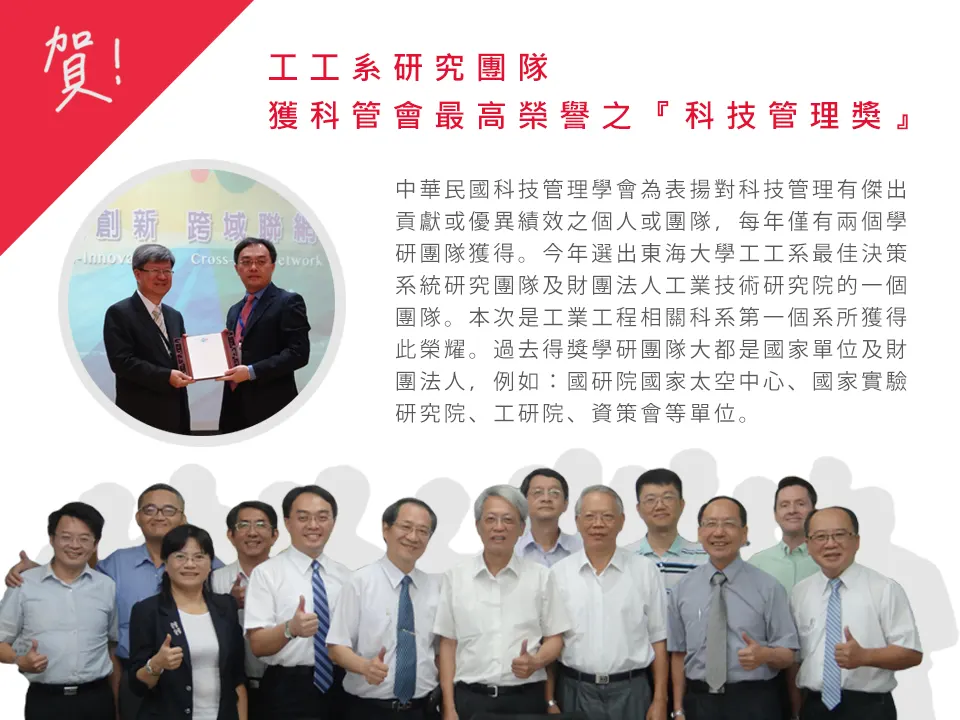
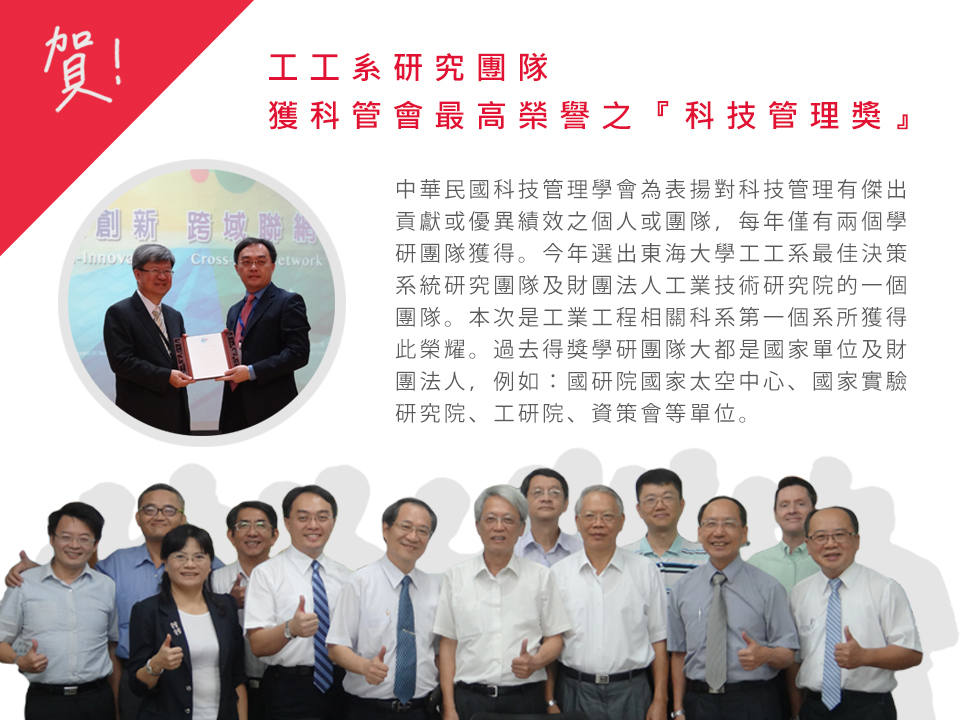
Original image 2016: Received the highest honor of the Technology Management Society of the Republic of China, the "Technology Management Award – Academic Research Team"
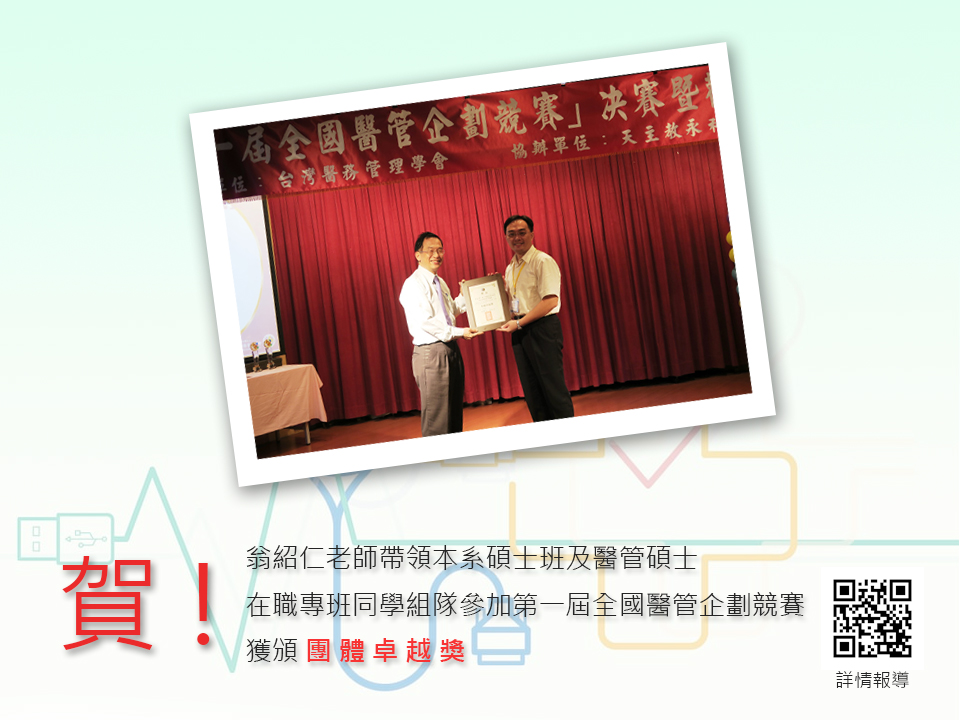
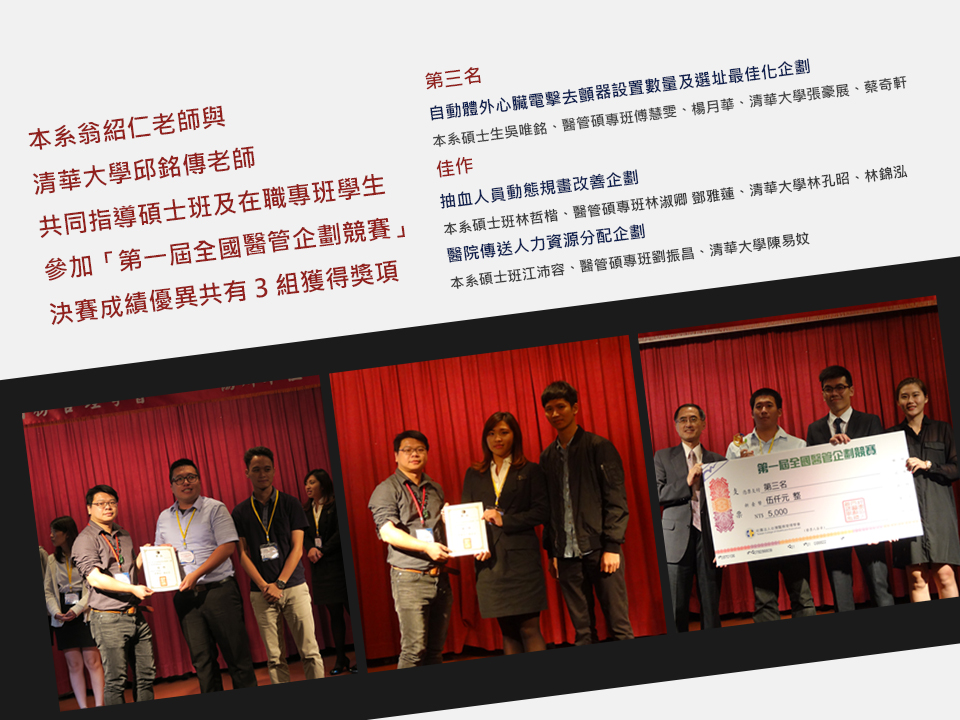
2016: At the 1st National Healthcare Management Planning Competition of the Taiwan College of Healthcare Executives, won (1) the Group Excellence Award, (2) third place, and (3) two Honorable Mentions
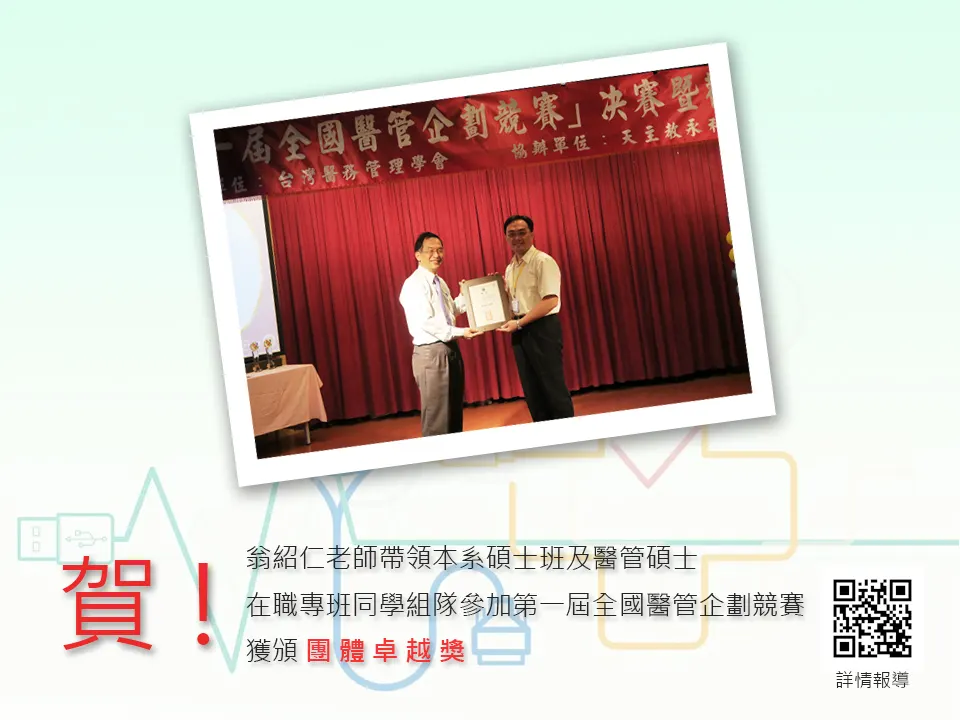
2016: 1st National Healthcare Management Planning Competition of the Taiwan College of Healthcare ExecutivesOriginal image 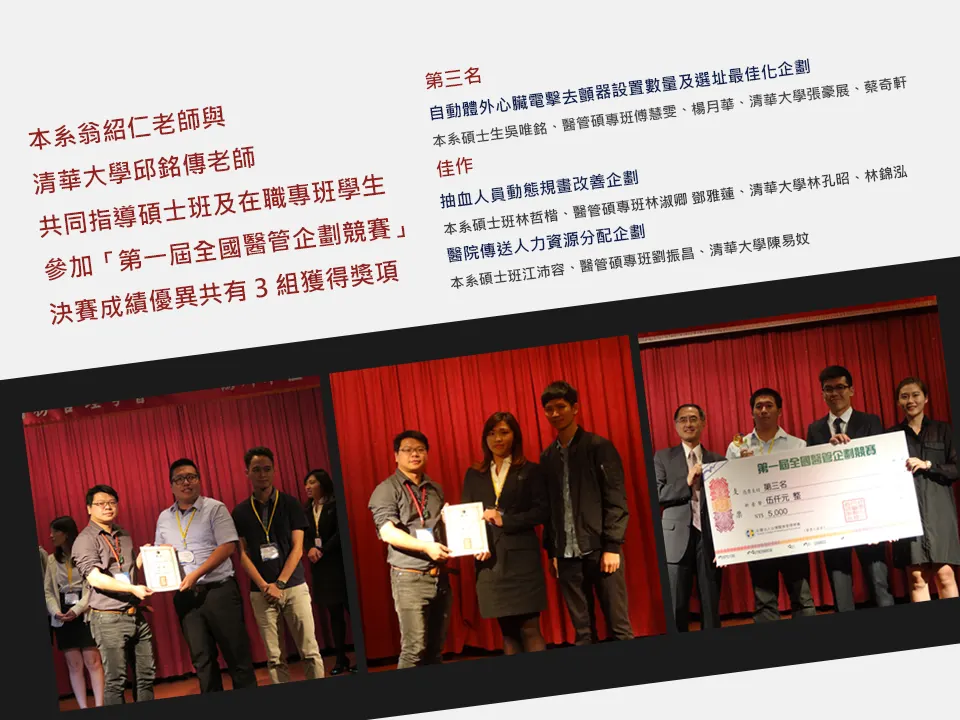
2016: 1st National Healthcare Management Planning Competition of the Taiwan College of Healthcare ExecutivesOriginal image
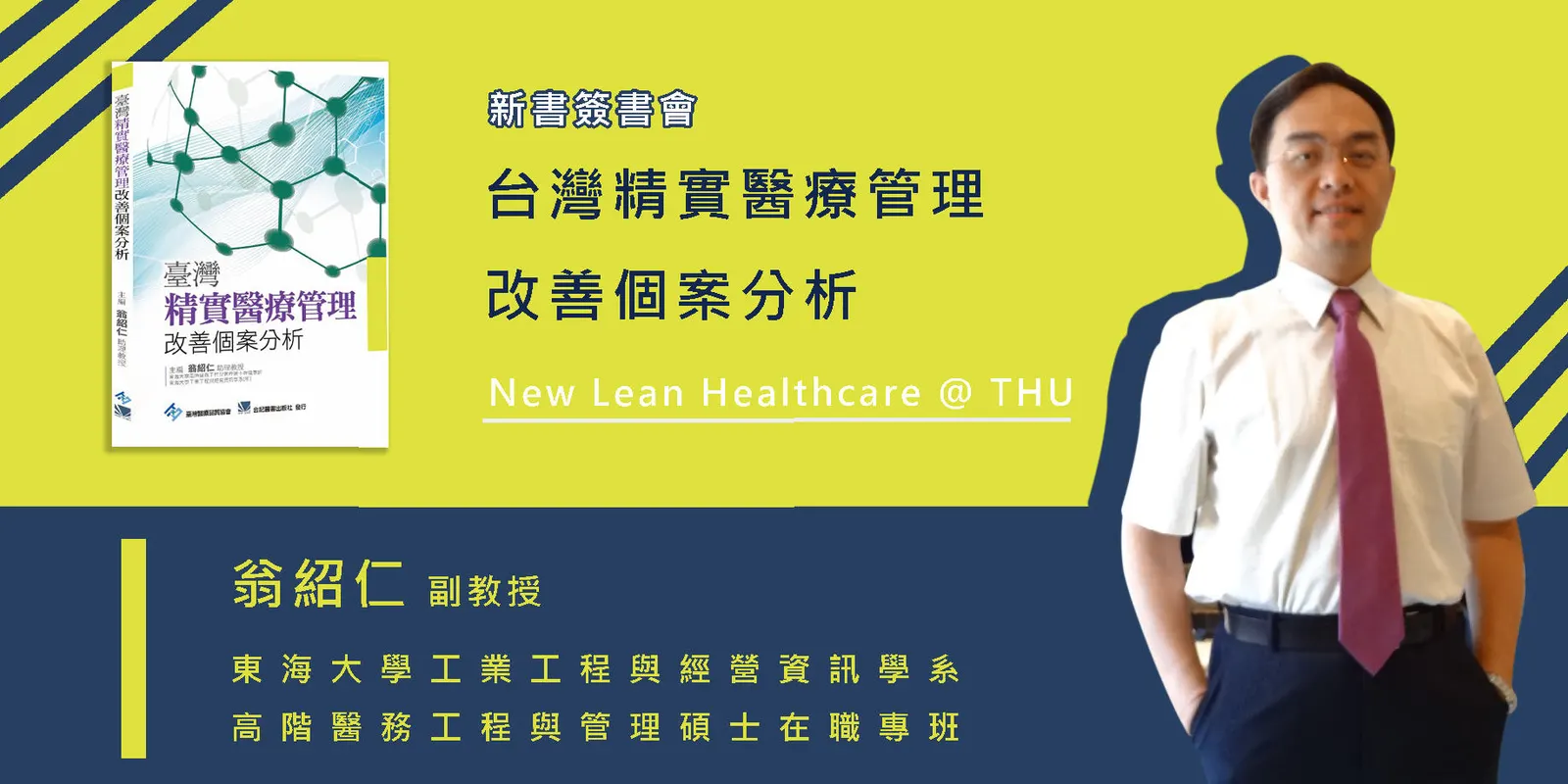
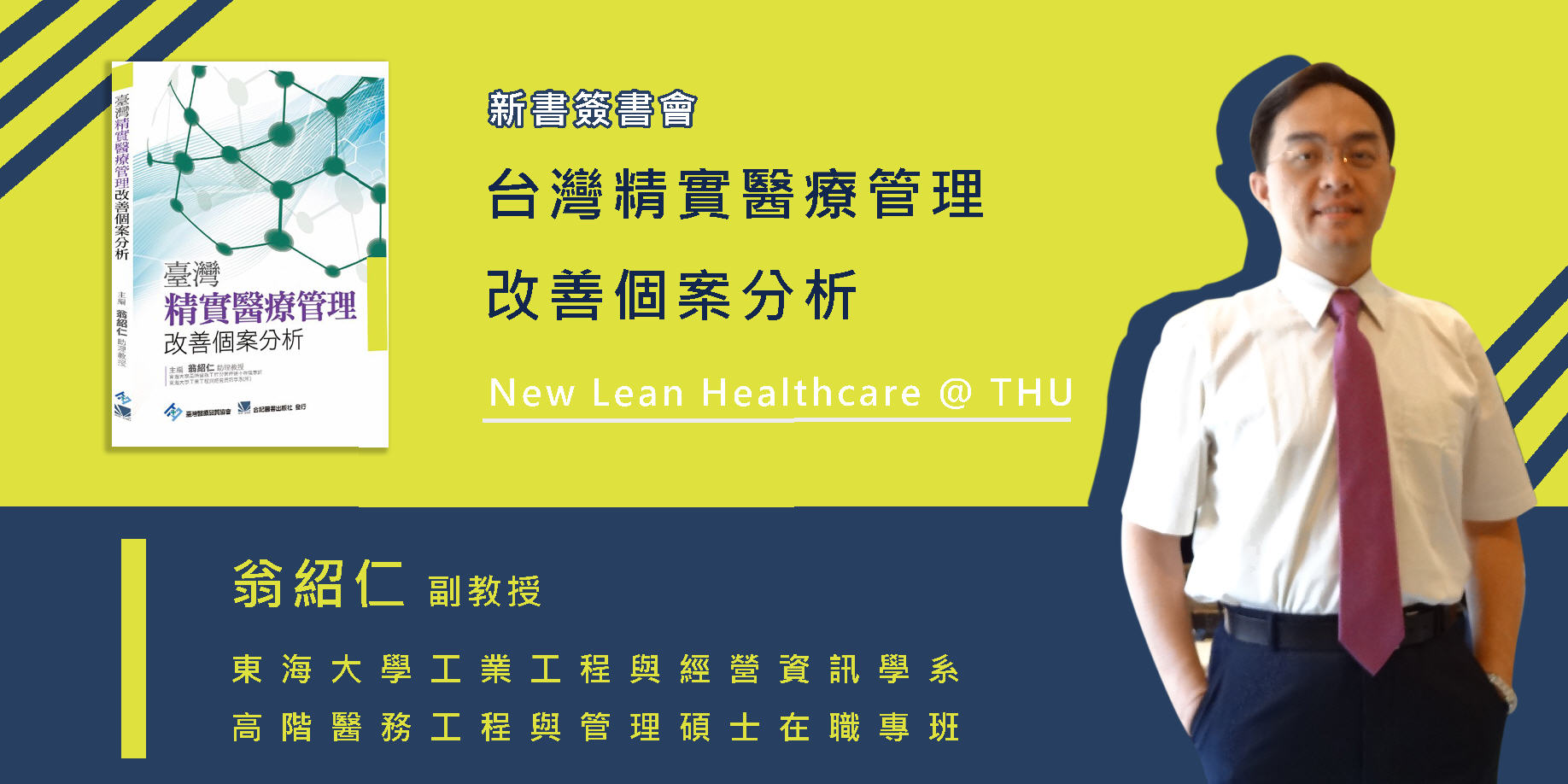
Original image 2016: New book launch and book signing by author Professor Shao-Jen Weng
2016: Judges of the Technology Management Society of the Republic of China's "Technology Management Award" conducted an on-site visit to the ODSRTeam.
Committee members present: 史欽泰, Chair Professor at the College of Technology Management, National Tsing Hua University (former President of ITRI); 魏哲和, Chair Professor at Tatung University (former Minister of the National Science Council); and 羅達賢, CEO of the ITRI College
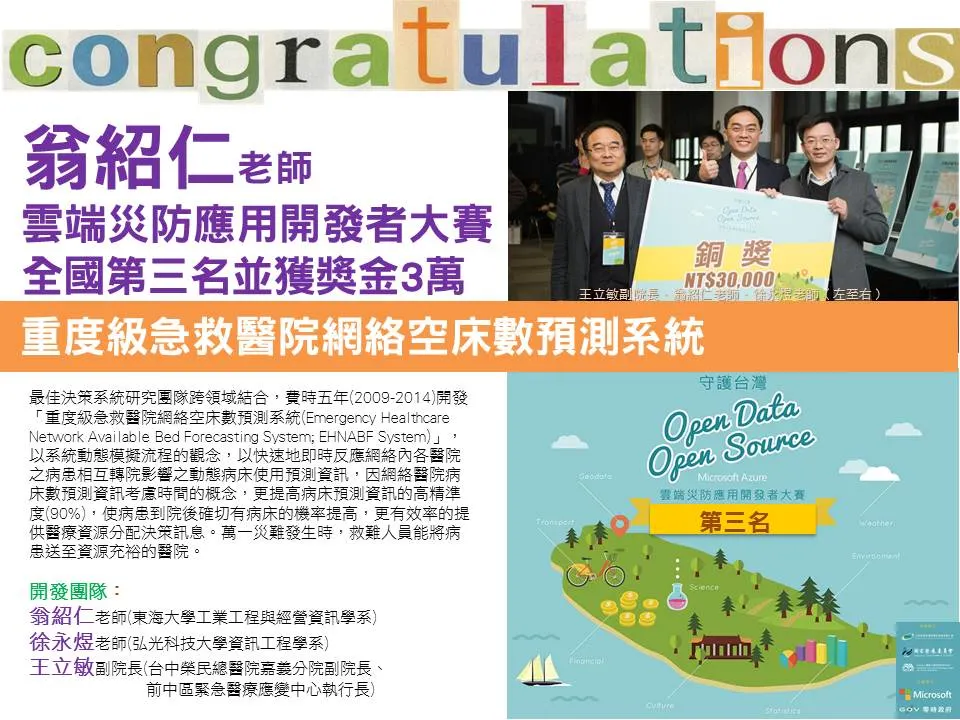
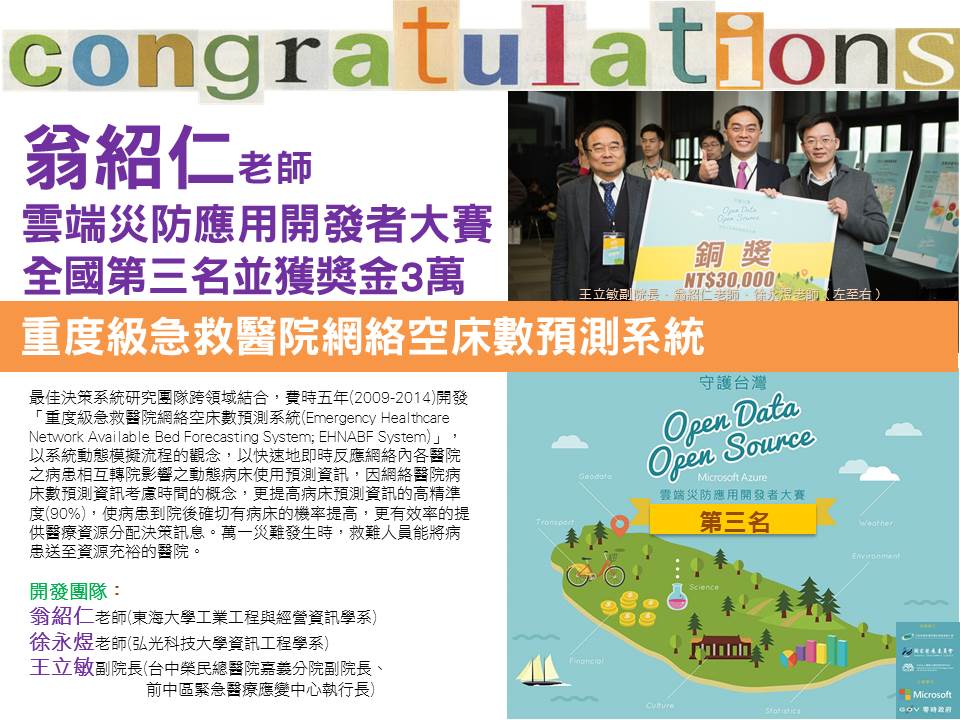
Original image 2015: The research team reached the finals of the Guardian Taiwan OpenData & OpenSource Cloud Disaster Prevention Application Developer Competition and won third place nationwide.
Event videos
- 2025 Healthcare Systems Consortium Badminton Invitational – event record
- 2024 Healthcare Systems Consortium General Assembly
- 2023 Healthcare Systems Consortium Seventh Annual General Meeting
- 2023 Healthcare Systems Consortium results and performance
- 2022 Taiwan Healthcare+ Expo – exhibitor thank-you compilation
- 2022 Taiwan Healthcare+ Expo highlights
- Easy Talks on Healthcare – video series
- Tunghai University trains AI talent for Taiwan, seeing the potential of the smart manufacturing industry and creating dedicated courses
- 2021 Taiwan Healthcare+ Expo – exhibitor thank-you compilation
- 2020 Healthcare Systems Consortium annual results and performance
- Technology & Healthcare – AI Startup Workshop
- Tunghai's Healthcare Systems Consortium builds a national smart healthcare team